MONITORING-PAM
Version:
Fluorometer for Long-term Monitoring of Photosynthesis
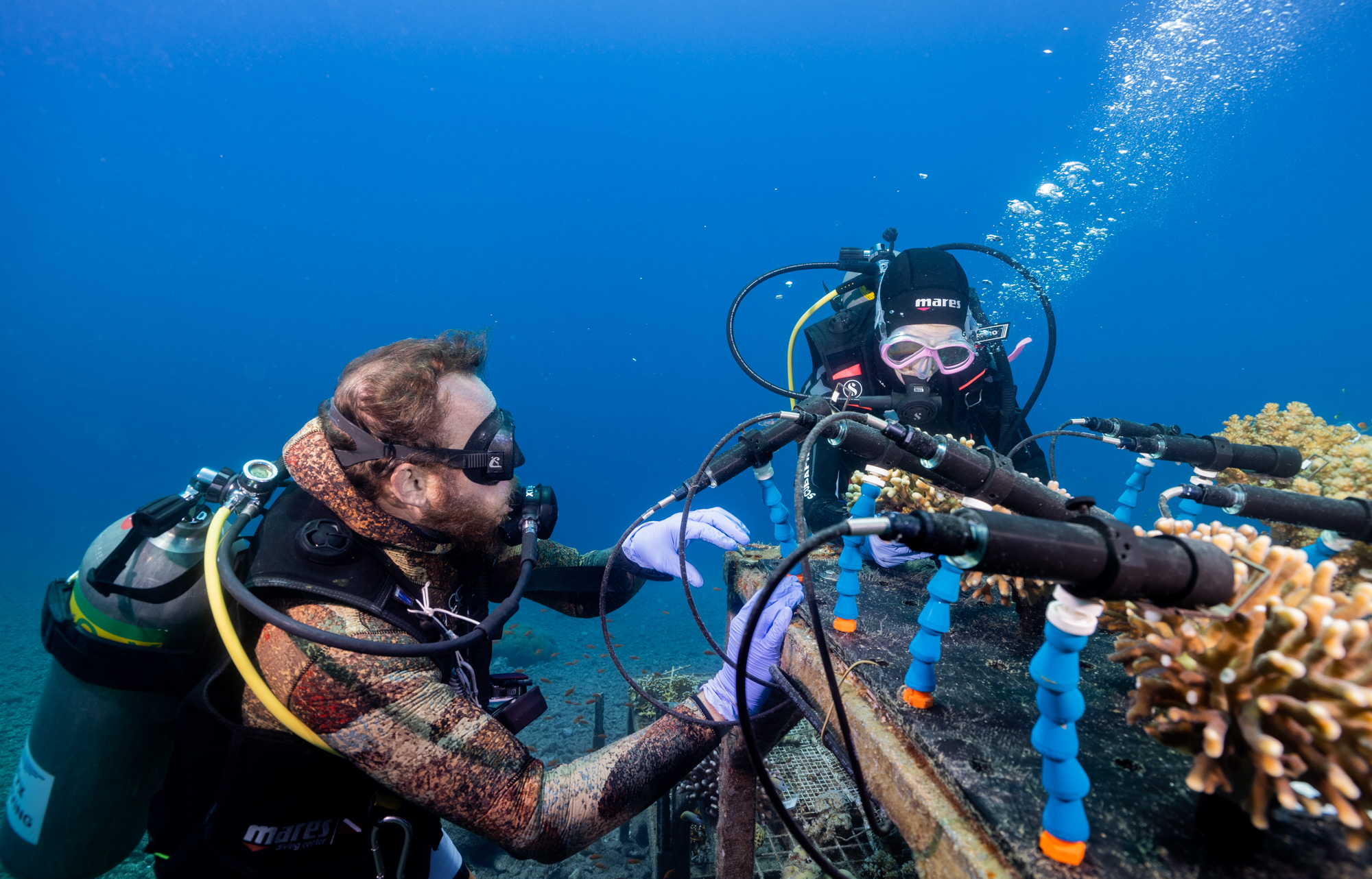
Pioneering use of the MONITORING-PAM AQUATIC version: World's first real-time, open-science, continuous coral monitoring in the Red Sea.
Coral reefs are under increasing threat from anthropogenic pressure, including rising sea temperatures, ocean acidification, and pollution. Monitoring coral health and understanding how environmental conditions impact them is essential for informed scientific research, conservation, and policymaking. The fragile state of most reef ecosystems underscores the urgency of generating accurate, real-time, and actionable monitoring data.
The Gulf of Aqaba (GoA) stands out as a marine refuge, with its reef-building corals demonstrating remarkable resilience to rising ocean temperatures.
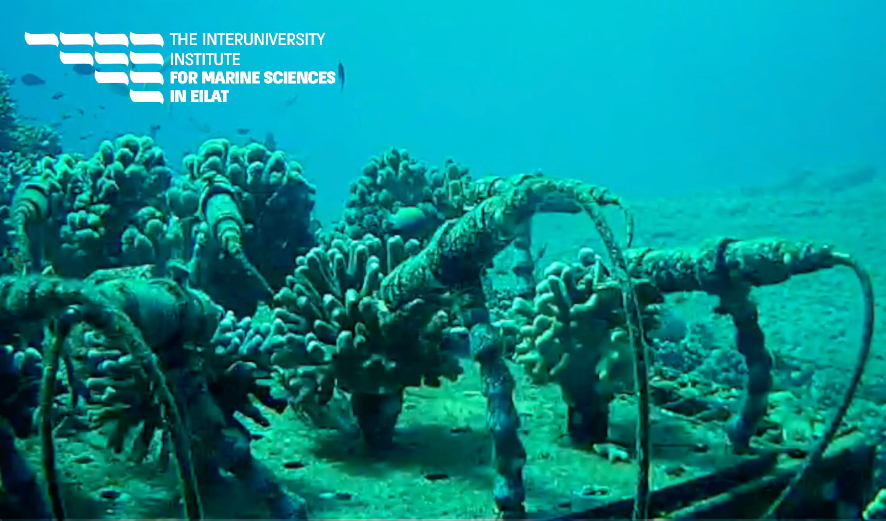
The world's first real-time, open data Coral Monitoring Network (CMN) was established to collect diverse data streams curated in an open-access online database. This database empowers researchers from across the region and around the world to collaborate and advance our understanding of how environmental conditions affect coral function and well-being. The Coral Monitoring Network currently rope in 3 stations in the Gulf of Aqaba: Coral Monitoring Station (CMS) I in Eilat at 6 m depth, CMS II at the same depth in Aqaba Jordan and CMS III in Eilat at 42 m depth.
The CMS is based on a MONITORING-PAM which measures continuously coral physiological performance (chlorophyll fluorescence) of 8 coral colonies and valuable real-time data of several environmental parameters (e.g., air and water temperature, wind speed and direction, light intensity at surface and underwater). Streaming video provides additional information on fish activity, coral pigmentation and light environment. The high-temporal-resolution of data provided by the CMN offer a comprehensive understanding, empowering scientists, managers, and the wider community to take informed action.

Click on the link below to see live video and PAM fluorescence data of a Coral Monitoring Station in the Gulf of Aqaba. The research site is part of a network for science-based conservation and management in the Red Sea region. Access to the monitoring station is kindly provided by Dr. Moaz Fine, Professor of Marine Ecology, Hebrew University in Jerusalem and Interuniversity Institute for Marine Sciences in Eilat (IUI). Archived data is available for researchers, managers, students, and teachers (PAM Dashboard).
Photosynthesis in Lakes
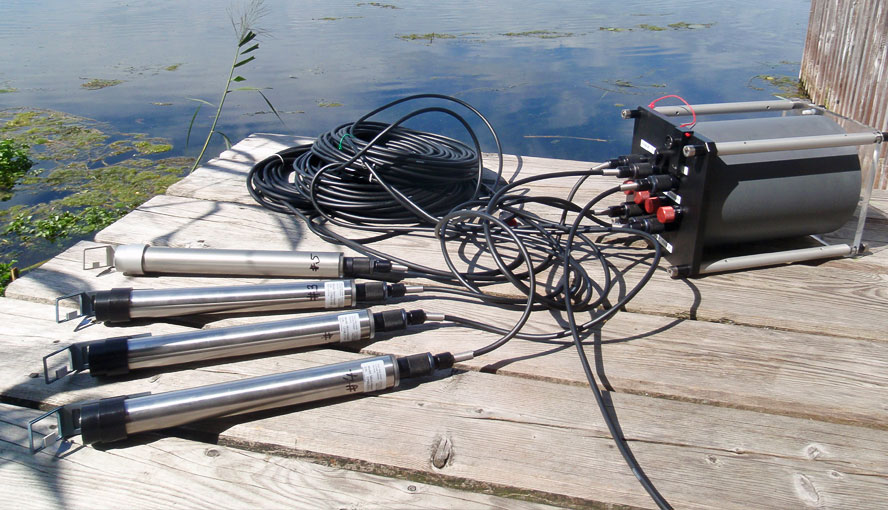
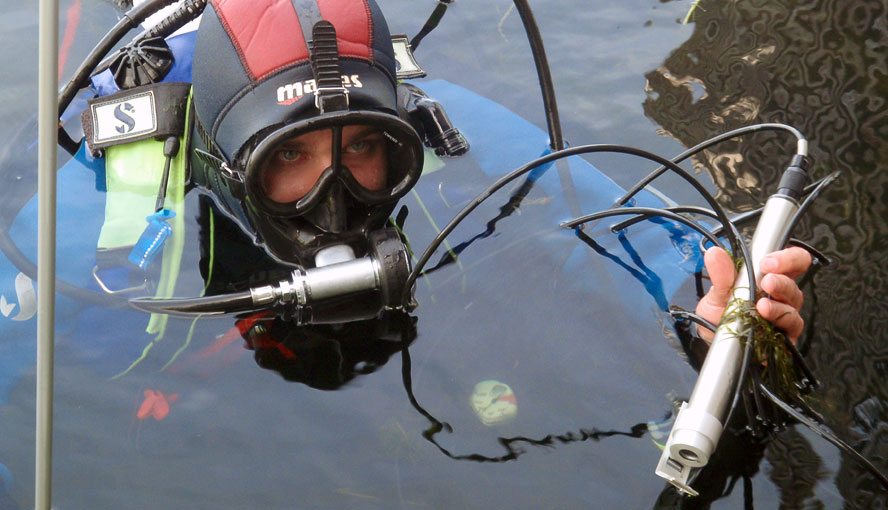
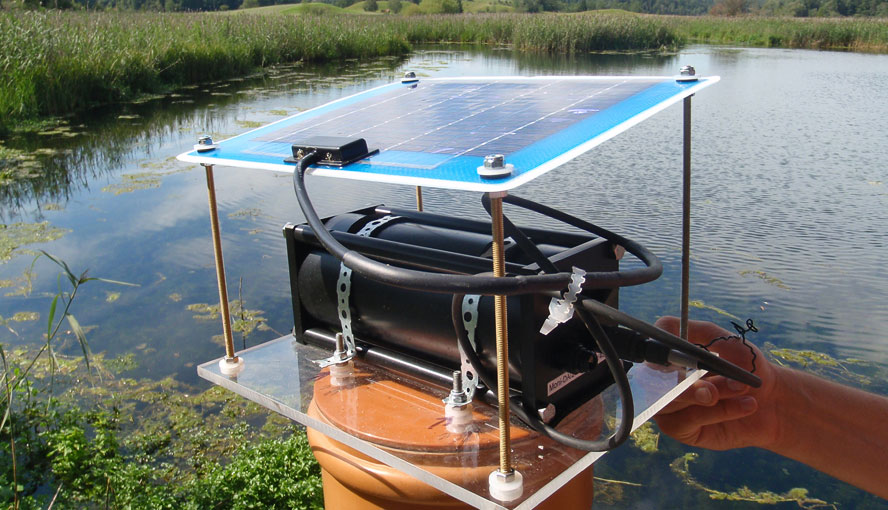
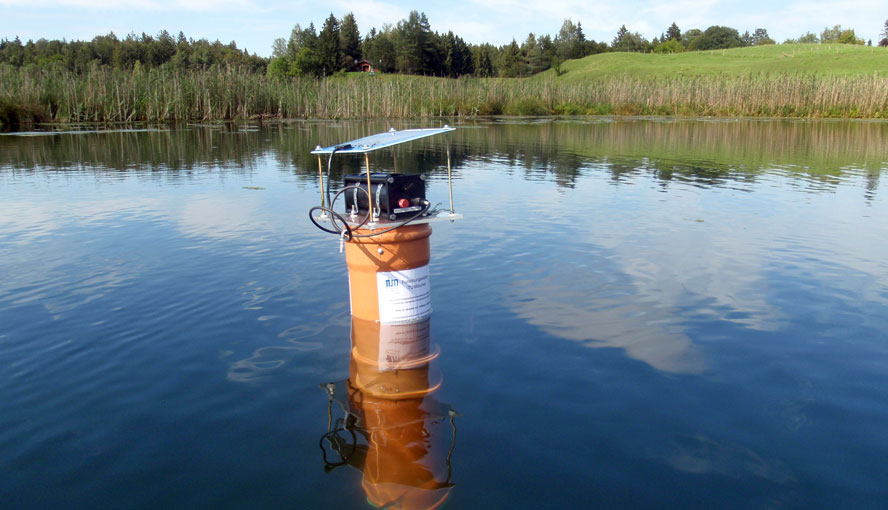
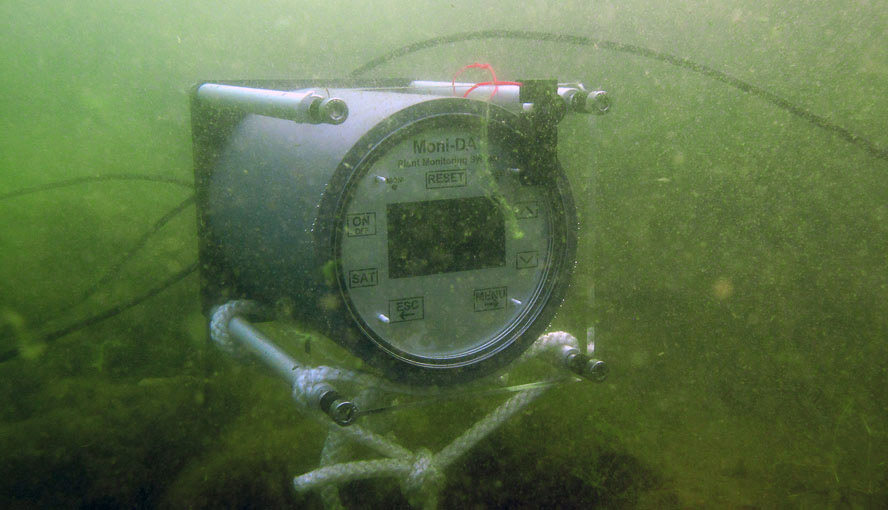
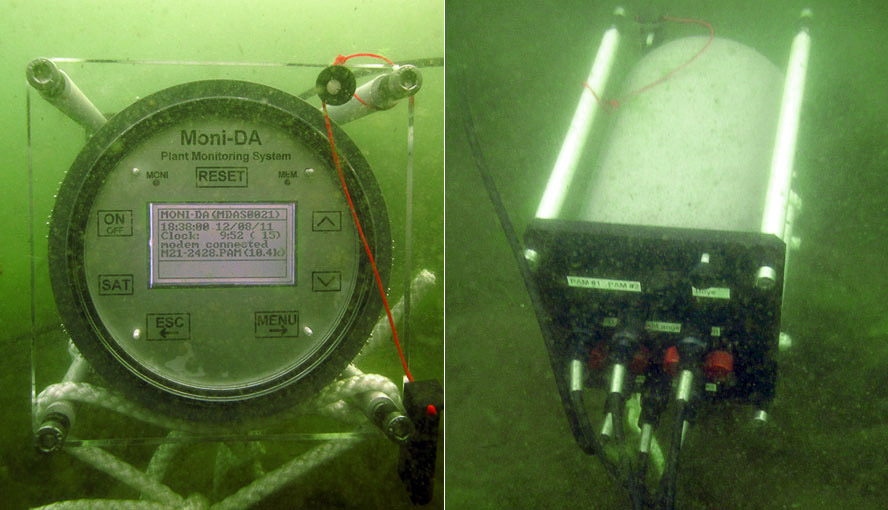
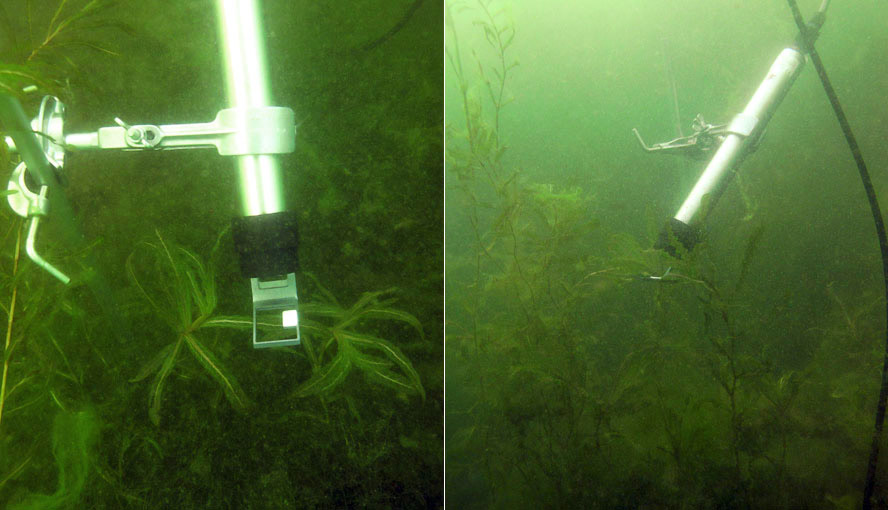
The sub water MONITORING-PAM in STAND-ALONE configuration was employed to continuously monitor photosynthesis in a monocotyledonous plant growing in Southern Bavarian lakes (Osterseen).
The work is part of the PhD work of M.Sc. Nicolas Eckert carried out at the limnological research base of the Technical University of Munich, Iffeldorf (head Prof. A. Melzer).
The Geisenheim FACE Experiment
The FACE (Free Air Carbon Dioxide Enrichment) site of the Hochschule Geisenheim and a similar site of the Justus Liebig-Universität Giessen form the experimental backbone of the LOEWE research cluster “FACE2FACE”. With substantial support from the state of Hessen, researchers strive to understand how elevated CO2 of the earth’s future atmosphere affects life.
Being the outstanding center of German grapevine breeding and research for almost 150 years, the Hochschule Geisenheim naturally includes grapevine plants in their FACE research program. Currently, a white and a red grape variety are investigated: Riesling and Cabernet Sauvignon, respectively.
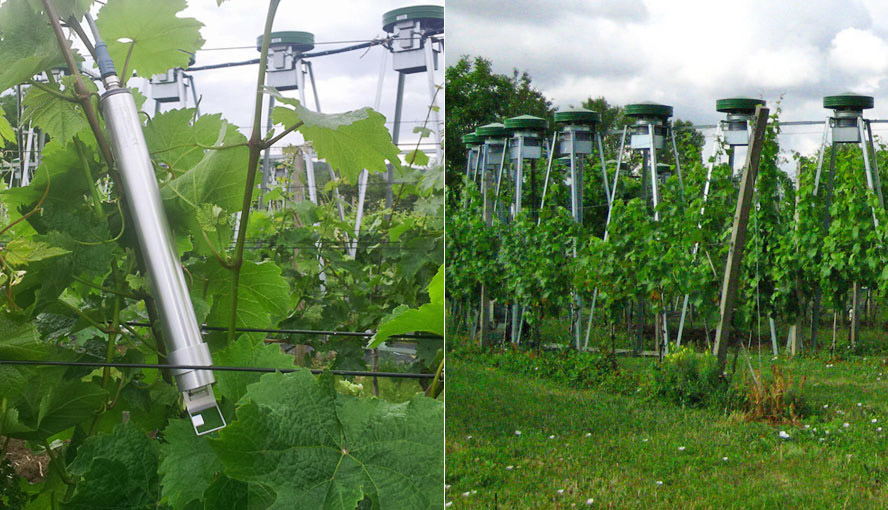
Right: Ring of CO2 outlets. Picture by courtesy of S. Tittmann and Y. Wohlfahrt, Hochschule Geisenheim.
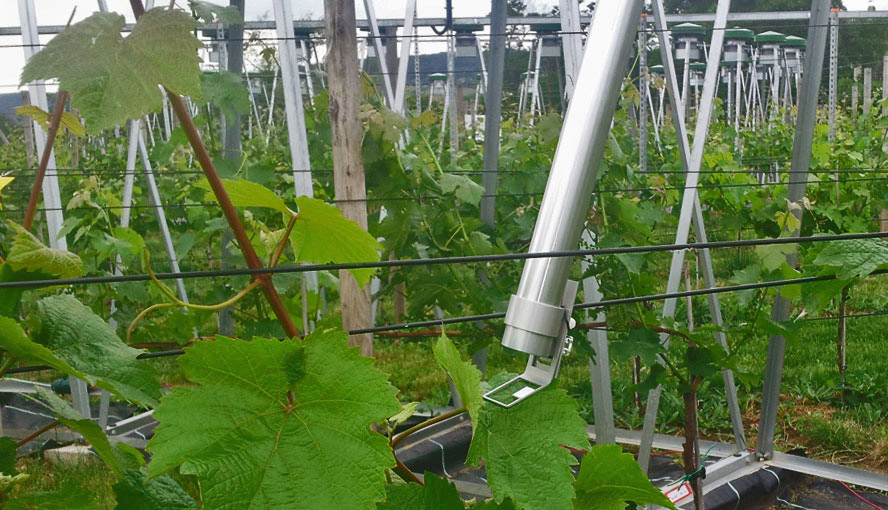
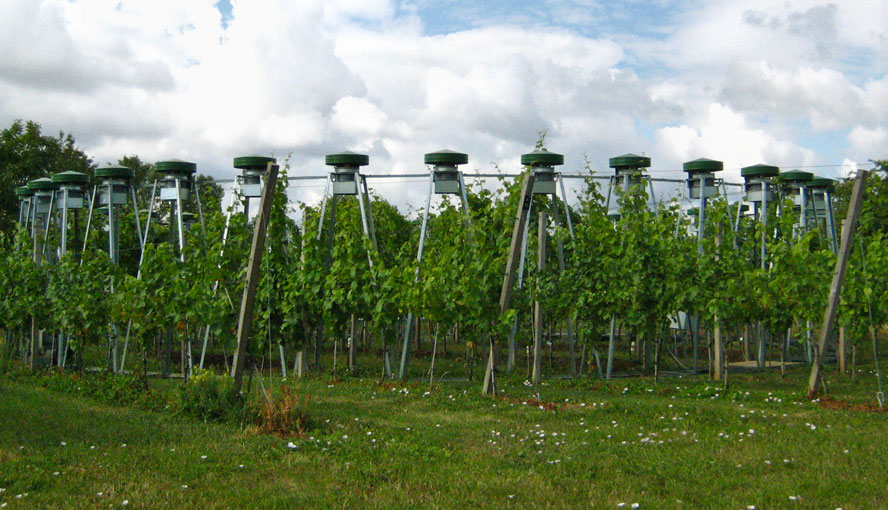
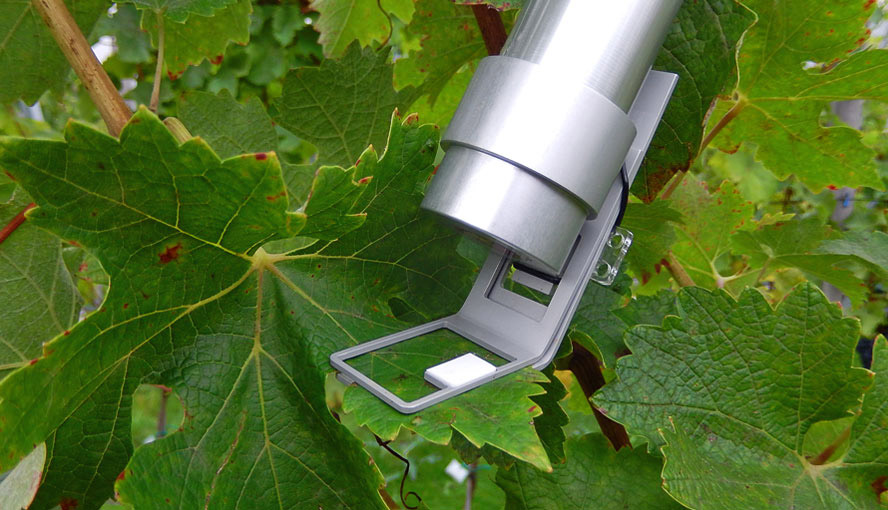
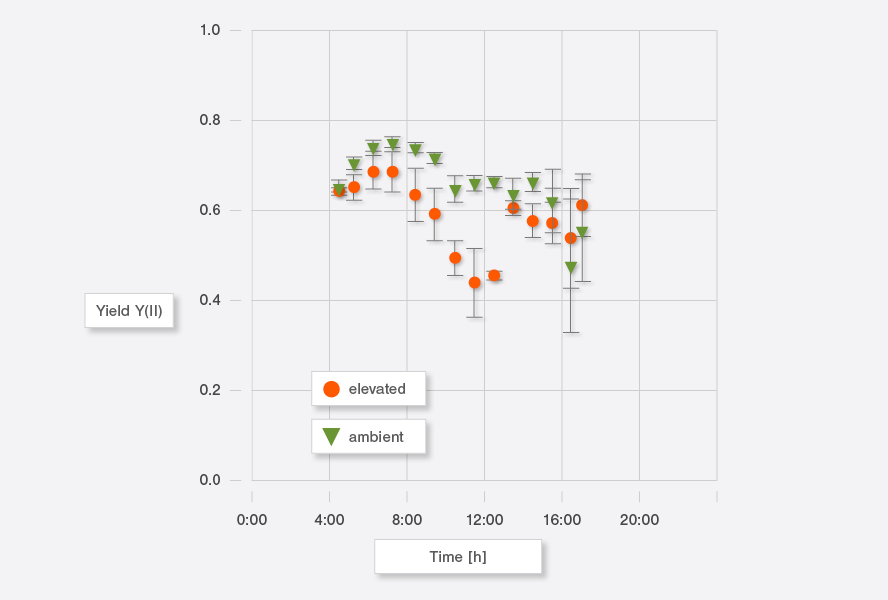
Led by Dr. Manfred Stoll, the Geisenheim research group records long-term effects on photosynthesis with two MONITORING-PAM systems, each capable of surveying simultaneously four samples. The MONITORING-PAMs determine data of Y(II) which indicate the efficiency of photosystem II to convert absorbed light into chemical energy. Figure 1 shows averages of 14 diurnal measurements of Y(II) carried out in June 2014.
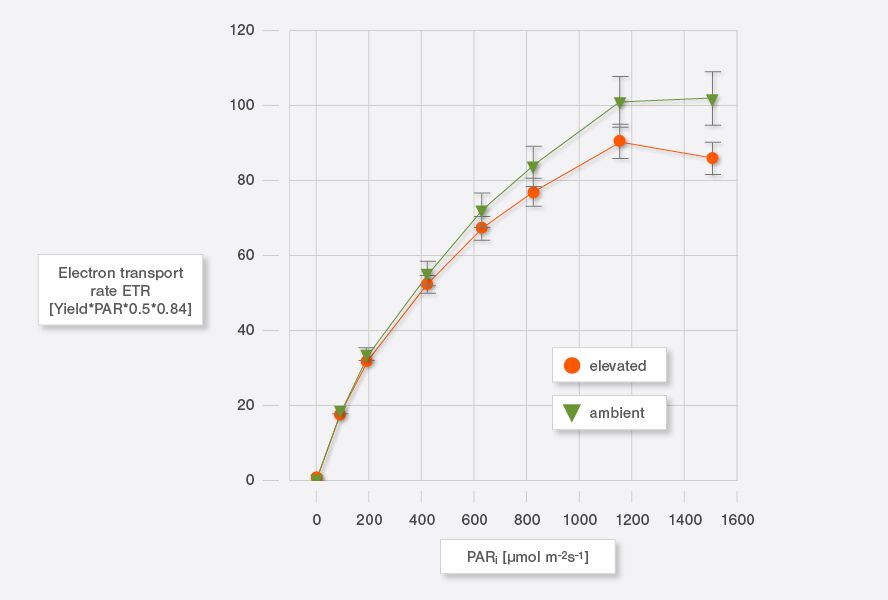
These daytime measurements were accompanied by experiments at night in which the response of Y(II) to increasing light intensities (PAR) from the MONI measuring heads was recorded. From Y(II) and PAR, photosynthetic electron transport rates were calculated and plotted against the respective PAR values (Fig. 2).
Based on these “light response curves”, acclimation state and maximum capacity of photosynthesis can well be assessed. The Geisenheim grapevine researchers crosscheck MONITORING-PAM data by CO2 gas exchange measurements using a GFS-3000 device. Apart from photosynthesis, the project is expected to yield general insights into plant growth, berry development, and wine quality under future climate conditions.
Continuous Monitoring
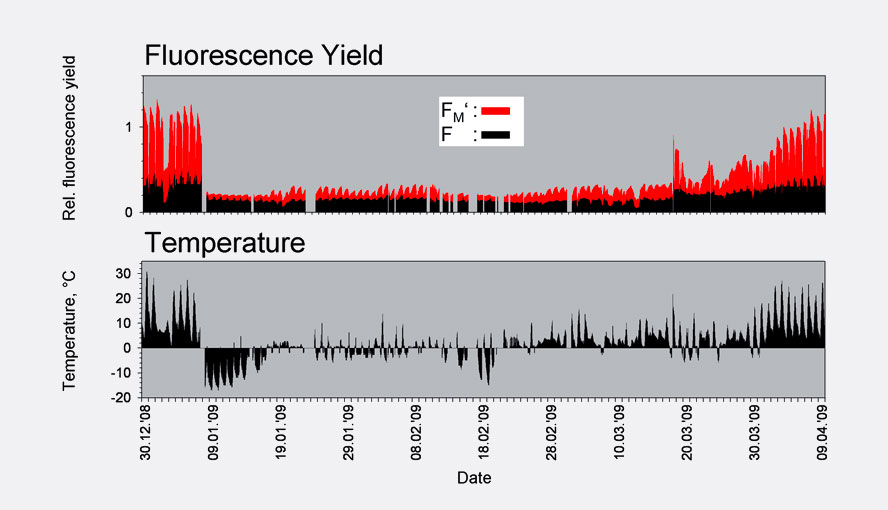
Continuous monitoring of fluorescence from a leaf of Ilex aquifolium, and of air temperature by the STANDALONE configuration of the TERRESTRIAL version of the MONITORING-PAM. The measurements reveal that Fm’ and F fluorescence levels dropped sharply during onset of a frost period on 07.01.2009. Fluorescence levels recovered close to initial values only at beginning of April when day temperatures reached 20°C and night temperatures did not drop below 5°C.
Likely, the sustained fluorescence quenching during low temperatures reflects markedly increased dissipation of absorbed light energy. This energy dissipation can prevent damage by light under very low temperature conditions when light energy can not be used by biochemistry.
The MONITORING-PAM in the Field
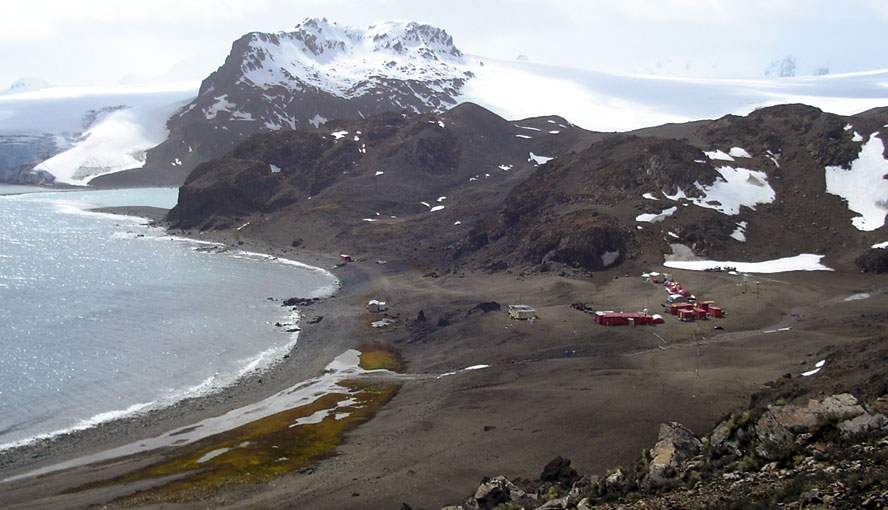
Photography by courtesy of Rolf Gademann.
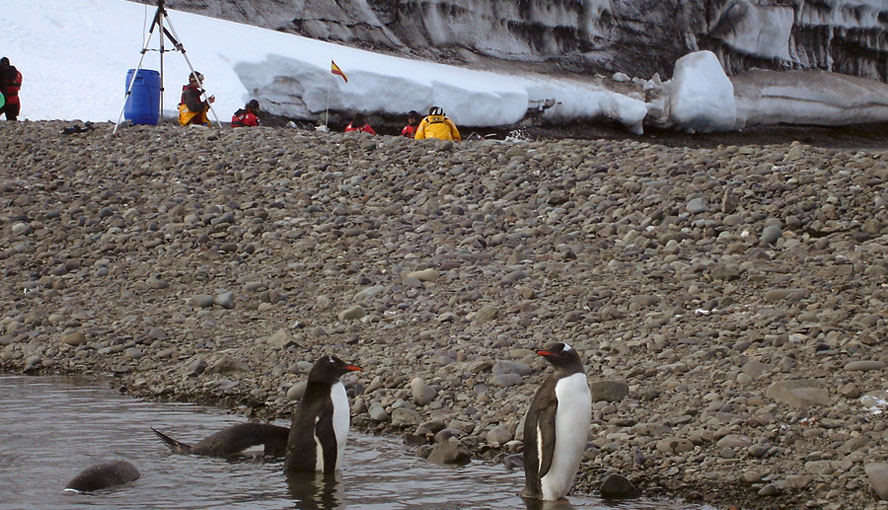
Photography by courtesy of Rolf Gademann.
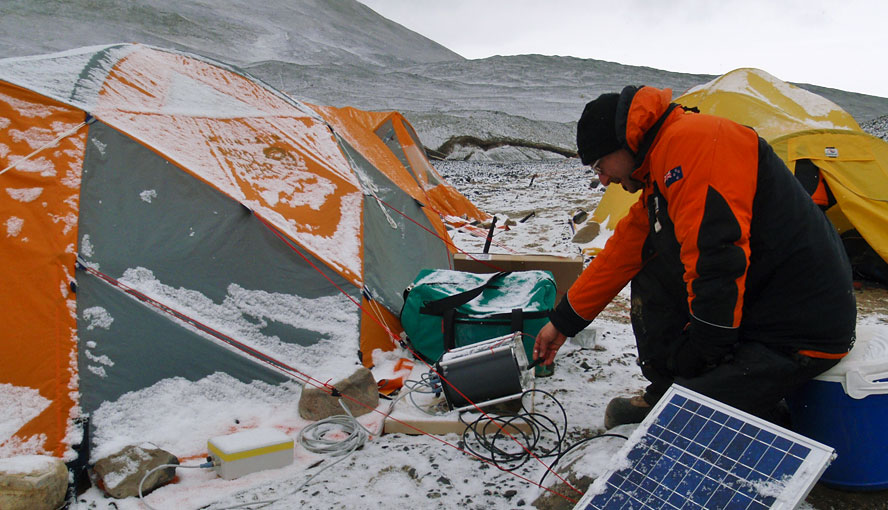
Photography by courtesy of Rolf Gademann.
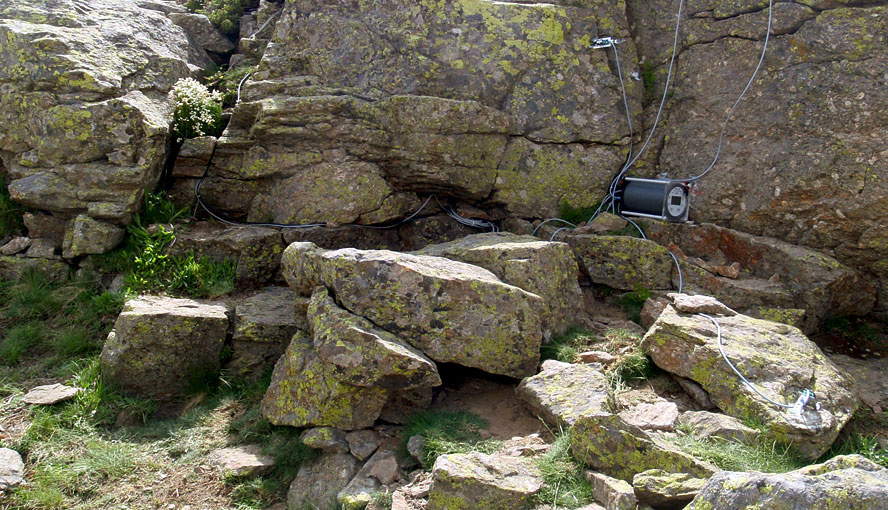
Photography by courtesy of Rolf Gademann.

Photography by courtesy of Albert Porcar-Castell.
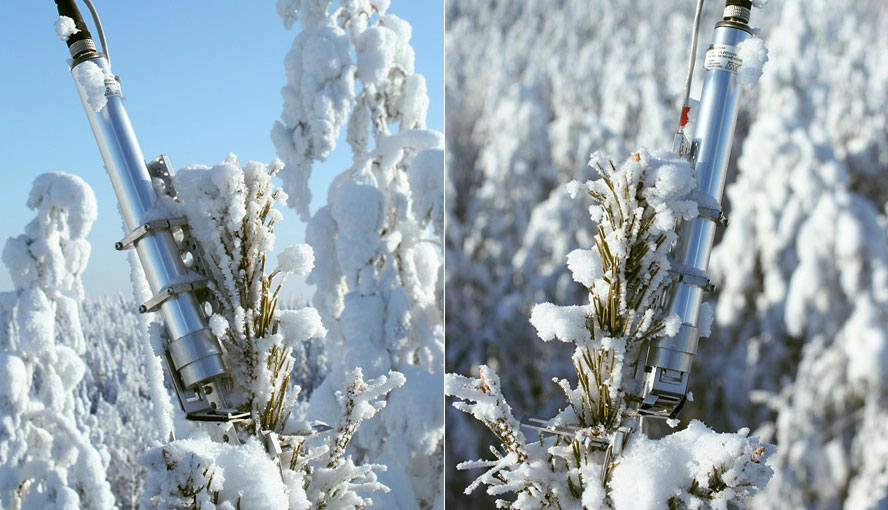
Photography by courtesy of Albert Porcar-Castell.