DUAL-PAM-100
P700 & Chlorophyll Fluorescence Measuring System




The Gold Standard for PSI and PSII Analysis
Immediately after its market launch, the DUAL-PAM-100 became the gold standard for parallel recording of Photosystem II and Photosystem I activities. The basic system consists of a high-performance PAM chlorophyll fluorometer to analyze PSII, and a dual-wavelength absorbance spectrometer (830/875 nm) to measure P700 absorbance changes reflecting PSI activity. A ground-breaking pulse-modulation technique measures both signals concurrently and at outstanding time resolution.
The DUAL-PAM-100 is not confined to PSI and PSII analysis. With the accessory P515/535 module, the system measures electrochromic band shift for membrane energization and proton motive force. The NADPH/9-AA module enables simultaneous chlorophyll and NADPH fluorescence measurements.
Chlorophyll Fluorescence and P700 Absorbance Measured Simultaneously
The simultaneously measured chlorophyll fluorescence and P700 absorbance responses reflect the interplay of the two photosystems connected via the intersystem electron transport chain. The software automatically calculates complementary quantum yields for both photosystems: Y(II), Y(NPQ), and Y(NO) for PSII, and Y(I), Y(ND), and Y(NA) for PSI. The P700 signal quality matches that of fluorescence and even at high time resolution, signal drift is negligibly small.
Learn more about the DUAL-PAM-100
Electron Transport Rate of PSII and PSI
Light response curves provide detailed information on electron transport capacity and limitations of the two photosystems. The DualPAM software displays the apparent electron transport rates ETR(I) and ETR(II) simultaneously, along with the corresponding quantum yields. The Klughammer-Flux method determines the number of electrons flowing through a PSI reaction center per unit time - a direct measure of PSI throughput.
Available as Modular and Fiber Version

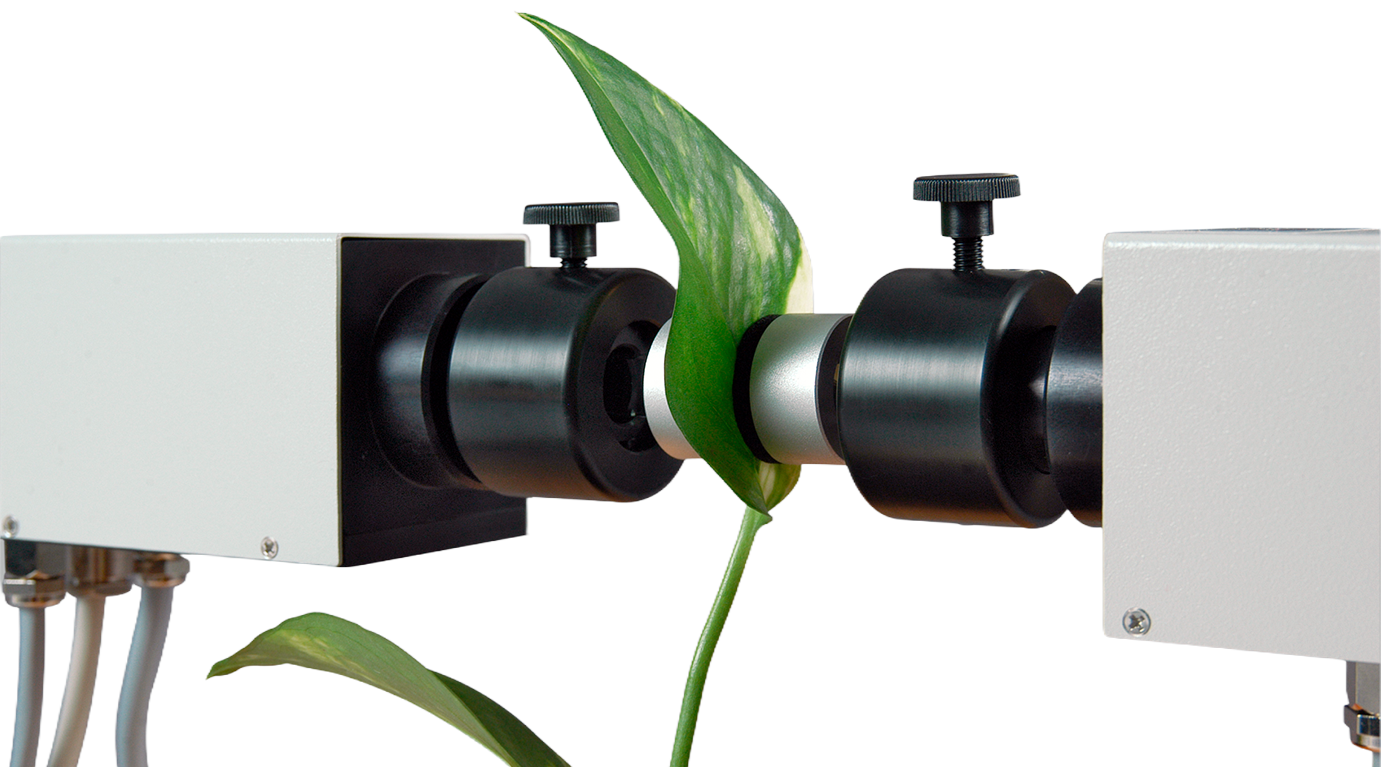
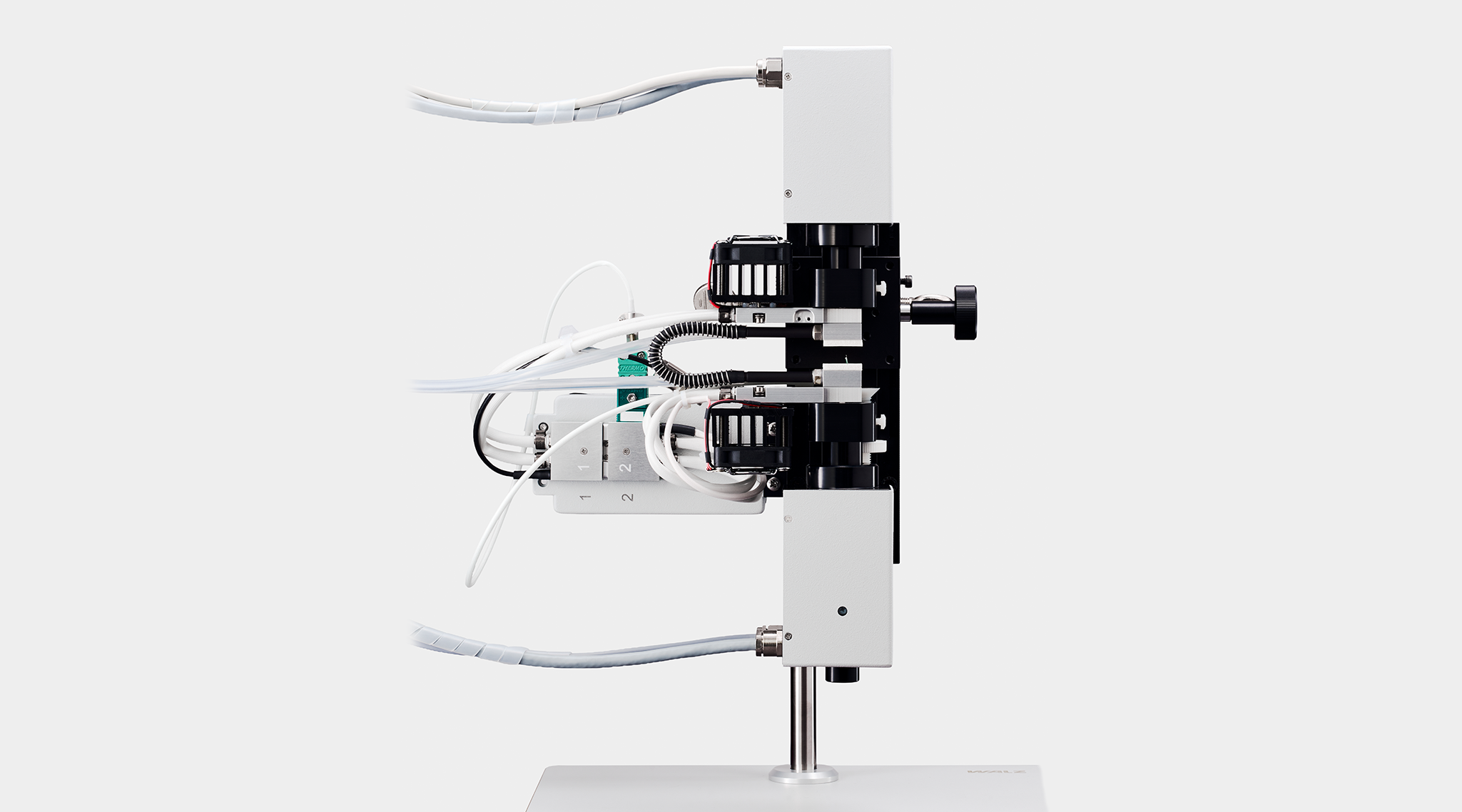
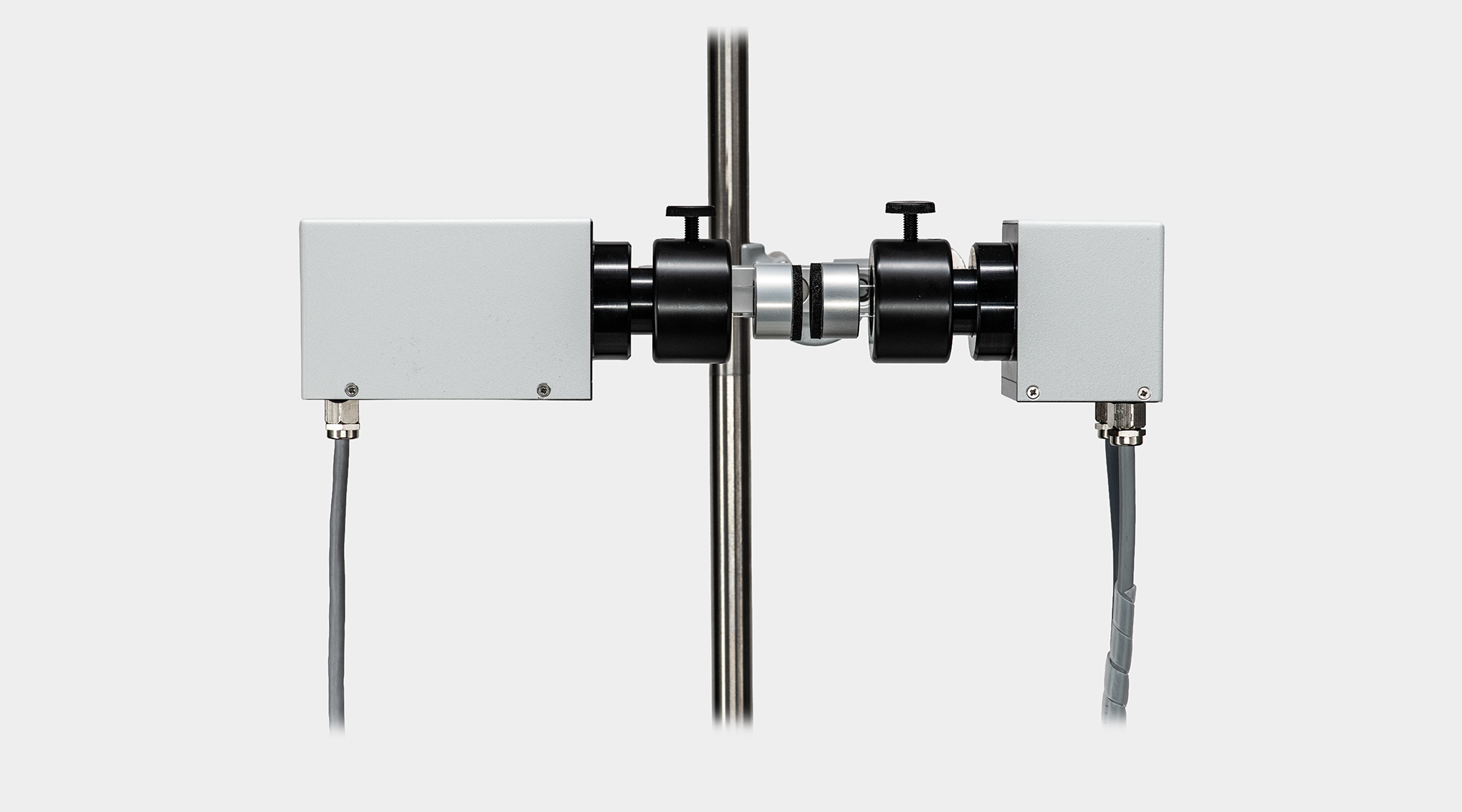
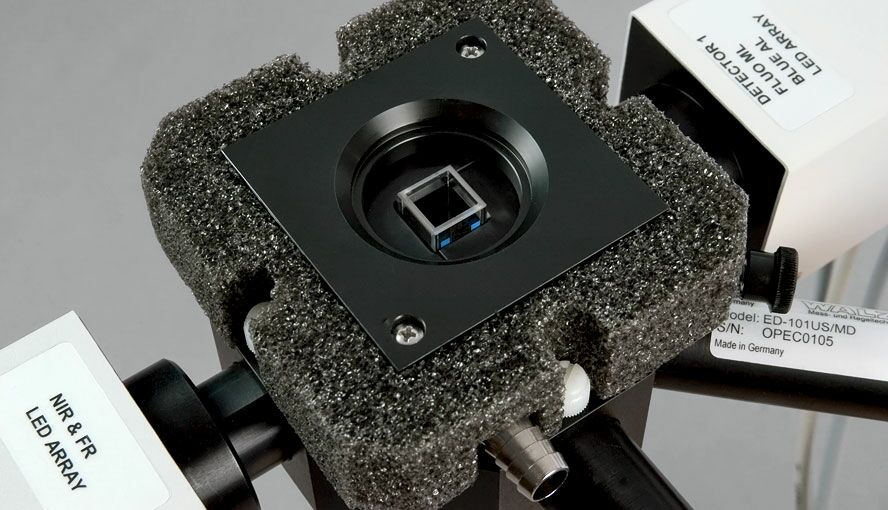
positions the sample between separate emitter and detector heads, measuring P700 absorbance changes in transmission mode. The measuring heads are easily exchangeable — using various accessory modules, the system can measure electrochromic band shift, NADPH fluorescence, fluorescence of pH-sensitive dyes, and fluorescence at two different wavebands.

integrates light sources and detection in the central unit, measuring P700 absorbance in remission mode via fiberoptics. This version is more compact but lacks the modular flexibility of the head-based system. Ideal when only PSII and PSI activities are of interest.
Technical Features of the DUAL-PAM-100
High-Performance Optics
Red (635 nm), blue (460 nm), and far-red (730 nm) actinic LEDs provide continuous illumination up to 4,000 µmol m⁻² s⁻¹, saturating single turnover flashes up to 200,000 µmol m⁻² s⁻¹ (5–50 µs), and multiple turnover flashes up to 30,000 µmol m⁻² s⁻¹ (1–1,000 ms). All light sources switch with 2.5 µs time resolution under software control.
Fast Kinetics
In single-channel mode at 400 kHz measuring light frequency, the system resolves the polyphasic fluorescence rise (Fo - I1 - I2 - Fm, or OJIP test) within the first second of illumination. A dedicated routine pre-oxidizes the PQ pool by far-red preillumination for reliable assessment of fluorescence parameters.
Automated Protocols
The DualPAM software supports induction curves, light curves, triggered runs, online and offline averaging, and script file programming. An unlimited number of trigger files and user settings can be saved for reproducible experiments.

Probing the Electron Transport Chain
The DUAL-PAM-100 is a powerful tool for identifying lesions in the electron transport chain. Simultaneous measurement of fast fluorescence and P700 induction at high light intensities reveals specific effects of mineral deficiencies, inhibitor treatments, and genetic modifications on electron transfer between PSII and PSI. This approach has been successfully used to diagnose deficiencies of copper, phosphorus, zinc, calcium, potassium, and nitrogen in wheat and sunflower leaves.
M. Onishi, R. Furuya, C. Miyake (Kobe), G. Schansker (Walz)
Simultaneous measurement of fast fluorescence and P700 induction at high light intensities (O-I1-I2-P-type measurement) is a powerful tool to probe lesions in the electron transport chain. Mineral deficiency is an example that can illustrate this.
The O-I1-I2-P or OJIP transient reflects the reduction of the electron transport chain, with the O-I1 rise paralleling the reduction of the acceptor side of PS II, the I1-I2 rise paralleling the reduction of the PQ pool, and the I2-P rise paralleling the re-reduction of plastocyanin and P700. The redox changes in P700 measured simultaneously indicate an initial oxidation of P700 and a subsequent re-reduction phase. This is illustrated in the next figure.
Mineral deficiencies affect these dynamics in different ways, and two of such effects are described here. One is the reaction induced by deficiencies of P (phosphorus) and Cu (copper), and the other by deficiencies of Zn (zinc), Ca (calcium), K (potassium), and N (nitrogen).
Copper is a cofactor for plastocyanin, a small protein that transports electrons through the lumen between the cellular b6f complex and photosystem (PS)I. Copper deficiency decreases plastocyanin content and slows electron transport between the cellular b6f complex and PS I. Phosphorus in the form of phosphate, on the other hand, is required for ATP synthesis by ATP synthase; P deficiency decreases phosphate content and inhibits ATP synthase activity. Protons pass from the lumen to the stroma through ATP synthase as part of its catalytic mechanism; inhibition of ATP synthase promotes acidification of the lumen, resulting in a “steady state” of the lumen pH. As a result, plastoquinol reoxidation by the cyt b6f complex slows down electron transfer to P700.

The figure shows the effect of these two deficiencies on fluorescence and P700 kinetics. In wheat, the amplitude of the I2-P phase is approximately halved and the P700+ redox kinetics are strongly slowed down in both cases. Focusing on the initial P700 oxidation phase, the difference is that P deficiency does not affect these kinetics (low lumen pH requires more time to establish), whereas low plastocyanin content (confirmed by DUAL-KLAS-NIR measurements) results in much faster P700 oxidation kinetics.

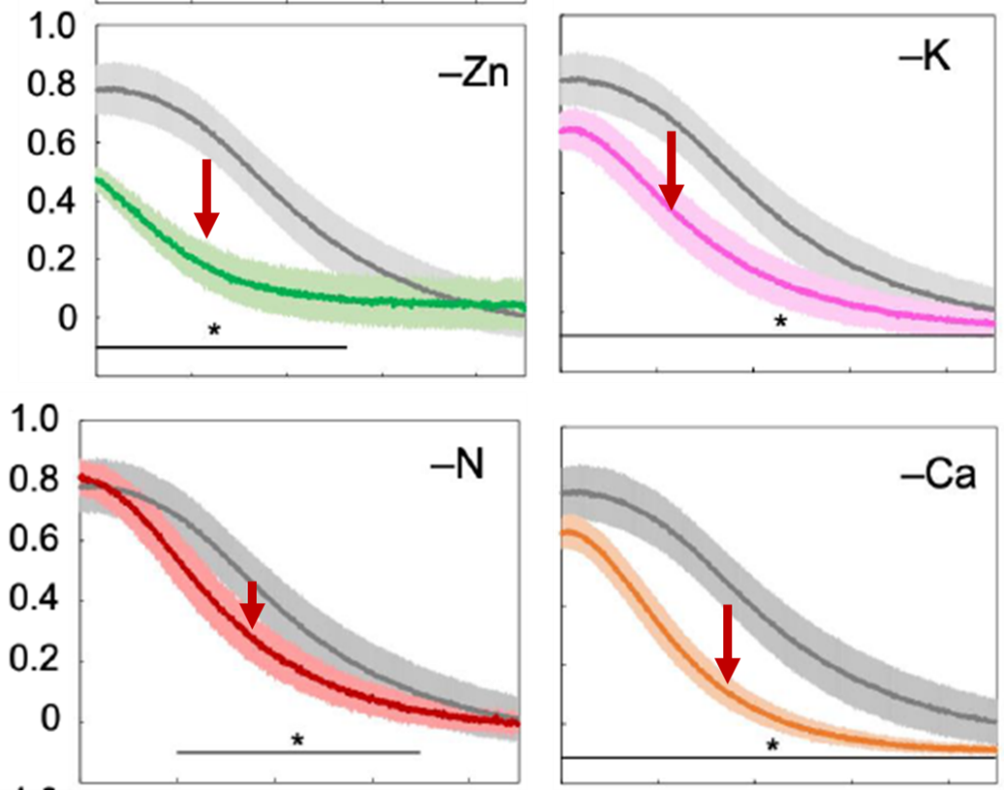
According to the literature, Zn, Ca, K and N play a role in the detoxification of oxygen radicals on the acceptor side of PS I. Deficiency is thought to cause oxygen radical-mediated damage to the acceptor side of PS I. If we look again at the dynamics of fluorescence and P700, what do we see?
The most striking effect observed in both sunflower and wheat leaves was a much faster P700+ re-reduction phase. In wheat, this was associated with a somewhat faster I2-P rise, but was not as clearly observed in sunflower leaves (Schansker et al. 2022). This can be explained by assuming that damage on the PS I acceptor side also implies a reduction in the number of electron acceptors. This would mean that fewer electrons need to flow through the electron transport chain to reduce P700+, meaning that in such leaves FM and full re-reduction of P700+ are reached earlier.
There are also a few mineral deficiencies that do not directly affect the electron transport chain but act further downstream and whose effects can be detected by feedback inhibition. Two examples (molybdenum (Mo) and boron (B) deficiencies) are shown below; the leaves were illuminated for 10 minutes, and quenching analysis was applied. Molybdenum and boron deficiencies showed higher Y(NA)-values (green) after 5 and 7.5 min of illumination, which can be interpreted as inhibition/limitation on the PS I acceptor side.

Effects induced by other deficiencies than Mo and B are observed by this type of Quenching Analysis measuring both Chl fluorescence and P700. The analysis of the visualized deficiency profile of each element will require further research. It shows us the world of the relationships between photosynthesis and minerals. It is expected that the solving of all of these relationships will create a research field by itself.
Literature
Ohnishi M, Furutani R, Sohtome T, Suzuki T, Wada S, Tanaka S, Ifuku K, Ueno D, Miyake C (2021) Photosynthetic parameters show a specific response to essential mineral deficiency. Antioxidants 10: 996; https://doi.org/10.3390/antiox10070996
Schansker G, Ohnishi M, Furutani R, Miyake C (2022) Photosynthetic parameters respond specifically to essential mineral deficiencies. Front Plant Sci13: 894607; https://doi.org/10.3389/fpls.2022.894607
Kuroki S, Ohnishi M, Furutani R, Tsuru K, Miyake C (2024) Nondestructive diagnosis of mineral deficiencies in wheat leaves by one- or two-shot saturation pulse measurement of chlorophyll fluorescence and P700+ absorbance with machine learning. Smart Agriculture Technology 9: 100586; https://doi.org/10.1016/j.atech.2024.100586
The 90 Degree Measuring Head Holder DUAL-H90 and special optical filters were employed to measure PAM fluorescence simultaneously in the spectral range below 700 nm (sw) and above 700 nm (lw). The experimental setup showed that sw fluorescence was more variable, resulting in higher PSII photochemical yields compared to lw fluorescence. The apparently higher PSII photochemical yields can be explained by low levels of constant photosystem I fluorescence in the sw spectral window. In the lw range, PSII photochemical yields are underestimated because of higher photosystem I background fluorescence.
PAN (2009) 2: 1 - 13 – NADPH Determination
New NADPH/9-AA module for the DUAL-PAM-100: Description, operation and examples of application.
By Ulrich Schreiber and Christof Klughammer.
The NADPH/9-AA module is a new accessory of the DUAL-PAM-100 system which excites fluorescence at 365 nm and detects fluorescence in the 420 to 580 nm range. The new module permits measuring of light-induced changes of NADPH fluorescence in suspensions of isolated chloroplasts, algae and cyanobacteria. Technical features of the module are outlined and examples of application are introduced. Also simultaneous measurements of chlorophyll (Chl) and NADPH fluorescence are presented. It is show that saturation pulses can serve for estimating the extent of NADP reduction in the steady state.
PAN (2008) 1: 27 - 35 – PSII Yield Parameters
Complementary PS II quantum yields calculated from simple fluorescence parameters measured by PAM fluorometry and the Saturation Pulse method.
By Christof Klughammer and Ulrich Schreiber.
The fate of excitation energy in PS II is comprehensively described by the complementary quantum yields Y(II) + Y(NPQ) + Y(NO) = 1. It is shown that the simple expressions for Y(NO) and Y(NPQ) proposed by Genty et al. (1996), which do not contain Fo', are fully equivalent to the much more complex expressions of Kramer et al. (2004) and are valid for both lake and puddle models. The practical meaning of the complementary quantum yields is discussed.
PAN (2008) 1: 21 - 24 – Chl b Mutant
Monitoring the effects of reduced PS II antenna size on quantum yields of photosystems I and II using the DUAL-PAM-100 measuring system.
By Erhard Pfündel, Christof Klughammer and Ulrich Schreiber.
The DUAL-PAM-100 is employed to analyze Chl b-less barley leaves (Hordeum vulgare cv. Donaria mutant chlorina-f2 2800) and the corresponding wild-type leaves. The results show that the small PS II antenna size in the mutant affects both, PS I and PS II photochemistry.
PAN (2008) 1: 15 - 18 – Heat Stress
Non-photochemical fluorescence quenching and quantum yields in PS II and PS I: Analysis of heat-induced limitations using Maxi-Imaging-PAM and DUAL-PAM-100.
By Ulrich Schreiber and Christof Klughammer.
In this article the large potential of combined measurements with the Maxi version of the Imaging-PAM and the DUAL-PAM-100 are demonstrated.
PAN (2008) 1: 11 - 14 – PSI Yield Parameters
Saturation Pulse method for assessment of energy conversion in PS I.
By Christof Klughammer and Ulrich Schreiber.
The paper summarizes the theoretical background of the saturating pulse method which is utilized by the DUAL-PAM-100 instrument to determine the quantum yields of photochemical energy conversion and nonphotochemical energy dissipation in PS I.
PAN (2008) 1: 1 - 10 – Membrane Potential
New accessory for the DUAL-PAM-100: The P515/535 module and examples of its application.
By Ulrich Schreiber and Christof Klughammer.
The technical features of the P515/535 module are outlined and some typical examples of application are presented.The device provides information on membrane potential, membrane energization ("scattering"), and proton gradient, as well as on proton and electron fluxes.

















Scientific Publications using Walz Devices
Source: Google Scholar.
Keywords: (Walz OR Waltz) Effeltrich.
Date: June 22, 2026.
Ʃ = 19642
Source: Google Scholar.
Keywords: (Walz OR Waltz) Effeltrich.
Date: June 22, 2026.
Ʃ = 19642
Selected Publications
Wavelength-dependent excitation ratio of photosystem I and II in Arabidopsis thaliana
Journal of Photochemistry and Photobiology B 272: 113278
The thylakoid- and pyrenoid-localized phosphate transporter PHT4-9 is essential for photosynthesis in Chlamydomonas
Plant Physiology 198: kiaf158
Cyclic and pseudo-cyclic electron pathways play antagonistic roles during nitrogen deficiency in Chlamydomonas reinhardtii
Plant Physiology 197: kiae617
Optimising peanut growth: exogenous calcium enhances photosynthesis in phosphorus-limited environments
Plant, Cell & Environment, in press
Enhanced stability and photochemical activity of photosystem I from the green alga Chlamydomonas reinhardtii upon encapsulation in organic matrixes
Sustainable Chemistry and Engineering 13: 5046-5056
Cytochrome c oxidase inactivation in Physcomitrium patens reveals that respiration coordinates plant metabolism
The Plant Cell 37: koaf101
Optimising CO2 level and light quality for enhanced whole-cell biotransformation reactions in Synechocystis sp. PCC 6803
Microbial Cell Factories 24: 198
Chlorophyll-mediated in vivo and in vitro photoisomerization of zita-carotene and lycopene in Synechocystis PCC 6803
Plant Physiology and Biochemistry 229: 110441
Optimizing algal hydrogen photoproduction: a simplified and efficient protocol for anoxic induction in a semi-autotrophic approach
Physiologia Plantarum 177: e70232
Shrink or expand? Just relax! Bidirectional grana structural dynamics as early light-induced regulator of photosynthesis
New Phytologist 246: 2580-2596
Drastic reduction in cytochrome b6f complex confers robust PSI photoprotection under fluctuating light at the expense of photosynthetic capacity
Physiologia Plantarum 177: e70483
SlPGR5/SlPGRL1 pathway-dependent cyclic electron transport regulates photoprotection and chloroplast quality in tomato plants
Horticultural Plant Journal 11: 211-226
Iron allocation to chloroplast proteins depends on the DNA-binding protein WHIRLY1
Planta 262: 32
The contribution of biophysical and biochemical CO2 concentration mechanisms to the carbon fixation of the green macroalga Ulva prolifera
Marine Life Science & Technology 7: 537-548
Processes independent of nonphotochemical quenching protect a high-light-tolerant desert alga from oxidative stress
Plant Physiology 197: kiae608
A cyanobacteria-derived intermolecular salt bridge stabilizes photosynthetic NDH-1 and prevents oxidative stress
Communications Biology 8: 172
Adaptive laboratory evolution of extremophilic red microalga Cyanidioschyzon merolae under high nickel stress enhances lipid production and alleviates oxidative damaga
Bioresource Technology 434: 132826
Effects of sulfate limitation on photosynthesis and cell composition of unicellular marine microalgae of different phylogenies
Physiologia Plantarum 177: e70401
Foliar application of silicon: an innovative and effective strategy for enhancing tomato yield in hydroponic systems
Agronomy 15: 1553
Reverse genetics in the Arabidopsis chloroplast genome identifies rps16 as a transcribed pseudogene
The Plant Journal 122: e70198
Differential stability of bacterial photosynthetic apparatus of Rhodobacter alkalitolerans strain JA916T under alkaline and light environment.
Frontiers in Microbiology 15: 1360650
Roles of mitochondrial alternative oxidase in photosynthetic electron transport in illuminated leaves of Arabidopsis thaliana at low temperature.
Journal of Biosciences 49: 61
Mitochondrial respiration is essential for photosynthesis-dependent ATP supply of the plant cytosol.
New Phytologist 243: 2175-2186
Chloroplastic ascorbate modifies plant metabolism and may act as a metabolite signal regardless of oxidative stress.
Plant Physiology 196: 1691-1711
Permanent stress adaptation and unexpected high light tolerance in the shade-adapted Chlamydomonas priscui.
Plants 13: 2254
Mg2+ limitation leads to a decrease in chlorophyll, resulting in an unbalanced photosynthetic apparatus in the cyanobacterium Synechocystis sp. PCC6803.
Photosynthesis Research 163: 13-27
A missense mutation in the barley Xan-h gene encoding the Mg-chetalase subunit I leads to a viable pale green line with reduced daily transpiration rate.
Plant Cell Reports 43: 246
Lipid turnover through lipophagy in the newly identified extremophilic green microalga Chlamydomonas urium.
New Phytologist 243: 284-298
Absence of alka(e)nes triggers profound remodeling of glycerolipid and carotenoid composition in cyanobacteria membrane.
Plant Physiology 196: 397-408
Plastid terminal oxidase (PTOX) protects photosystem I and not photosystem II against photoinhibition in Arabidopsis thaliana and Marchantia polymorpha.
The Plant Journal 117: 669-678
Dynamic adaptation of the extremophilic red microalga Cyanidioschyzon merolae to high nickel stress.
Plant Physiology and Biochemistry 207: 108365
Symbiodiniaceae and Ruegeria sp. co-cultivation to enhance nutrient exchanges in coral holobiont.
Microorganisms 12: 1217
The role of the pigment-protein complex LHCBM1 in nonphotochemical quenching in Chlamydomonas reinhardtii.
Plant Physiology 194: 936-944
Nondestructive diagnosis of mineral deficiencies in wheat leaves by one- or two-shot saturation pulse measurement of chlorophyll fluorescence and P700+ absorbance with machine learning.
Smart Agricultural Technology 9: 100586
Photoautotrophic cultivation of a Chlamydomonas reinhardtii mutant with zeaxanthin as the sole xanthophyll.
Biotechnology for Biofuels and Bioproducts 17: 41
High daily light integral positively regulate photosynthetic capacity through mediating nitrogen partitioning and leaf anatomical characteristic in flowering Chinese cabbage.
Scientia Horticulturae 326: 112715
Mycorrhizal fungi reduce the photosystem damage caused by drought stress on Paris polyphylla var. yunnanensis.
PLOS One 19: e0294394
Chlorophyll fluorescence characteristics and H2O2 contents of Chinese tallow tree are dependent on population origin, nutrients and salinity.
AoB Plants 16: plae024
Photosynthetic response of Chara braunii towards different bicarbonate concentrations.
Physiologia Plantarum 176: e14234
Accounting for photosystem I photoinhibition sheds new light on seasonal acclimation strategies of boreal conifers.
Journal of Experimental Botany 75: 3973-3992
UV-A radiation increases biomass yield by enhancing energy flow and carbon assimilation in the edible cyanobacterium Nostoc spaeroides.
Applied and Environmental Microbiology 90: e02110-23
Bestrophin-like protein 4 is involved in photosynthetic acclimation to light fluctuations in Chlamydomonas.
Plant Physiology 196: 2374-2394
Distinct contribution of two cyclic electron transport pathways to P700 oxidation.
Plant Physiology 192: 326-341
Identification of heat-resistant varieties of non-headed Chinese cabbage and discovery of heat-resistant physiological mechanisms.
Horticulturae 9: 619
Effects of phytotoxic nonenolides, Stagonolide A and Herbarumin I, on physiological and biochemical processes in leaves and roots of sensitive plants.
Toxins 15: 234
Engineered hypermutation adapts cyanobacterial photosynthesis to combined high light and high temperature stress.
Nature Communications 14: 1238
x- and y-type thioredoxins maintain redox homeostasis on photosystem I acceptor side under fluctuating light.
Plant Physiology 193: 2498-2512
Effects of high irradiance and low water temperature on photoinhibition and repair of photosystems in Marimo (Aegagropila linnaei) in Lake Akan, Japan.
International Journal of Molecular Sciences 24: 60
Novel insights into the contribution of cyclic electron flow to cotton bracts in response to high light.
International Journal of Molecular Sciences 24: 5589
Drought affects both photosystems in Arabidopsis thaliana.
New Phytologist 240: 663-675
Cyclic and pseudo-cyclic electron pathways play antagonistic roles during nitrogen deficiency in Chlamydomonas reinhardtii.
bioRxiv
Thylakoid membrane appression in the giant chloroplast of Selaginella martensii Spring: a lycophyte challenges grana paradigms in shade-adapted species.
Plant Science 336: 111833
Chloroplast magnesium transporters play essential but differential roles in maintaining magnesium homeostasis.
Frontiers in Plant Science 14: 1221436
The impact of long-term acclimation to different growth light intensities on the regulation of zeaxanthin epoxidase in different plant species.
Physiologia Plantarum 175: e13998
Alternative electron transport pathways contribute to tolerance to high light stress in lichenized algae.
Physiologia Plantarum 175: e13904
ROS-derived lipid peroxidation is prevented in barely leaves during senescence.
Physiologia Plantarum 174: e13769
Photoprotective energy quenching in the red alga Porphyridium purpureum occurs at the core antenna of the photosystem II but not at its reaction center.
Journal of Biological Chemistry 298: 101783
Regulation of chloroplast ATP synthase modulates photoprotection in the CAM plant Vanilla planifolia.
Cells 11: 1647
Directing cyanobacterial photosynthesis in a cytochrome c oxidase mutant using a heterologous electron sink.
Plant Physiology 189: 2554-2566
Identification of twelve different mineral deficiencies in hydroponically grown sunflower plants on the basis of short measurements of the fluorescence and P700 oxidation/reduction kinetics.
Frontiers in Plant Science 13: 894607
Cyclic electron flow-coupled proton pumping in Synechocystis sp. PCC6803 is dependent upon NADPH oxidation by the soluble isoform of Ferredoxin:NADP-oxidoreductase.
Microorganisms 10: 855
Attachment of Ferredoxin: NADP+ oxidoreductase to phycobilisomes is required for photoheterotrophic growth of the cyanobacterium Synechococcus sp. PCC 7002.
Microorganisms 10: 1313
Order-of-magnitude enhancement in photocurrent generation of Synechocystis sp. PCC 6803 by outer membrane deprivation.
Nature Communications 13: 3067
Physiological functional traits explain morphological variation of Ulva prolifera during the drifting of green tides.
Ecology and Evolution 12: e8504
Chloroplast translationial regulation uncovers nonessential photosynthesis genes as key players in plant cold acclimation.
Plant Cell 34: 2056-2079
Light-harvesting complex stress-related proteins play crucial roles in the acclimation of Physcomitrella patens under fluctuating light conditions.
Photosynthesis Research 151: 1-10
Quantification of NAD(P)H in cyanobacterial cells by a phenol extraction method.
Photosynthesis Research 148: 57-66
A photosynthesis operon in the chloroplast genome drives speciation in evening primroses.
The Plant Cell 33: 2583-2601
Redox regulation of NADP-malate dehydrogenase is vital for land plants under fluctuating light environment.
Proceedings of the National Academy of Sciences USA 118: e2016903118
Leaf photosynthetic and anatomical insights into mechanisms of acclimation in rice in response to long-term fluctuating light
Plant, Cell & Environment 44: 747-761
Photosystem I in low light-grown leaves of Alocasia odora, a shade-tolerant plant, is resistant to fluctuating light-induced photoinhibition.
Photosynthesis Research 149: 69-82
Elevated CO2 concentration alters photosynthetic performances under fluctuating light in Arabidopsis thaliana.
Cells 10: 2329
Simultaneously measuring pulse-amplitude-modulated (PAM) chlorophyll fluorescence of leaves at wavelengths shorter and longer than 700 nm.
Photosynthesis Research 147: 345-358
Photosynthetic parameters show specific responses to essential mineral deficiencies.
Antioxidants 10: 996
Respiration interacts with photosynthesis through the acceptor side of photosystem I, reflected in the dark-to-light induction kinetics of chlorophyll fluorescence in the Cyanobacterium Synechocystis sp. PCC 6803.
Frontiers in Plant Science 12: 717968
Evolutive differentiation between alga- and plant-type plastid terminal oxidase: study of plastid terminal oxidase PTOX isoforms in Marchantia polymorpha.
Biochimica et Biophysica Acta 1862: 148309
Depletion of m-type thioredoxin impairs photosynthesis, carbon fixation, and oxidative stress in cyanobacteria.
Plant Physiology 187: 1325-1340
Regulation of photosynthetic electron flow on dark to light transition by ferredoxin:NADP(H) oxidoreductase interactions.
eLife 10: e56088
Genetic autonomy and low singlet oxygen yield support kleptoplast functionality in photosynthetic sea slugs.
bioRxiv
The Arabidopsis NOT4A E3 ligase promotes PGR3 expression and regulates chloroplast translation.
Nature Communications 12: 251
Short-term effects of increased CO2, nitrate and temperature on photosynthetic activity in Ulva rigida (Chlorophyta) estimated by different pulse amplitude modulated fluorometers and oxygen evolution.
Journal of Experimental Botany 72: 491-509
Bi-directional electron transfer between H2 and NADPH mitigates light fluctuation responses in green algae.
Plant Physiology 186: 168–179
PGR5 and NDH-1 systems do not function as protective electron acceptors but mitigate the consequences of PS I inhibition.
Biochimica et Biophysica Acta 1861: 148154
Far-red light accelerates photosynthesis in the low-light phases of fluctuating light.
Plant & Cell Physiology 61: 192-202
Photosynthesis without β-carotene.
eLife 9: e58984
Mechanistic insights into pH-dependent H2 photoproduction in bisulfite-treated Chlamydomonas cells.
Biotechnology for Biofuels 13: 64
Auxin is involved in magnesium-mediated photoprotection in photosystems of alfalfa seedlings under aluminium stress.
Frontiers in Plant Science 11: 746
Cyclic electron transport around PS I contributes to photosynthetic induction with thioredoxin f.
Plant Physiology 184: 1291-1302
Collaboration between NDH and KEA3 allows maximally efficient photosynthesis after a long dark adaptation.
Plant Physiology 184: 2078-2090
Consequences of the reduction of the photosystem II antenna size on the light acclimation capacity of Arabidopsis thaliana.
Plant, Cell & Environment 43: 866-879
Phenotyping of isogenic chlorophyll-less bread and durum wheat mutant lines in relation to photoprotection and photosynthetic capacity.
Photosynthesis Research 139: 239-251
pH dependence, kinetics and light-harvesting regulation of nonphotochemical quenching in Chlamydomonas.
Proceedings of the National Academy of Sciences USA 116: 8320-8325
Plant biodiversity and regulation of photosynthesis in the natural environment.
Planta 249: 1217-1228
Galactolipid deficiency disturbs spatial arrangement of the thylakoid network in Arabidopsis thaliana plants.
Journal of Experimental Botany 70: 4689-4703
Photosynthesis in Arabidopsis is unaffected by the function of the function of the vacuolar K+ channel TPK3
Plant Physiology 180: 1322-1335
Evidence that cyanobacterial Sll1217 functions analogously tot PGRL1 in enhancing PGR5-dependent cyclic electron flow.
Nature Communications 10: 5299
Flavodiiron protein substitutes for cyclic electron flow without competing CO2 assimilation in rice.
Plant Physiology 176: 1509-1518
Effects of genetic manipulation of the activity of photorespiration on the redox state of photosystem I and its robustness against excess light stress under CO2-limited conditions in rice.
Photosynthesis Research 137: 431-441
Stimulation of energy willow biomass with triacontanol and seaweed extract.
Industrial Crops and Products 120: 104-112
Linking chloroplast relocation to different responses of photosynthesis to blue and red radiation in low and high light-acclimated leaves of Arabidopsis thaliana (L.)
Photosynthesis Research 137: 105-128
Comparative analysis of mutant plants impaired in the main regulatory mechanisms of photosynthetic light reactions – from biophysical measurements to molecular mechanisms.
Plant Physiology and Biochemistry 112: 290-301
Artificial remodeling of alternative electron flow by flavodiiron proteins in Arabidopsis.
Nature Plants 2: 16012
Post-illumination transient O2-uptake is driven by photorespiration in tobacco leaves.
Physiologia Plantarum 156: 227-238
The chloroplast NADPH thioreductase C, NTRC, controls non-photochemical quenching of light energy and photosynthetic electron transport in Arabidopsis.
Plant, Cell and Environment 39: 804-822
Role of cyclic electron transport around photosystem I in regulating proton motive force.
Biochimica et Biophysica Acta (BBA) – Bioenergetics 1847: 931-938
Artificial leaf aids analysis of chlorophyll fluorescence and P700 absorbance in studies involving microalgae.
Phycological Research 63: 72-76
Influence of ofloxacin on photosystems I and II activities of Microcystis aeruginosa and the potential role of cyclic electron flow.
Journal of Bioscience and Bioengineering 119: 159-164
NdhO, a subunit of NADPH dehydrogenase, destabilizes medium size complex of the enzyme in Synechocystis sp. Strain PCC 6803.
Journal of Biological Chemistry 289: 26669-26676
Exogenous Calcium Alleviates Low Night Temperature Stress on the Photosynthetic Apparatus of Tomato Leaves.
PLoS ONE 9: e97322
NADPH fluorescence as an indicator of hydrogen production in the green algae Chlamydomonas reinhardtii.
International Journal of Hydrogen Energy 39: 1640-1647
Reflectance and cyclic electron flow as an indicator of drought stress in cotton (Gossypium hirsutum).
Photochemistry and Photobiology 90: 544-551
Cyclic electron flow around photosystem I is enhanced at low pH.
Plant Physiology and Biochemistry 83: 194-199
Photosystem II photoinhibition-repair cycle protects Photosystem I from irreversible damage.
Biochimica et Biophysica Acta (BBA) – Bioenergetics 1837: 210-215
Trans-thylakoid ∆pH dependent oscillation of FPS I/FPS II under continuous irradiance in isolated thylakoids.
Journal of Bioenergetics and Biomembranes 46: 71-82
Characterizing photoinhibition and photosynthesis in juvenile-red versus mature-green leaves of Jatropha curcas L.
Plant Physiology and Biochemistry 79: 48-59
Different responses of photosystem I and photosystem II in three tropical oilseed crops exposed to chilling stress and subsequent recovery.
Trees 28: 923-933
NADPH fluorescence in the cyanobacterium Synechocystis sp. PCC 6803: A versatile probe for in vivo measurements of rates, yields and pools.
Biochimica et Biophysica Acta (BBA) – Bioenergetics Volume 1837: 792-801
Redox changes accompanying inorganic carbon limitation in Synechocystis sp. PCC 6803.
Biochimica et Biophysica Acta (BBA) – Bioenergetics 1847: 355-363
Photosystem I shows a higher tolerance to sorbitol-induced osmotic stress than photosystem II in the intertidal macro-algae Ulva prolifera (Chlorophyta).
Physiologia Plantarum 152: 380-388
Influence of a variation potential on photosynthesis in pumpkin seedlings (Cucurbita pepo L.)
Biophysics 58: 361-365
Deriving fluorometer-specific values of relative PS I fluorescence intensity from quenching of F0 fluorescence in leaves of Arabidopsis thaliana and Zea mays.
Photosynthesis Research 114: 189-206
Continuous ECS-indicated recording of the proton-motive charge flux in leaves.
Photosynthesis Research 117: 471-487
Differences in the responses of photosystem I and photosystem II of three tree species Cleistanthus sumatranus, Celtis philippensis and Pistacia weinmannifolia exposed to a prolonged drought in a tropical limestone forest.
Tree Physiology 33: 211-220
The physiological links of the increased photosystem II activity in moderately desiccated Porphyra haitanensis (Bangiales, Rhodophyta) to the cyclic electron flow during desiccation and re-hydration.
Photosynthesis Research 116: 45-54
Effect of partial or complete elimination of light-harvesting complexes on the surface electric properties and the functions of cyanobacterial photosynthetic membranes.
Physiologia Plantarum 147: 248-260
Effect of the anthocyanic epidermal layer on Photosystem II and I energy dissipation processes in Tradescantia pallida (Rose) Hunt.
Acta Physiologiae Plantarum 35: 463-472
Toxic effects of mercury on PS I and PS II activities, membrane potential and transthylakoid proton gradient in Microsorium pteropus.
Journal of Photochemistry and Photobiology B 127: 1-7
A transthylakoid proton gradient and inhibitors induce a non-photochemical fluorescence quenching in unicellular algae Nannochloropsis sp.
FEBS Letters 587: 1310-1315
Cyclic electron flow around photosystem I via chloroplast NAD(P)H dehydrogenase (NDH) complex performs a significant physiological role during photosynthesis and plant growth at low temperature in rice.
Physiologia Plantarum 144: 189-200-2
Morphological and photosynthetic variations in the process of spermatia formation from vegetative cells in Porphyra yezoensis Ueda (Bangiales, Rhodophyta) and their responses to desiccation.
Planta 235: 885-893
Analysis of the photosynthetic response induced by variation potential in geranium.
Planta 235: 703-712
Short-term effects of acetate and microaerobic conditions onm photosynthesis and respiration in Chlorella sorokiniana GXNN 01 (Chlorophyta).
Journal of Phycology 48: 992-1001
Reactive oxygen intermediates produced by photosynthetic electron transport are enhanced in short-day grown plants.
Biochimica et Biophysica Acta (BBA) – Bioenergetics 1817: 1306-1313
An alternative strategy of dismantling of the chloroplasts during leaf senescence observed in a high-yield variety of barley.
Physiologia Plantarum 144: 189-200
Elevated ΔpH restores rapidly reversible photoprotective energy dissipation in Arabidopsis chloroplasts deficient in lutein and xanthophyll cycle activity.
Planta 235: 193-204
Cyclic electron flow plays an important role in photoprotection for the resurrection plant Paraboea rufescens under drought stress.
Planta 235: 819-828
The enhancement of cyclic electron flow around photosystem I improves the recovery of severely desiccated Porphyra yezoensis (Bangiales, Rhodophyta).
Journal of Experimental Botany 63: 4349-4358
Enhanced sensitivity of the photosynthetic apparatus to heat stress in digalactosyl-diacylglycerol deficient Arabidopsis.
Environmental and Experimental Botany 80: 16-26
Two distinct strategies of cotton and soybean differing in leaf movement to perform photosynthesis under drought in the field.
Functional Plant Biology 38: 567-575
PAM fluorometry as a tool to assess microalgal nutrient stress and monitor cellular neutral lipids.
Bioresource Technology 102: 1675-1682
Elimination of a group II intron from a plastid gene causes a mutant phenotype.
Nucleic Acids Res 39: 5181-5192
CAM-related changes in chloroplastic metabolism of Mesembryanthemum crystallinum L.
Planta 233: 275-285
Impacts of chlorination and heat shocks on growth, pigments and photosynthesis of Phaeodactylum tricornutum (Bacillariophyceae).
Journal of Experimental Marine Biology and Ecology 397: 214-219
Photosynthetic responses of thalli and isolated protoplasts of Bryopsis hypnoides (Bryopsidales, Chlorophyta) during dehydration.
Chinese Journal of Oceanology and Limnology: 29: 334-342
Superoxide anion radicals generated by methylviologen in photosystem I damage photosystem II.
Physiologia Plantarum 142: 17-25
PS I-driven cyclic electron flow allows intertidal macro-algae Ulva sp. (Chlorophyta) to survive in desiccated conditions.
Plant and Cell Physiology 52: 885-893
Tree size and light availability increase photochemical instead of non-photochemical capacities of Nothofagus nitida trees growing in an evergreen temperate rain forest.
Tree Physiology 31: 1128-1141
Tobacco plants ectopically expressing the Ammopiptanthus mongolicus AmCBL1 gene display enhanced tolerance to multiple abiotic stresses.
Plant Growth Regulation 63: 259-269
Effects of parameters affecting biomass yield and thermal behaviour of Chlorella vulgaris.
Journal of Bioscience and Bioengineering 111: 377-382
Distinct roles of multiple NDH-1 complexes in the cyanobacterial electron transport network as revealed by kinetic analysis of P700+ reduction in various ndh-deficient mutants of Synechocystis sp. strain PCC6803.
Journal of Bacteriology 193: 292-295
Identification of novel Ssl0352 protein (NdhS), essential for efficient operation of cyclic electron transport around photosystem I, in NADPH:plastoquinone oxidoreductase (NDH-1) complexes of Synechocystis sp. PCC 6803.
The Journal of Biological Chemistry 286: 36992-37001
Optimization of conditions for tetraspore release and assessment of photosynthetic activities for different generation branches of Gracilaria lemaneiformis Bory.
Chinese Journal of Oceanology and Limnology 28: 738-748
Differences in light usage among three fern species of genus Blechnum of contrasting ecological breadth in a forest light gradient.
Ecological Research 25: 273-281
Influence of the redox state of QA on phycobilisome mobility in the cyanobacterium Synechocystis sp. strain PCC 6803.
Journal of Luminescence 130: 1169-1173
Heat-induced disassembly and degradation of chlorophyll-containing protein complexes in vivo.
Biochimica et Biophysica Acta (BBA) - Bioenergetics 1797: 63-70
Spectroscopic and functional characterizations of cyanobacterium Synechocystis PCC 6803 mutants on and near the heme axial-ligand of cytochrome B559 in photosystem II.
Journal of Biological Chemistry 285, 5653-5663
The different effects of chilling stress under moderate light intensity on photosystem II compared with photosystem I and subsequent recovery in tropical tree species.
Photosynthesis Research 103: 175-182
Light energy partitioning in photosystems I and II during development of Nothofagus nitida growing under different light environments in the Chilean evergreen temperate rain forest.
Trees - Structure and Function 24: 247-259
Reversible association of ribulose-1, 5-bisphosphate carboxylase/oxygenase activase with the thylakoid membrane depends upon the ATP level and pH in rice without heat stress.
Journal of Experimental Botany 61: 2939-2950
Monogalactosyldiacylglycerol deficiency in Arabidopsis affects pigment composition in the prolamellar body and impairs thylakoid membrane energization and photoprotection in leaves.
Plant Physiology 148: 580-592
Multiple Rieske proteins enable short- and long-term light adaptation of Synechocystis sp. PCC 6803.
Journal of Biological Chemistry 284: 27875-27883
Experimental evidence for ascorbate-dependent electron transport in leaves with inactive oxygen-evolving complexes.
Plant Physiology 149:1568-1578
Chloroplast ribonucleoprotein CP31A is required for editing and stability of specific chloroplast mRNAs.
Proceedings of the National Academy of Sciences of the United States of America 106: 6002-6007
Photosynthetic performance of outdoor Nannochloropsis mass cultures under a wide range of environmental conditions.
Aquatic Microbial Ecology 56: 297–308
Localization of cytochrome b6f complexes implies an incomplete respiratory chain in cytoplasmic membranes of the cyanobacterium Synechocystis sp. PCC 6803.
Biochimica et Biophysica Acta (BBA) - Bioenergetics 1787: 1479-1485
Dichromate effect on energy dissipation of photosystem II and photosystem I in Chlamydomonas reinhardtii.
Journal of Photochemistry and Photobiology B. Biology 96: 24-29
Photosynthetic parameters of sexually different parts of Porphyra katadai var. hemiphylla (Bangiales, Rhodophyta) during dehydration and re-hydration.
Planta 229: 803-810
Short-term variations in photosynthetic parameters of Nannochloropsis cultures grown in two types of outdoor mass cultivation systems.
Aquatic Microbial Ecology 56: 309-322
The zeaxanthin-independent and zeaxanthin-dependent qE components of nonphotochemical quenching involve common conformational changes within the photosystem II antenna in Arabidopsis.
Plant Physiology 149: 1061-1075
Photoprotective energy dissipation in higher plants involves alteration of the excited state energy of the emitting chlorophyll(s) in the light harvesting antenna II (LHCII).
Journal of Biological Chemistry 284: 23592-23601
The role of diglycosyl lipids in photosynthesis and membrane lipid homeostasis in Arabidopsis.
Plant Physiology 150: 1147-1159
The regulation of xanthophyll cycle activity and of non-photochemical fluorescence quenching by two alternative electron flows in the diatoms Phaeodactylum tricornutum and Cyclotella meneghiniana.
Biochimica et Biophysica Acta 1787: 929-938
Heat-induced electrical signals affect cytoplasmic and apoplastic pH as well as photosynthesis during propagation through the maize leaf.
Plant Cell & Environment 32: 319-326
The photosystem II light-harvesting protein Lhcb3 affects the macrostructure of photosystem II and the rate of state transitions in Arabidopsis.
The Plant Cell 21: 3245-3256
Identification and characterization of a cytochrome b559 Synechocystis 6803 mutant spontaneously generated from DCMU-inhibited photoheterotrophical growth conditions.
Biochimica et Biophysica Acta (BBA) - Bioenergetics 1787: 1179-1188
Expression profiling and functional characterization of a DREB2-type gene from Populus euphratica.
Biochemical and Biophysical Research Communications 378: 483-487
Towards efficient hydrogen production: the impact of antenna size and external factors on electron transport dynamics in Synechocystis PCC 6803.
Photosynthesis Research 99: 205-216
An allelic mutant series of ATM3 reveals its key role in the biogenesis of cytosolic iron-sulfur proteins in Arabidopsis.
Plant Physiology 151: 590-602
Rpl33, a nonessential plastid-encoded ribosomal protein in tobacco, is required under cold stress conditions.
Plant Cell 20: 2221-2237
Alteration of energy dissipation by dichromate in xanthophyll deficient mutants of Chlamydomonas reinhardtii.
In: Energy from the Sun. 14th International Congress on Photosynthesis, 2008 Springer, 1407-1411
The response of electron transport mediated by active NADPH dehydrogenase complexes to heat stress in the cyanobacterium Synechocystis 6803.
Science in China Series C: Life Sciences 51: 1082-1087
Excitation energy transfer between photosystems in the cyanobacterium Synechocystis 6803.
Journal of Luminescence 128: 546-548
The paramutated SULFUREA locus of tomato is involved in auxin biosynthesis.
Journal of Experimental Botany 59: 3635-3647
Alternative photosynthetic electron flow to oxygen in marine Synechococcus.
Arrigo K, Shrager J, Grossman A
Biochimica et Biophysica Acta 1777: 269-276
DUAL-PAM-100
μmol m-2 s-1 PAR.
Windows computer (Windows 10/11) with DualPAM software
P700 dual-wavelength emitter. Sample wavelength 830 nm, reference wavelength 875 nm
Far-red LED lamp: 730 nm. Chip-on-board (COB) LED array: 635 nm for continuous actinic illumination, maximum 3000 μmol m-2 s-1 PAR. Saturating single turnover flashes, maximal 200 000 μmol m-2 s-1 PAR, adjustable between 5 and 50 μs. Multiple turnover flashes, maximal 30 000 μmol m-2 s-1 PAR, adjustable between 1 and 1000 ms
Aluminum box with custom foam packing
Amplifier Box PM-101/N
Included in extent of delivery of NADPH/9-AA Photomultiplier Detector Unit or Photomultiplier Detector DUAL-DPM
Base plate, 40 cm x 30 cm
73.5 cm, diameter 1.5 cm
2.8 kg
Mini quantum sensor for selective PAR (photosynthetically active radiation) measurement, cosine corrected for PPFD (photosynthetical photon flux density) measurement.
Black anodized aluminum housing
Perspex
High stability silicone photovoltaic detector with filter set for PAR correction (to learn more about the typical sensitivity see “General Features”). Signal output typically -2 μA / (1000 μmol m-2 s-1)
0.01 %/K
± 5 %
error < 4 % between angles from -80° to +80° from normal axis
Typically 1.32
- 5 °C … + 45 °C
3 m
BNC
Not required
Height: 16 mm
Diameter: 14 mm
Diffuser diameter: 5.5 mm
32 g
Accessories
Pneumatically separated upper and lower cuvette halves. Controlled by a regulator unit with sockets for cable connections to the Control Unit 3000 C of the GFS-3000 and a trigger input line.
Black-anodized aluminum body with central 10 x 10 mm glass cuvette; for attachment of Measuring Heads and Miniature Magnetic Stirrer PHYTO-MS; additional ports for attachment of two additional measuring heads
750 g
Based on a device manufactures by h+p (type Variomag-Mini); featuring adapter to be mounted in the bottom port of the Optical Unit ED-101US/MD; powered and controlled by the Power-and-Control-Unit
3.7 mm Ø diffusing sphere coupled to integrated PAR sensor via 2 mm diameter fiber; compact amplifier unit and special holder for mounting on Optical Unit ED-101US/MD; to be connected tot the Power-and-Control Unit
Magnetic stirrer driven by a rotating magnetic field; the PHYTO-MS is connected to Power-and-Control Unit PHYTO-II-C; a special adapter plug allows the insertion in the bottom port of the Optical Unit ED-101US/MP
Power-and-Control Unit US-T/DR
Peltier Heat-Transfer Head US-T/DS
0.29 kg (including cable)
AC Adapter
100 V - 240 V AC 1.5 A 50-60 Hz
130 mm x 56 mm x 30 mm (L x W x H)
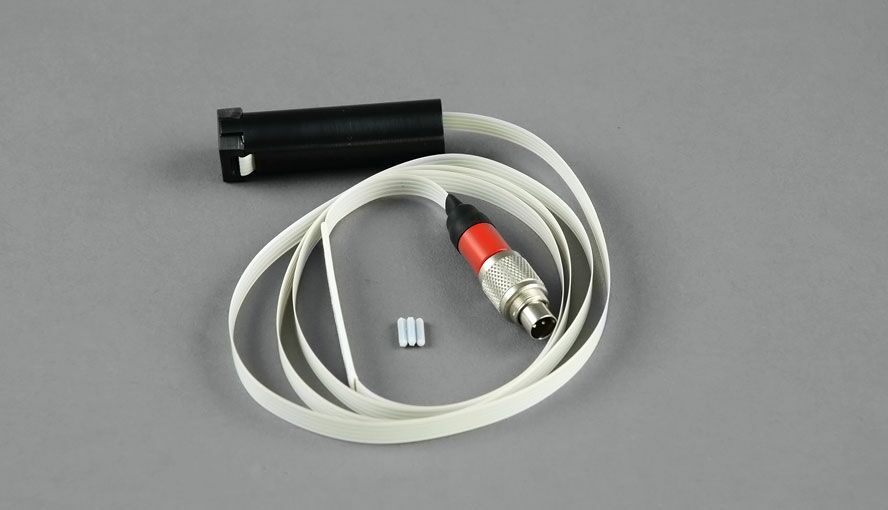
Round stainless steel cuvette (7.5 mm wide, 9.0 mm deep) with top window adapter for connecting the fiberoptics; embedded in PVC body with injection port for Hamilton syringes and hose nozzles for connecting an external flow-through water bath (not included). Including three 6.0 x 1.5 mm magnetic stir bars
General Features and Graphical User Interface
The DualPAM software has been optimized for user-friendliness and efficient management of dual channel measurements. The software automatically calculates classical fluorescence ratio parameters as well as more recently suggested fluorescence parameters which consider energy transfer between photosystem II units.
Further, the software executes saturation pulse analysis of photosystem I to derive information on the use of energy in this photosystem (Klughammer and Schreiber, 1994, Planta 192: 261-268).


The simultaneously measured fluorescence and P700 responses reflect the interplay of the consecutive light reactions of PS II and PS I that are connected via the intersystem electron transport chain. The same transthylakoidal ΔpH that induces nonphotochemical quenching of Fm' with respect to Fm, causes P700 oxidation. After light activation of CO2 fixation and subsequent ATP consumption in the Calvin-Benson cycle, the ΔpH relaxes, as indicated by parallel re-reduction of P700 and relaxation of nonphotochemical quenching (increase of Fm').
Analysis of PS I parameters is based on a special routine for assessment of the maximal P700 change (Pm determination), which involves pre-illumination by far-red (or blue in case of cyanobacteria) and a saturation pulse that induces maximal P700 oxidation followed by full reduction. The Pm determination is analogous to Fo, Fm determination. Note: P700 signal quality matches that of fluorescence even at high time resolution and signal drift is negligibly small. Hence, using the Dual-PAM-100 the P700 signal is fully equivalent to the fluorescence signal.
The Dual-PAM-100 combines high flexibility of pre-programmed measuring parameters with user friendly software. For example, a special SP trigger window is provided for programming the saturation pulse for simultaneous P700 and fluorescence analysis. Triggering events can be programmed with 2.5 µs resolution. Note: For different applications an unlimited number of trigger files and user settings files can be saved. In this way all instrument settings can be reliably reproduced at any time in future experiments.
Based on the original concept of excitation energy partitioning of Kramer et al. 2004 (Photosynth Res 79: 209-218) three complementary quantum yields are defined for PS I in analogy to PS II:
- Y(I) = 1 - Y(ND) - Y(NA)
- Y(I), photochemical quantum yield of PS I
- Y(ND), quantum yield of nonphotochemical energy dissipation in PS I due to donor side limitation
- Y(NA), quantum yield of nonphotochemical energy dissipation in PS I due to acceptor side limitation
- Y(II) = 1- Y(NPQ) - Y(NO)
- Y(II), photochemical quantum yield of PS II
- Y(NPQ), quantum yield of regulated energy dissipation in PS II
- Y(NO), quantum yield of non-regulated energy dissipation in PS II
The simultaneously measured quantum yields Y(I) and Y(II) are automatically plotted against each other in the yield plot window. The depicted example is based on the original slow kinetics recording of the dark-light induction curve in Fig. 1. Any deviation of the plotted points from the 1:1 line reflects an apparent imbalance of the two photosystems, undergoing dynamic changes during the light induction process.
All data are automatically saved in an extensive report file, from where they can be stored on hard disk or exported into a spread-sheet program (like Excel). All changes of settings are documented. The report includes slow kinetics recordings as well as the fast kinetics files for each individual saturation pulse, thus allowing very thorough analysis of the saved data. The report can be edited by the user. Explanatory comments can be added.
Light response curves provide detailed information on electron transport capacity and limitations of the two photosystems. Various fluorescence and P700 parameters may be selected for display on the light curve window. Differences between quantum yields, Y(I) and Y(II) and between apparent electron transport rates, ETR(I) and ETR(II), may be related to cyclic electron flow, differences in energy distribution and/or PS I/PS II ratio. The DualPAM software also supports special “Light Curves” involving the automated assessment of Fast Kinetics as a function of the state of illumination.
The polyphasic fluorescence rise upon onset of continuous saturating light is measured at maximal frequency (400 kHz) of pulse-modulated measuring light in the single channel fast acquisition mode. The various rise phases (Fo-I1, I1-I2 and I2-Fm) reflect different electron transfer steps in PS II. The trigger settings for switching on/off measuring light and maximal frequency are pre-programmed for optimal performance (see Fig. 3). The Dual-PAM-100 offers a special routine to pre-oxidize the PQ-pool by defined far-red preillumination in order to assure reliable assessment of fluorescence parameters. Without definition of the PQ redox state interpretation of the polyphasic rise is problematic. On the other hand, by comparison of the kinetics +/- FR the momentary PQ redox state can be evaluated.
A log time scale can be applied for assessment of the rapid part of the polyphasic fluorescence rise. The Fo level is displayed as a pronounced step. At the given intensity of the saturating light the half-rise time of Fo-I1 (photochemical phase) is about 100 µs. The I1 level is characterized by another pronounced step, followed by the "thermal" I1-I2 and I2-Fm phases. Evaluation of the various phases provides valuable information on the optical cross-section of PS II and the state of donor and acceptor sides. The Fo, I1, I2 and Fm levels are analogous to the O, J, I and P-levels defined by Strasser and co-workers. These levels, however, are not necessarily identical, due to technical differences between the applied devices (fluorescence excitation, intensity of saturating light etc.).
Besides standard induction curves (see Fig.1) and manually controlled “chart recordings”, the Dual-PAM-100 also supports so-called triggered runs, which involve the triggering of various light sources at defined times after run-start. Triggered runs can be derived from manually triggered recordings and edited by the user. Fig.10 shows a triggered run of a P700 measurement for assessment of the intersystem pool size involving single and multiple turnover flashes in the presence of far-red background light. In addition, the DualPAM software also allows to program more extended so-called script files, which may involve all actions that can be carried out manually (i.e. also switching between different modes of data acquisition, measuring induction/light curves and fast kinetics etc.).
Usage
Highlights
- Red, blue, and far-red actinic light. Saturating single and multiple turnover flashes.
- All light sources can be switched with 2.5 μs time resolution under software control.
- Saturation pulse method for photosystem I analysis.
- Klughammer-Flux method to determine the number of electrons flowing through a PSI reaction center per time.
- Fully programmable using script files. Macro recorder for easy programming of triggered run tables.
Downloads
- Software: DualPAM_v343_Software
- Manuals & Documentation: DUAL-PAM-100 MODULAR/FIBER Manual
- Manuals & Documentation: NADPH-AO Manual