MICRO-PAM

Version:

Product

Compact Fluorometer for Long-term Monitoring of Photosynthesis
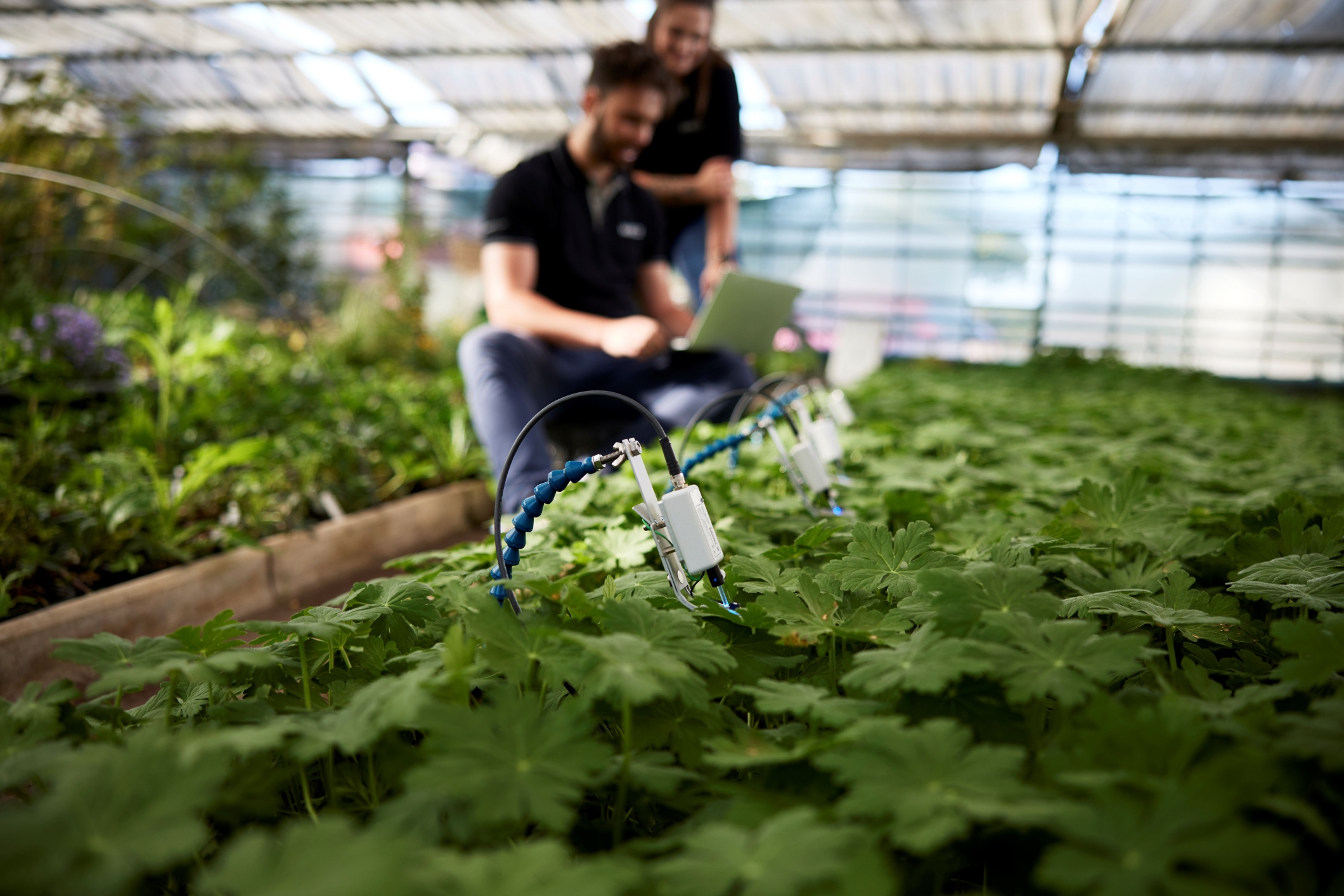
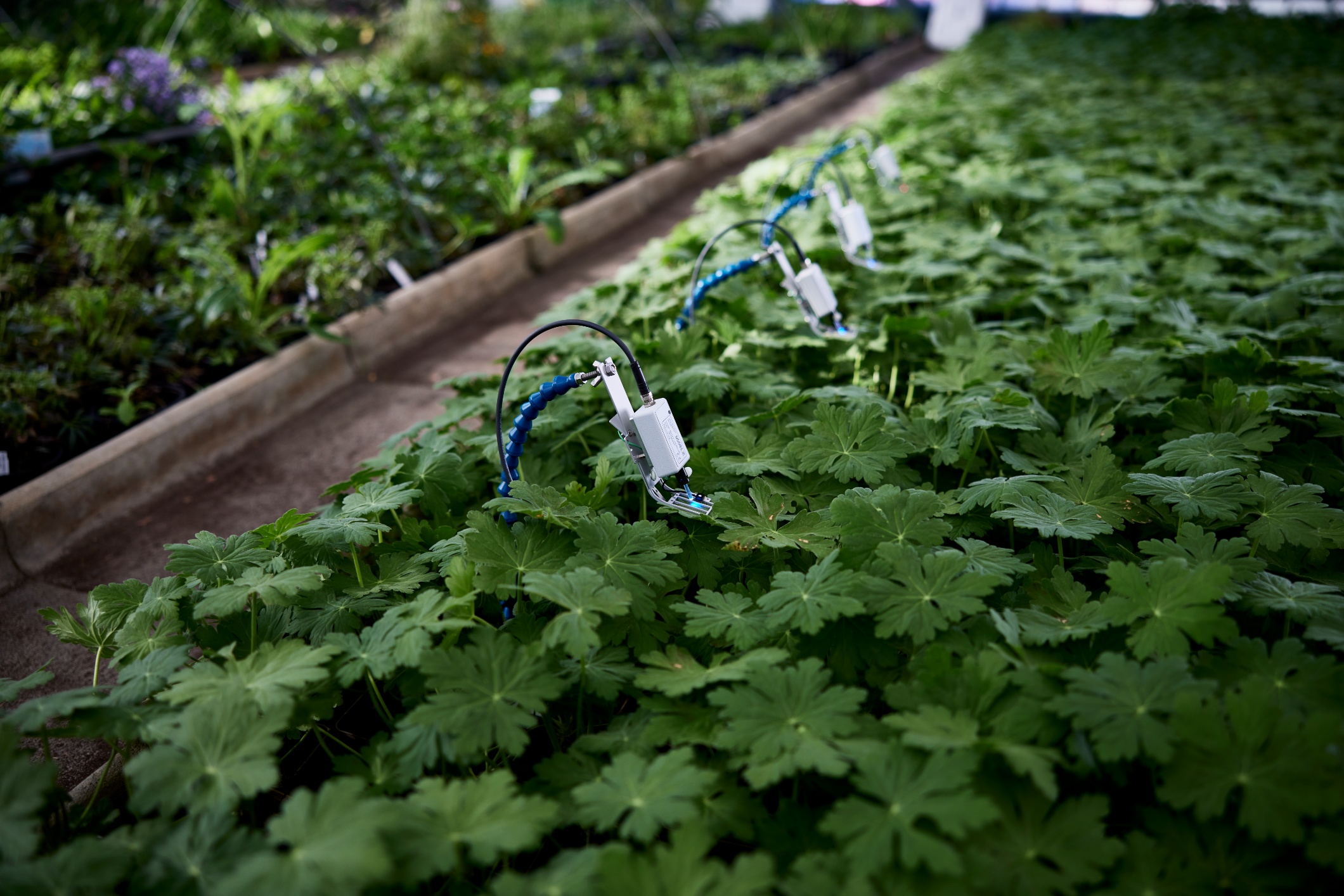
A MICRO-PAM system involves several light-weight chlorophyll fluorometers for field use. Being capable of multi-site monitoring of photosynthesis over weeks and months, the MICRO-PAM is tailored to study plant responses to environmental changes in nature and under controlled conditions. Due to its compact measuring heads, the MICRO-PAM is suited for smaller samples than those typically probed by the established MONITORING-PAM.

Originally, the MICRO-PAM has been developed to measure photosynthesis of lichens growing on rocks or in biological soil crusts. The actual field of application includes herbaceous plants, shrubs and trees. In addition to determining photosynthesis yield by the saturation pulse technique, the measuring heads record light intensity and temperature by external sensors, and humidity by an internal sensor.

General Features MICRO-PAM

The measuring heads of a MICRO-PAM system are denoted as MICRO-HEAD/3B where the “3” specifies the diameter in mm of the light guide and the “B” stands for the blue color of measuring and actinic light. An extra long light guide for immersed samples is available.

The MICRO-HEAD/3B possesses a blue power LED with maximum emission at 465 nm and a full width at half maximum of 22 nm. The maximum actinic light intensity at sample level is 3000 μmol m-2 s-1, the maximum saturation pulse intensity is 8000 μmol m-2 s-1.

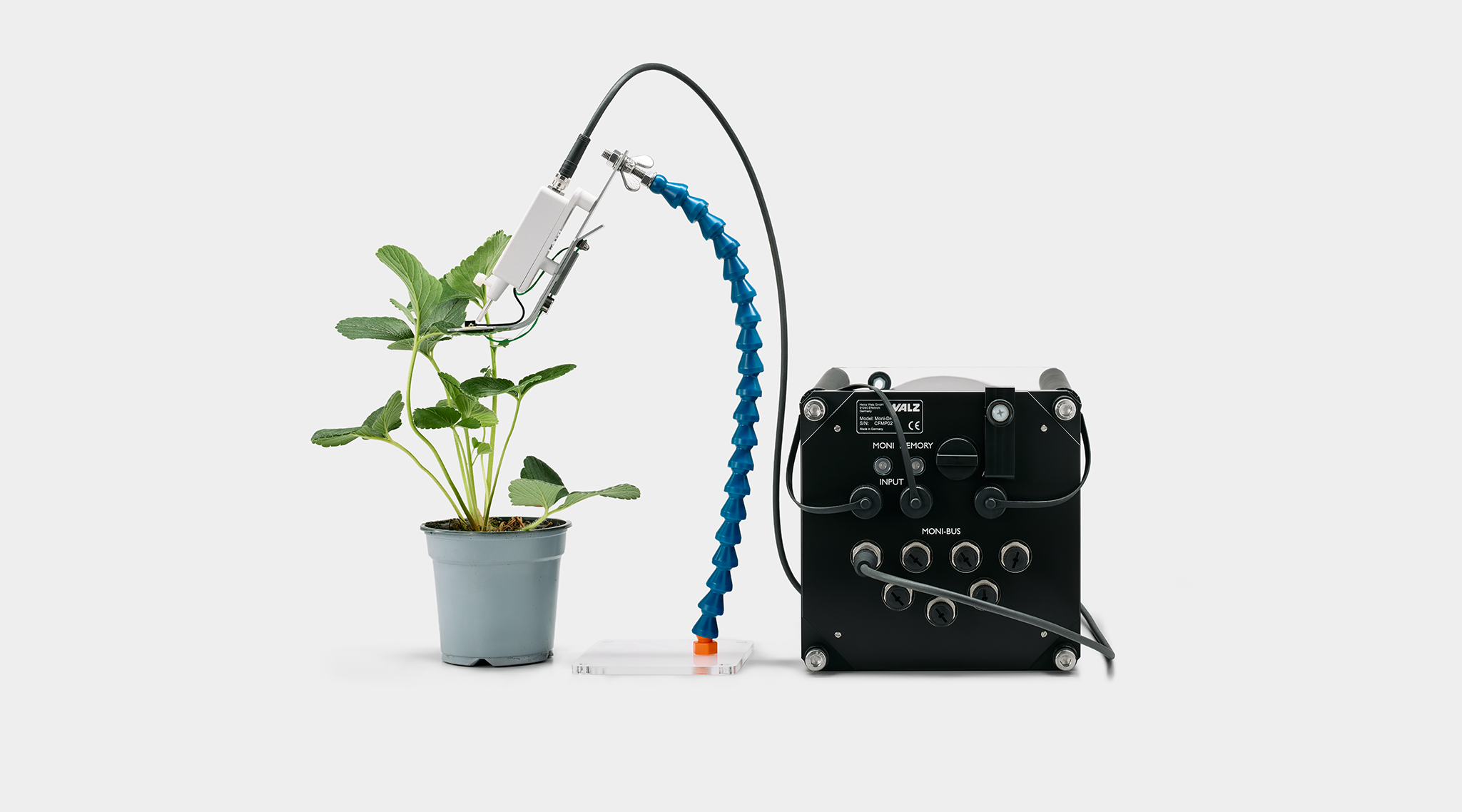
The MICRO-HEAD/3B is equipped with a sample clip. A cosine-response PAR sensor is positioned parallel to the sample plane. A thermocouple touching the lower sample side measures temperature. Humidity is measured by a capacitive-type sensor located inside the fluorometer housing. On request, a special stand will be provided to mount the MICRO-HEAD/3B on solid surfaces.

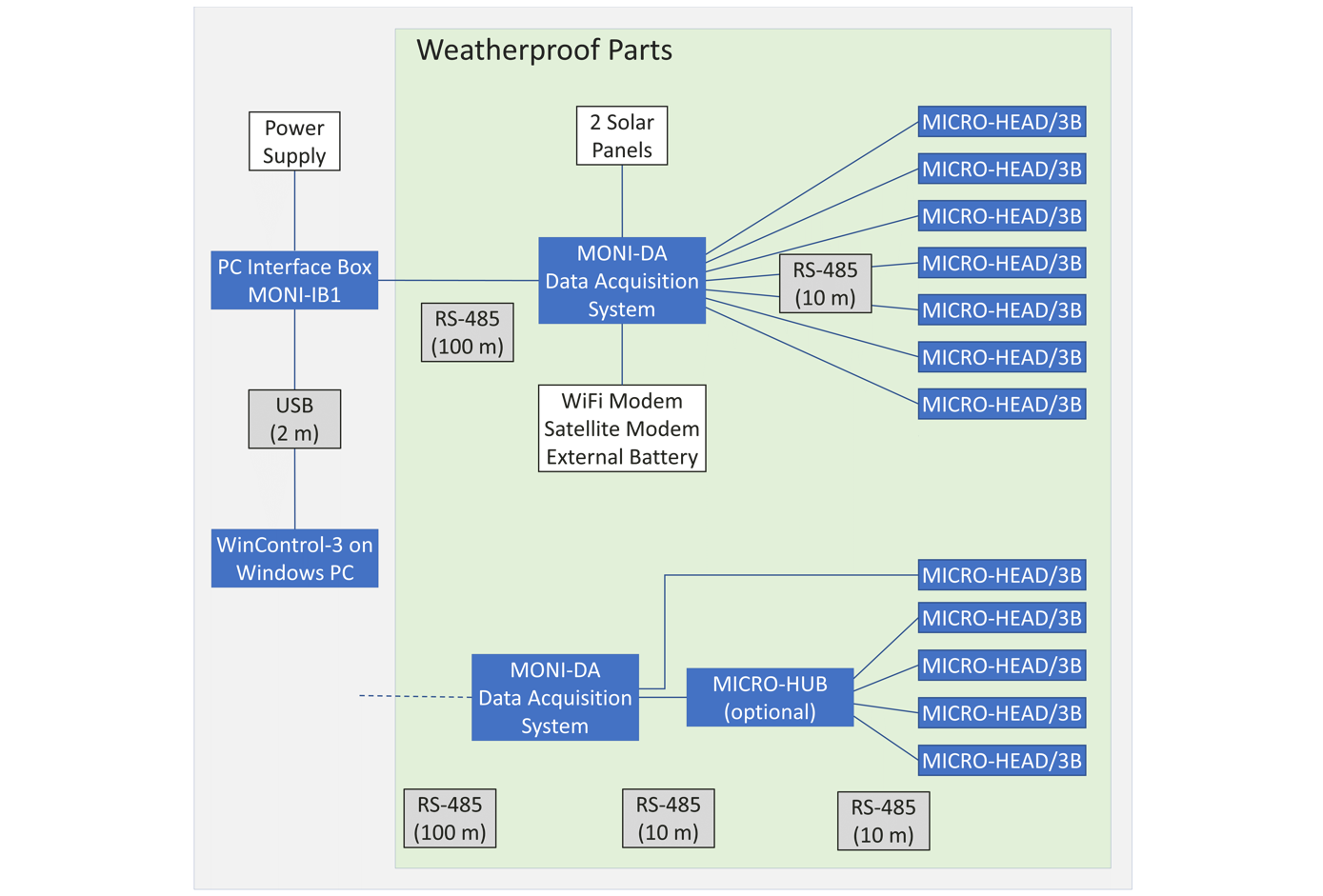
MICRO-PAM systems can be operated in the ONLINE configuration in which up to four measuring heads can be connected via the MONI-IB4/LAN PC Interface Box to an USB port of a Windows computer running WinControl-3. In the OFFLINE configuration, measuring heads are connected directly or via the so-called MINI-HUB to a MONI-DA data acquisition system.

Online and Offline Operation

The MICRO-PAM supports two configurations. In online mode, up to four heads connect via the MONI-IB4/LAN Interface Box to a Windows computer running WinControl-3 — ideal for greenhouse or laboratory setups with real-time data display. In offline mode, heads connect to a MONI-DA data acquisition system for autonomous field deployments with data retrieval via WiFi modem.

Comparing Monitoring Systems

System

MICRO-PAM

MONI-PAM

Measuring Head

MICRO-HEAD/3B

MONI-HEAD/485

Weight

96 g

205 g

Volume

189 cm3

365 cm3

PAR Sensor

External

Internal

Temperature Sensor

External (Thermocouple)

Internal

Humidity Sensor

Internal

Absent

Optical Pathway

Fiber

Lens

Weather Resistance

Coating of electronic circuitry to protect against moisture

Waterproof Housing

Underwater Version

Not available

Available

Power Consumption

3 W during SPmax

7 W during SPmax

Cold-acclimation of Leaves

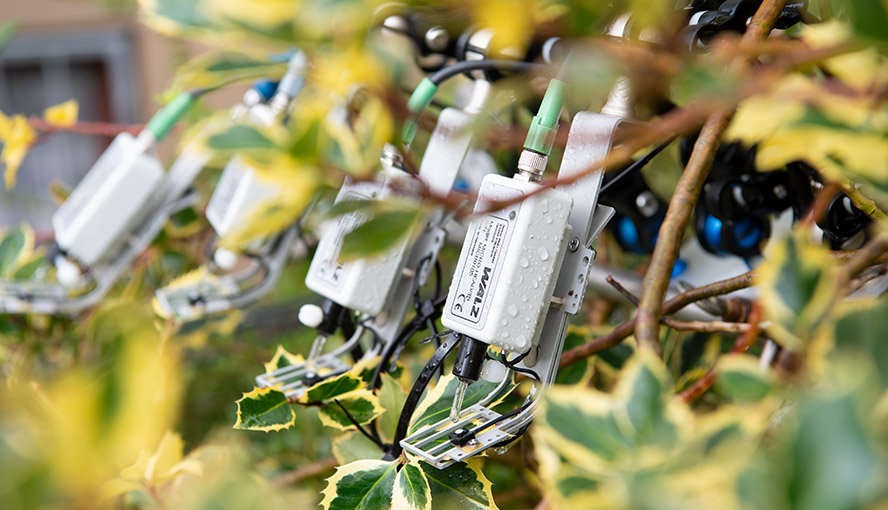
A MICRO-PAM system was used to monitor acclimation of photosystem II to decreasing temperature in fall. Outdoor experiments were performed with leaves from holly (Ilex aquifolium) from October 9 to November 6, 2019. Position: latitude: 49.656564 | longitude: 11.09793.

During the monitoring period, the maximum FM’ showed a tendency to decrease and exhibited lowest values between days 20 and 24 (Fig. 1). On average, the PAR was higher at the initial part of the experiment compared to the final part, but a decrease comparable to the FM’ was not observed (Fig. 2).

Temperature showed a tendency to decrease. As observed for FM’, minimum values were recorded between das 20 and 24 (Fig. 3).

Analyzing the relationship between maximum FM’ and minimum temperatures by linear regression yielded a coefficient of determination of 0.6 (Fig. 4), suggesting that the two parameters are related to each other. Sustained non-photochemical quenching might be a factor involved in this fluorescence/temperature relationship.

Lichen Photosynthesis (MICRO-PAM Prototype)

Prototypes of the measuring heads MICRO-HEAD/3B have been successfully employed to monitor photosynthesis of lichens growing under extreme climate conditions. Experimental sites include Tierra del Fuego and the Antarctica.

The poster below describes the experimental setup and shows long-term data of PAR, temperature, photosystem II yield and calculated electron transport rate.

Download Poster (PDF)

Scientific Publications using Walz Devices

Source: Google Scholar.
Keywords: (Walz OR Waltz) Effeltrich.
Date: June 22, 2026.

Ʃ = 19642

Per Year

Source: Google Scholar.
Keywords: (Walz OR Waltz) Effeltrich.
Date: June 22, 2026.

Ʃ = 19642

Year

Selected Publications

A novel multilayer cultivation strategy improves light utilization and fruit quality in plant factories for tomato production

Furuta H, Qu Y, Ishizuka D, Kawabata S, Sano T, Yamori W

Field integration of shoot gas-exchange and leaf chlorophyll fluorescence measurements to study the long-term regulation of photosynthesis in situ

Oivukkamäki J, Aalto J, Pfündel EE, Tian M, Zhang C, Grebe S, Salmon Y, Hölttä T, Porcar-Castell A

Tree Physiology 45: tpae162

Go to publication

Harnessing LED technology for consistent and nutritious production of large-fruited tomatoes

Qiu N, Shen H, Ishizuka D, Yatsuda K, Kawabata S, Qu Y, Yamori W

HortScience 60: 1851-1859

Go to publication

Modulation of phenology and agronomical performance of Syrah grafted on rootstocks under combined salinity and water stress conditions: a three-year field study

Reta K, Lupo Y, Persi NS, Lazarovitch N, Fait A

Plant Stress 18: 101050

Go to publication

The ECOSENSE forest-enriching tower-based flux measurements of carbon and water exchange with novel distribute sensor networks

Sulzer M, Brzozon J, Christen A, Dedden L, Dormann CF, Dumberger S, Frey Y, Gassilloud M, Göritz A, Grote R, Haberstroh, Kattenborn T, Kremer L, Kreuzwieser J, Kühnhammer K, Lang F, Lee H, Müller J, Schack-Kirchner H, Seifert T, Stock C, Strack J, Tesch J, Wagner D, Wallrabe U, Weiler M, Werner C

ARPHA Conference Abstracts 8: e149267

Go to publication

Evaluation of comprehensive alkali resistance in tomato germplasm seedlings

Wang X, Song J, Fan W, He Z, Zhang X

Euphytica 221: 137

Go to publication

Novel methods facilitating the mechanistic interpretation of multiscale optical remote sensing measurements.

Oivukkamäki J

Dissertationes Forestales 349

Go to publication

Sinusoidal LED light recipes can improve rocket edible biomass and reduce electricity costs in indoor growth environments.

Stamford JD, Hofmann TA, Lawson T

Frontiers in Plant Science 15: 1447368

Go to publication

Effects of exogenous melatonin on Chrysanthemum physiological characteristics and photosynthesis under drought stress.

Luo Y, Hu T, Huo Y, Wang L, Zhang L, Yan R

Horticulturae 9: 106

Go to publication

Performance of singular spectrum analysis in separating seasonal and fast physiological dynamics of solar-induced chlorophyll fluorescence and PRI optical signals.

Biriukova K, Pacheco-Labrador J, Migliavacca M, Mahecha MD, Gonzalez-Cascon R, Martín MP, Rossini M

Journal of Geophysical Research: Biogeosciences 126: e2020JG006158

Go to publication

Characterization of river biofilm responses to the exposure with heavy metals using a novel micro fluorometer biosensor.

Carafa R, Lorenzo NE, Llopart JS, Kumar V, Schuhmacher M

Aquatic Toxicology 231: 105732

Go to publication

Metabolic activity duration can be effectively predicted from macroclimatic data for biological soil crust habitats across Europe.

Raggio J, Green TGA, Sancho LG, Pintado A, Colesie C, Weber B, Büdel B

Geoderma 306, 10-17

Go to publication

In situ monitoring of microclimate and metabolic activity in lichens from Antarctic extremes: a comparison between South Shetland Islands and the McMurdo Dry Valleys.

Raggio J, Green TGA, Sancho LG

Polar Biology 39: 113-122

Go to publication

MICRO-PAM

Housing
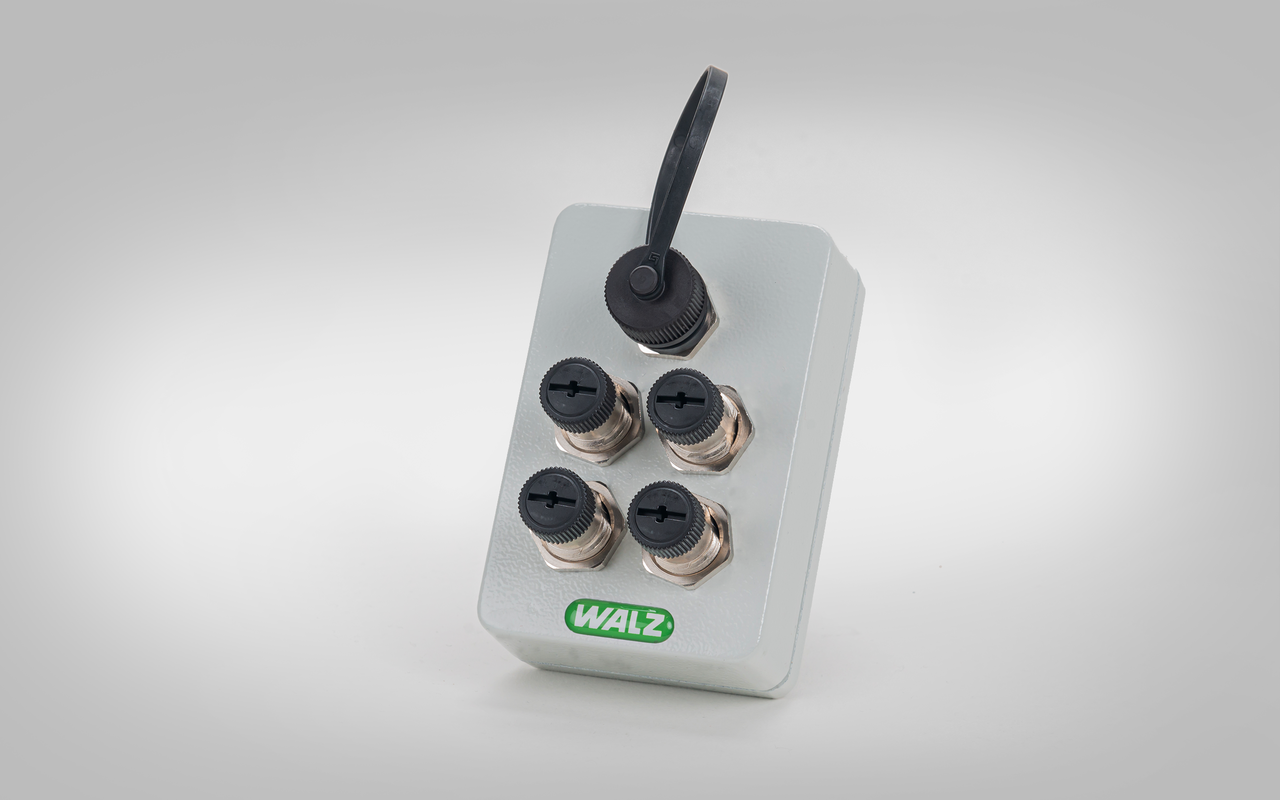
Aluminum case with RS-232, USB-B, Ethernet, power supply sockets, and four M12 5-pole sockets for RS-485 communication
Interfacing
The interface box connects a computer with up to four MICRO-HEAD/3B (or one MONI-DA). RS-485 serial data communication is used between interface box and MICRO-HEAD/3B or MONI-DA. RS232, USB or Ethernet communication is used between interface box and computer
Recommended maximum cable lengths
To computer via USB and RS-232: 2 m. To computer via Ethernet, 100 m. To MICRO-HEAD/3B via RS-485: 10 m. To MONI-DA via RS-485, 100 m
Dimensions
12 x 9.3 x 3 cm (L x W x H)
Weight
400 g
Operating temperature
0 to +40 °C
Power supply
Input: 100 to 240 V AC, 50 to 60 Hz. Output: 19 V DC, 3.7 A. Dimensions: 13.2 x 5.8 x 3 cm (L x W x H). Weight: 310 g
General design
Housing
Polymer housing with optical block and fiber connector on one side, and a combined power line/RS485 socket on the opposite side
MICRO-HEAD/BK Leaf Clip
Consisting of 2 aluminum frames (3.5 x 2.5 cm), held together by magnet, 0.4 cm distance between sample plane of leaf clip and lightguide, angle between sample plane and optical light guide: 60°
Cables
RS 485 data/power cable, 10 m standard length, connecting MICRO-HEAD/3B and MICRO IB4 PC Interface Box. RS 485 adapter cable, 0.6 m long, to connect MICRO-HEAD/3B to optional PC Interface Box MONI IB4/LAN or to optional MONI DA system for data acquisition
Flexible stand
Baseplate of acrylic glass 10 x 10 x 0.5 cm (L x W x H); flexible goose neck consisting of 20 links, 1.7 cm maximum diameter, 30 cm length, one end with metal thread equipped with 1 butterfly nut, 1 nut and 2 washers. Weight 114 g
Dimensions
Complete head with leaf clip, 13.5 x 3.5 x 4 cm (L x W x H)
Power consumption
Peak loads during saturating pulses 3 W. During measuring mode 0.15 W
Operating temperature
-15 to +40 °C
Weight
96 g
Light Emission
Modulated fluorescence excitation
Blue power LED (typical peak wavelength 460 nm, full width at half maximum 22 nm). Photosynthetically active radiation (PAR) of measuring light at level of the sample clip range from 0.15 to 1.5 μmol m-2 s-1 at low modulation frequencies (5 to 25 Hz), and from 1.5 to 22.5 μmol m-2 s-1 at high modulation frequencies (100 Hz)
Actinic light
Same power LED as for modulated light. At sample level of leaf clip, 3000 μmol m-2 s-1 maximum PAR of actinic light, 8000 μmol m-2 s-1 maximum PAR of saturating flashes
Sensors
Fluorescence
PIN-photodiode protected by longpass filter (50% transmittance at 645 nm). Selective window amplifier to measure pulse amplitude modulated (PAM) fluorescence.
Photosynthetically active radiation (PAR)
External LS-C sensor for selective PAR measurement, range 0 to 7000 μmol m-2 s-1, cosine-corrected for light incident at angles between -30° to +30° from the surface normal
Temperature
Thermocouple: Ni-CrNi, wire diameter 0.1 mm, -20 to +60 °C
Humidity
Capacitive-type humidity sensor on a specialized analog and digital integrated circuit, 0 - 100% relative humidity
General design
Modulated fluorescence excitation
Amber power LED (typical peak wavelength 598 nm, full width at half maximum 27 nm). Photosynthetically active radiation (PAR) of measuring light at level of the sample clip range from 0.15 to 1.5 μmol m-2 s-1 at low modulation frequencies (5 to 25 Hz), and from 1.5 to 22.5 μmol m-2 s-1 at high modulation frequencies (100 Hz)
Actinic light
Same power LED as for modulated light. At sample level of leaf clip, 3000 μmol m-2 s-1 maximum PAR of actinic light, 8000 μmol m-2 s-1 maximum PAR of saturating flashes
Further specifications
Same as Measuring Head MICRO-HEAD/3B
Housing
Robust water-proof cylinder consisting of a polyvinyl chloride (PVC) tube and poly-oxymethylene (POM) endplates. One endplate with 2 male M12 5-pole sockets connected in parallel (MONI-IB4/LAN communication, charging voltage), one male M12 5-pole socket for auxiliaries, and 7 female M12 5-pole sockets (MICRO-PAM measuring head communication)
Dimensions
Cylinder with diameter of 16 cm and length of 24 cm
Data management
Dual data storage on internal 8 MByte circular flash buffer and an industrial grade 512 MByte removable microSD flash card. Wireless data transfer via cellular phone or satellite modem. Online data transfer using RS-485 serial data communication.
Power consumption

5 mW in standby mode. Operating mode, depends on the number of MONI-PAM measuring heads connected (see MONI-HEAD/485 power consumption)

Battery
12 V / 7.5 Ah (96 Wh) LiFePO4 battery.
Operating temperature
-30 to +60 °C
Weight
5.4 kg
Program

WinControl-3 System Control and Data Acquisition Program (Microsoft Windows 10/11) for operation of measuring system via PC, data acquisition and analysis. Not compatible with Windows 10 on ARM

Measured parameters
Ft, F0, FM, F, F0' (also calculated), FM'. Calculated: F0' (also measured), FV/FM and Y(II) (maximum and effective photochemical yield of PS II, respectively), qL, qP, qN, NPQ, Y(NPQ), Y(NO) and ETR (electron transport rate). Fitting Routines: Two routines for determination of the cardinal points α, Ik and ETRmax of light curves
Further date acquired
PAR, leaf temperature, humidity
Additional feature
Automatic determination of signal offset for all light intensities and all gain levels
Communication Protocol
USB
Computer Requirements
Processor, 1 GHz. RAM, 512 MB. Screen resolution, 1024 x 600 pixels. Interface, USB 2.0/3.0
Housing
Aluminum case with USB-B socket, power supply socket, and M12 5-pole socket for RS-485 communication
Links
The interface box connects a computer with a MONI-DA using RS-485 serial data communication. The same line is used to charge the MONI-DA battery. USB communication is used between interface box and computer
Recommended maximum cable lengths
To computer via USB: 2 m. To MONI-DA via RS-485,
100 m
Dimensions
9.7 x 6.3 x 3.5 cm (L x W x H)
Housing
Aluminum case with USB-B socket, power supply socket, and M12 5-pole socket for RS-485 communication
Weight
270 g
Recommended maximum cable lengths
To computer via USB: 2 m. To MONI-DA via RS-485,
100 m
Operating temperature
0 to +40 °C
Design

Two monocrystalline silicon panels. Waterproof and dustproof in accordance with IP 67. Each equipped with 0.9 m cables for the plus and minus poles. Including 2 x 0.4 m adapter for connecting the 2 panels in parallel, a 5 m extension cord, and a 0.4 m adapter for connecting to the AUX or INPUT port of the Data Acquisition System MONI-DA

Electrical characteristics

Vmax, 45.0 V, Imax, 1.14 A, Power 20 W

Dimensions

41.5 x 28.5 x 0.3 cm (L x W x H)

Weight

0.6 kg

Specification depend on available electronic components at the time of order

Program

WinControl-3 System Control and Data Acquisition Program (Microsoft Windows 10 and 11) for operation of measuring system via PC, data acquisition and analysis. Not compatible with Windows 10 on ARM

Saturation Pulse Analysis

Measured: Ft, F0, FM, F, F0’ (also calculated), FM’. Depending on the leaf clip connected, the software can record PAR, temperature and also humidity. [In the case of the MINI-PAM-II clip humidity can be measured, which the clip of the JUNIOR-PAM cannot.]
Calculated: F0’ (also measured), FV/FM and Y(II) (maximum and effective photochemical yield of PS II, respectively), qL, qP, qN, NPQ, Y(NPQ), Y(NO) and ETR (electron transport rate)

Fitting Routines

Two routines for determination of the cardinal points α, Ik and ETRmax of light curves

Programmed Features

Automatic determination of signal offset for all light intensities and gain levels. Automatic calibration of internal PAR sensor against an external PAR sensor connected to the instrument

Computer Requirements

Processor: 0.8 GHz, RAM: 512 MB, screen resolution: 1024 x 600 pixels, interface: USB 2.0/3.0

Communication Protocol

USB

Design

Aluminum box with custom foam packing MICRO-PAM

Dimensions

60 cm x 40 cm x 34 cm (L x W x H);
60 liter

Weight

4.9 kg

Design
Aluminum box with custom foam packing for PAM-CONTROL and accessories
Dimensions
60 cm x 40 cm x 25 cm (L x W x H)
Weight

4,7 kg

Accessories

Design
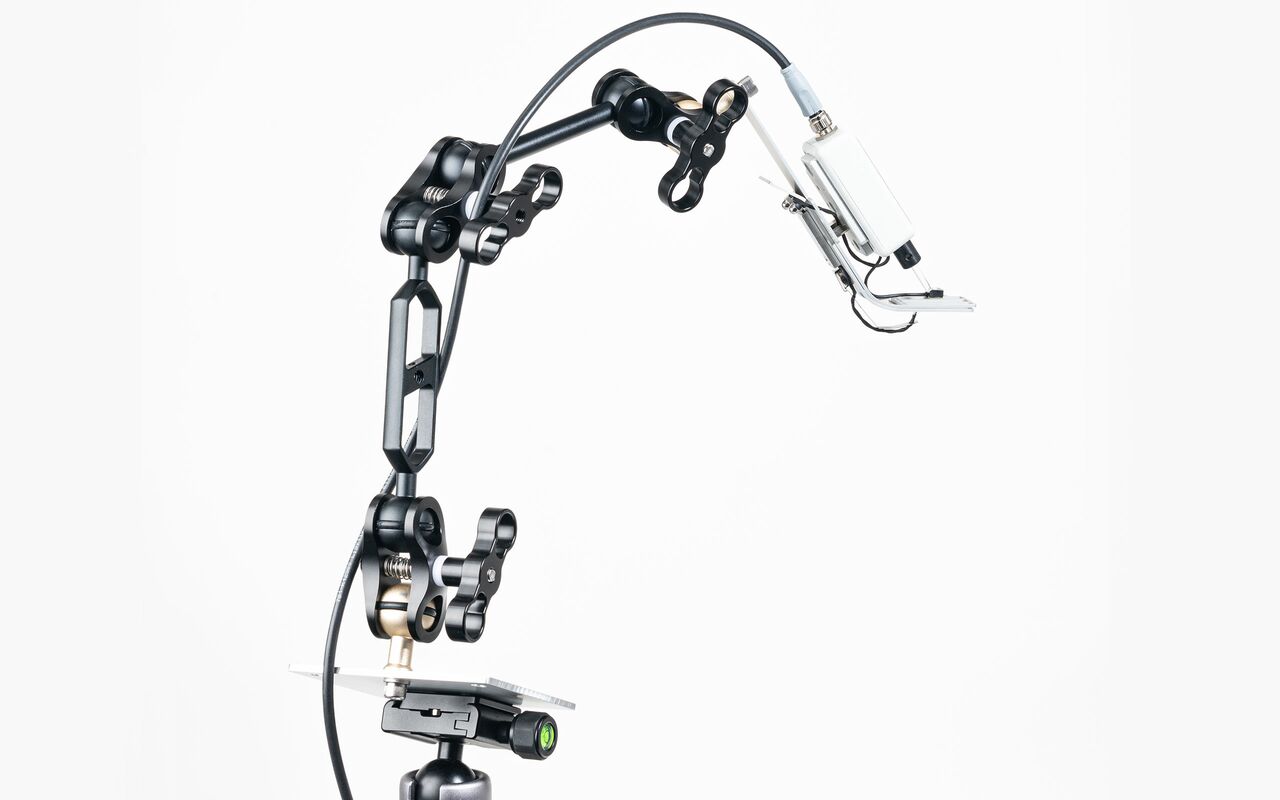
Two double-ball arm segments, two ball end pieces with photo thread (1/4” external), to mount a measuring head and a base plate with photo thread (1/4" internal), respectively.
Dimensions
39 cm (L max.)
Weight
410 g
Housing
Aluminum case with one M12 5-pole connector and four M8 5-pole connectors
Links
The interface box connects up to four MICRO-PAM measuring heads to one single MONI-BUS port of a MONI-DA data acquisition system
Recommended maximum cable lengths
10 m between MICRO-PAM measuring head and MICRO-HUB, and between MICRO-HUB and MONI-DA
Dimensions
10 x 6 x 3.5 cm (L x W x H)
Weight
228 g
Operating temperature
-30 to +40 °C
Recommended maximum cable lengths
10 m between MICRO-HEAD/3B and MICRO-HUB, and between MICRO-HUB and MONI-DA
Design
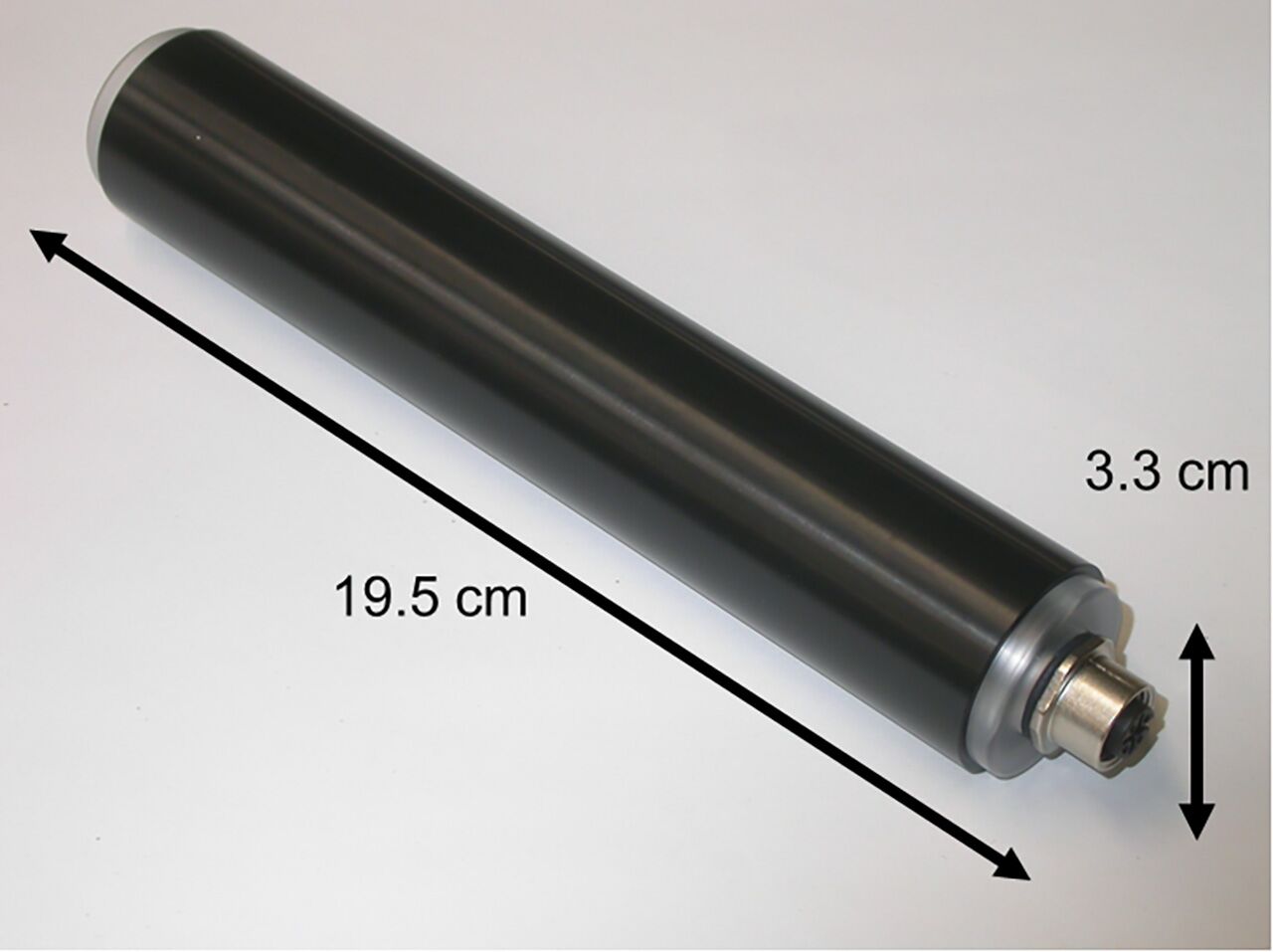
Weatherproof cylinder made of POM (Polyoxymethylene) containing a standard WiFi modul. One endplate made of POM, the other endplate made of Plexiglas with 5-pole M12 plug connector. Includes a 10 m cable to connect the modem to the AUX port of the MONI-DA. Data transfer requires connection to a compatible WiFi network or hotspot (2.4 GHz, IEEE 802.11 b/g/n, WPA2-PSK)
Dimensions
19.5 cm (L) 3.27 cm (Ø)
Weight
140 g (modem), 320 g (cable)

See the MICRO-PAM in action

On June 10, 2026, after 7 years of recording photosynthesis of trees, a new experiment was started. Now, our monitoring station at the Walz headquarters streams live chlorophyll fluorescence data from ivy (Hedera helix). Five MICRO-PAM fluorometers continuously record photosynthetic yield, light intensity, temperature, and humidity - 24 hours a day, 7 days a week.

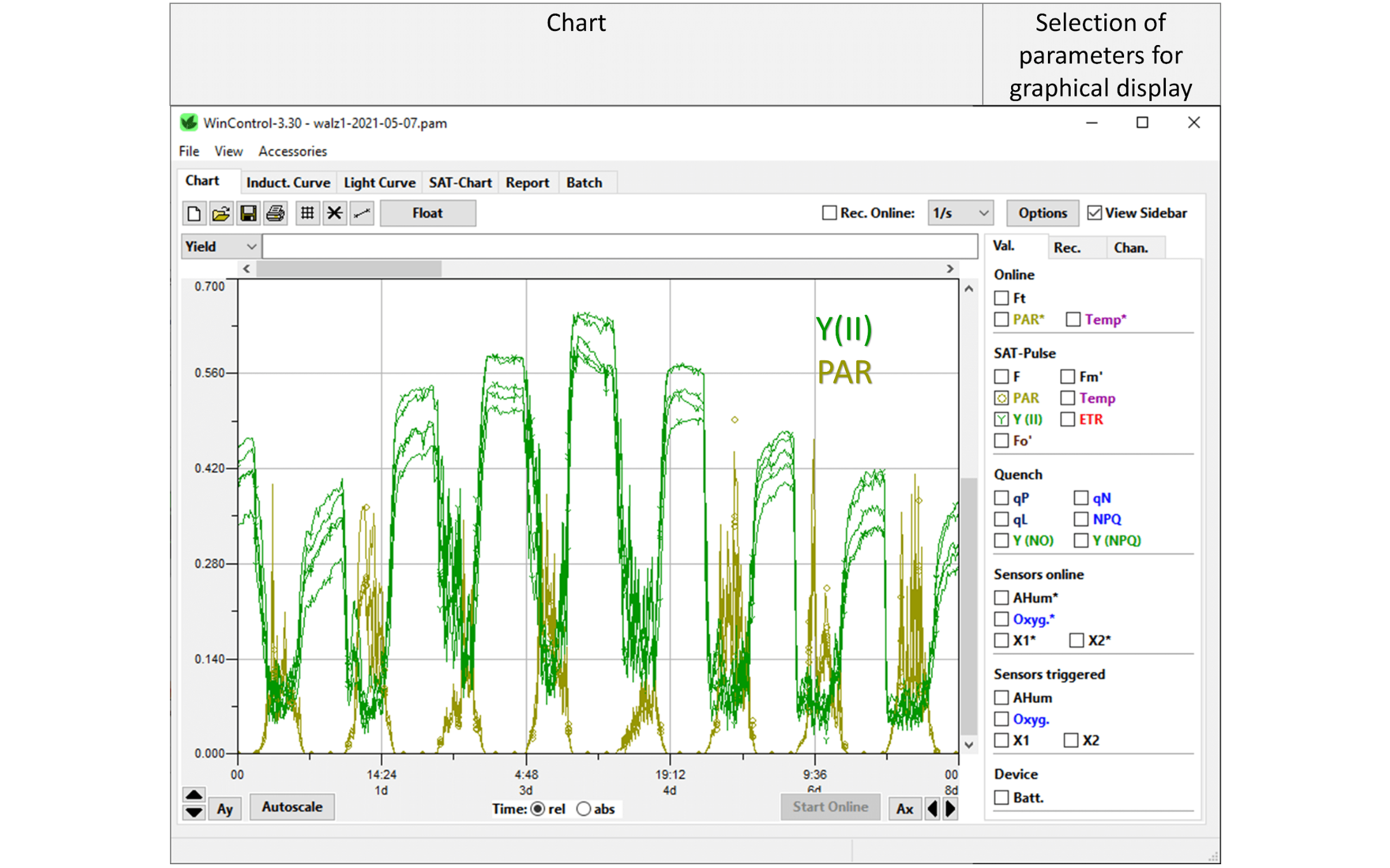
Three types of live graphs are available: Y(II) + PAR, Y(II) + ETR, and Temperature + PAR + Humidity. Data can be downloaded and displayed using the WinControl-3 software.

loading...
Y(II), PAR
Y(II), ETR
Temp., PAR, Hum.
Download
Ch. F Fm' Y(II) PAR 1) ETR 1) Temp. °C Air Hum. %
1) µmol m-2 s-1
Live view at a spot about 10 m distant from the test site.

ONLINE Configuration of MICRO-PAM

In the ONLINE configuration, the MICRO-PAM system is operated by the Software WinControl 3 running on a Windows computer. Up to 4 MICRO HEAD/3B can be connected to a computer USB port using the PC Interface Box MONI-IB4/LAN. The standard cable length between PC Interface Box MONI-IB4/LAN and MICRO HEAD/3B is 10 m.

The PC Interface Box MONI-IB4/LAN permits integration of the Online configuration into a local area network (LAN). The Ethernet port can be located at a distance of up to 100 m away from the MONI-IB4/LAN. For special applications, the interface box also offers RS 232 communication.

STAND-ALONE Configuration of MICRO-PAM

The STAND-ALONE configuration comprises the data acquisition system MONI-DA which permits battery-powered operation of the MICRO-PAM system. The STAND-ALONE configuration includes solar panels allowing data acquisition for very long periods of time independent of line power. An optional modem sends live data to a dedicated server for download by the user.

The Four-Way Distributor MICRO-HUB connects 4 measuring heads MICRO-HEAD/3B to a single port of the MONI-DA. The maximum number of measuring heads MICRO-HEAD/3B per MONI-DA is 16. As the MONI-DA has 7 input ports, the number of 16 is achieved using 3 MICRO-HUB interfaces each connecting 4 measuring heads to the MONI-DA, and linking directly another 4 measuring heads to the MONI-DA.

WinControl-3 Software for MICRO-PAM

General Features and Graphical User Interface

The WinControl-3 is a very versatile software dedicated to operate a certain class of Walz PAM fluorometers. The software executes classical experimental routines like fluorescence induction and light response curves, but also acquires and graphically display data.

WinControl-3 not only operates the MICRO-PAM but also the DIVING-PAM-II, JUNIOR-PAM, MINI-PAM-II, and MONITORING-PAM fluorometers, as well as PAM-CONTROL operated instruments (MICROSCOPY-PAM, MICROFIBER-PAM and WATER-PAM) and the Universal Light Meter ULM-500.

Data Evaluation

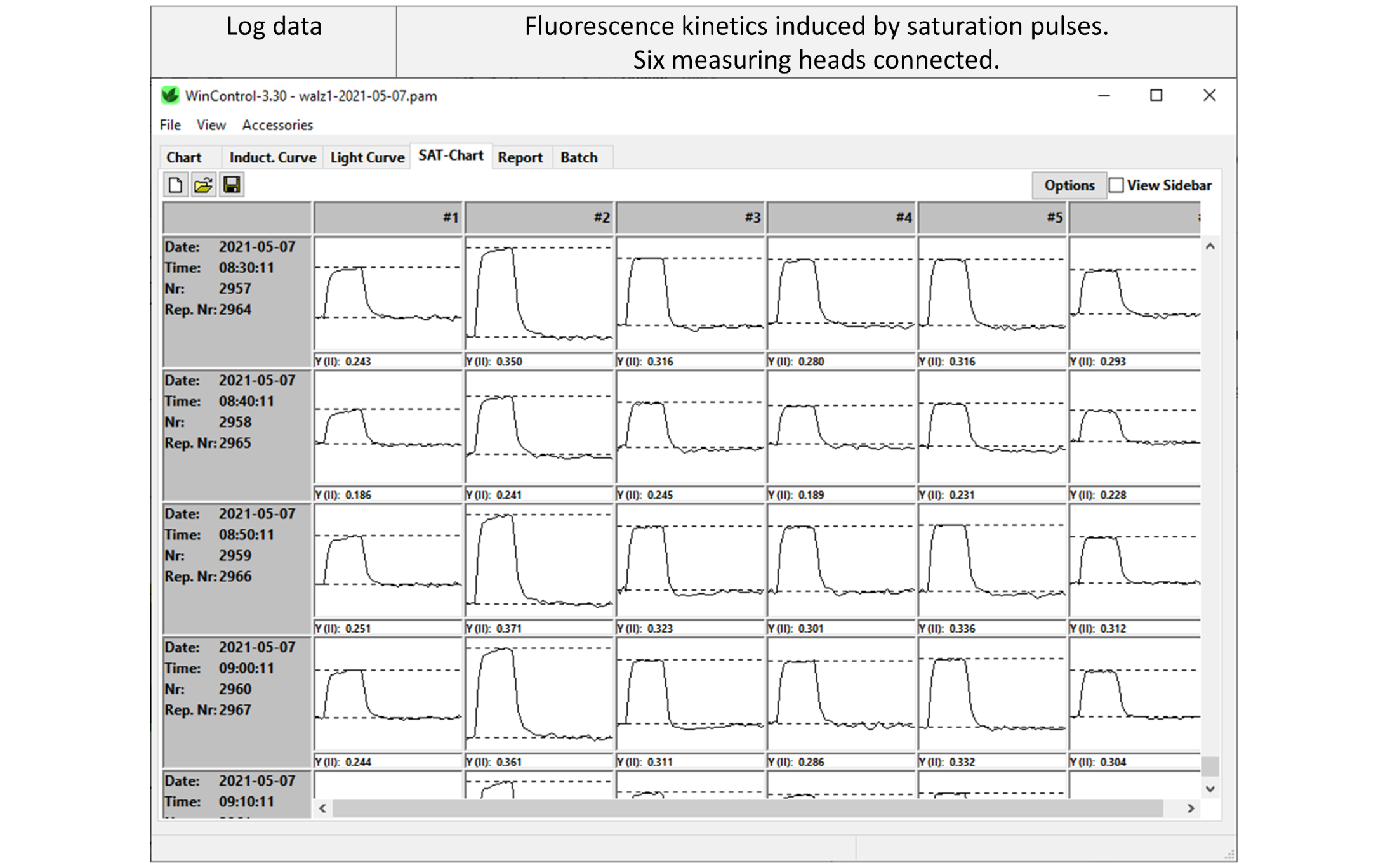
Saturating pulse analysis with automatic detection of fluorescence levels F0, FM, F, and FM’. Calculation of F0’ level fluorescence and of standard fluorescence parameters. Specifically, photochemical yield of photosystem II, FV/FM and Y(II), photochemical quenching, qP and qL, non-photochemical quenching, qN, NPQ, Y(NPQ), and Y(NO), and electron transport rate, ETR.


Advanced Features

All experimental protocols can be performed automatically using the batch file feature of WinControl-3. Convenient programming of experiments using the built-in macro recorder. The software is capable of DDE communication with peripheral machines.


Automated Routines

Repetitive triggering of fluorometer functions (e. g., dark-light induction and dark recovery curves) by adjustable clock. Automatic execution of light exposure protocols and fitting of two different model functions to data of light response experiments.


Data Export

Export of original fluorescence traces, saturating pulse analysis data and parameter estimates of light response curves as semicolon- or tab-separated data.