DIVING-PAM-II (SEO)
Version:
Underwater Fluorometer with Miniature Spectrometer
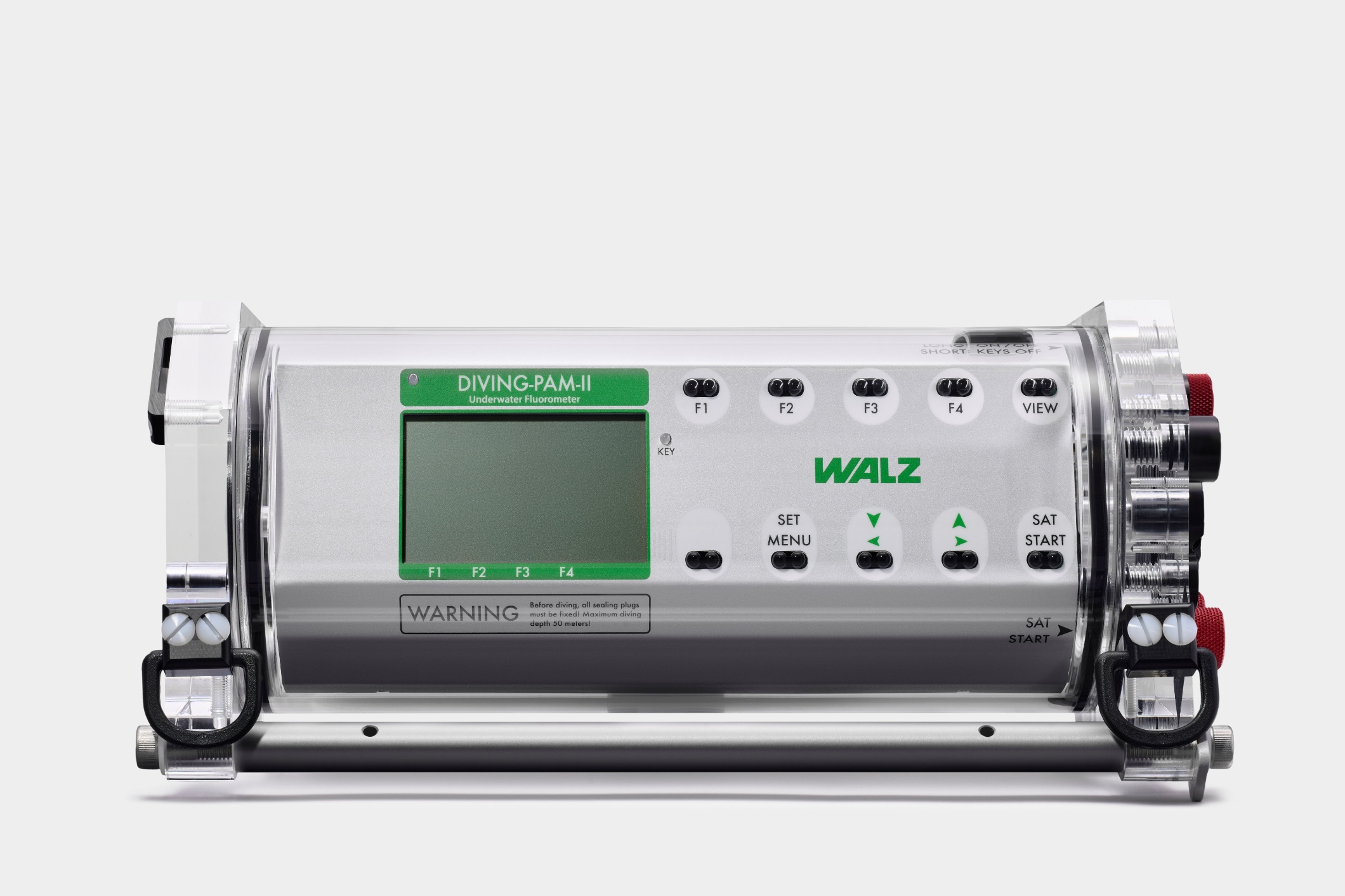
Measuring Photosynthesis Underwater
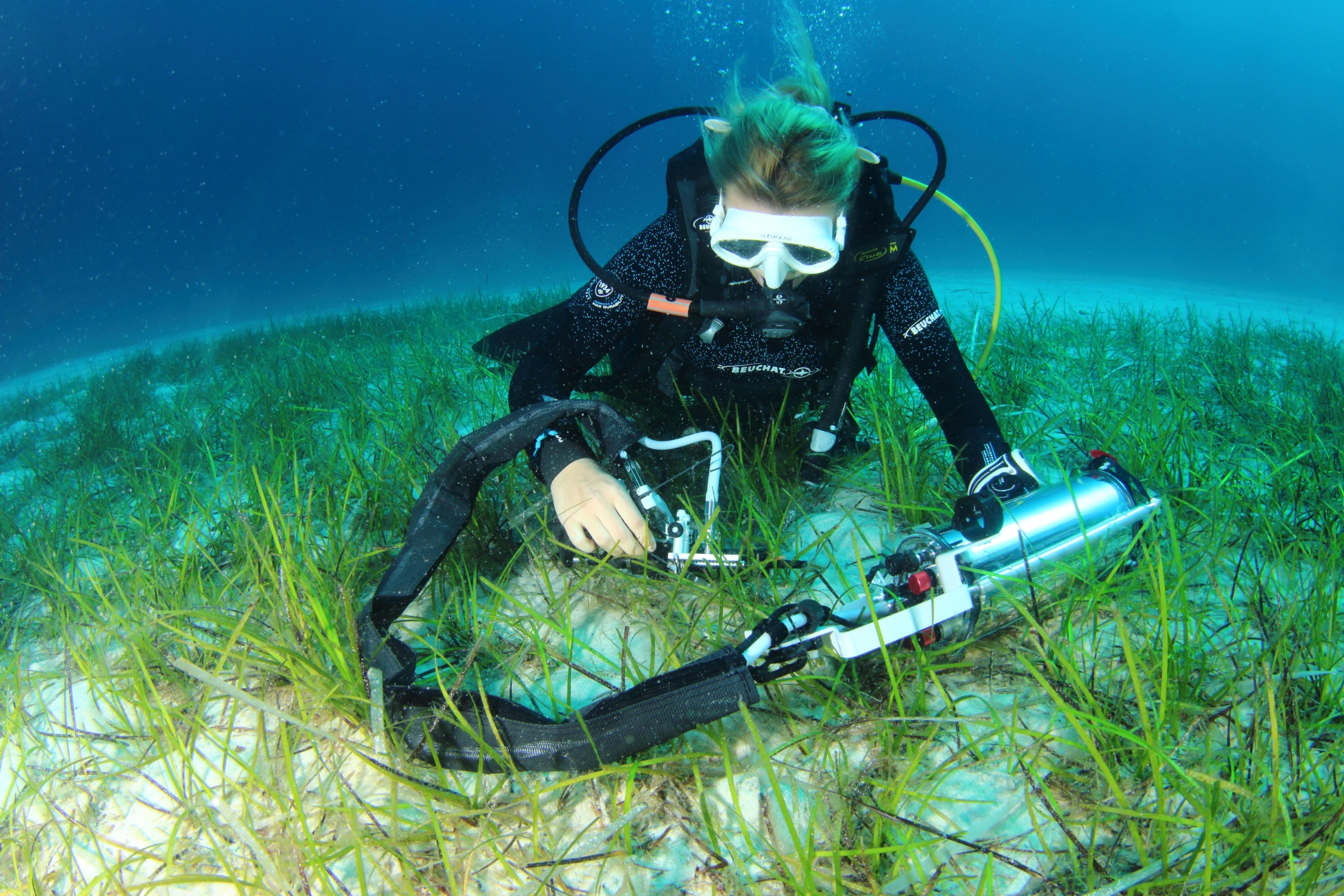
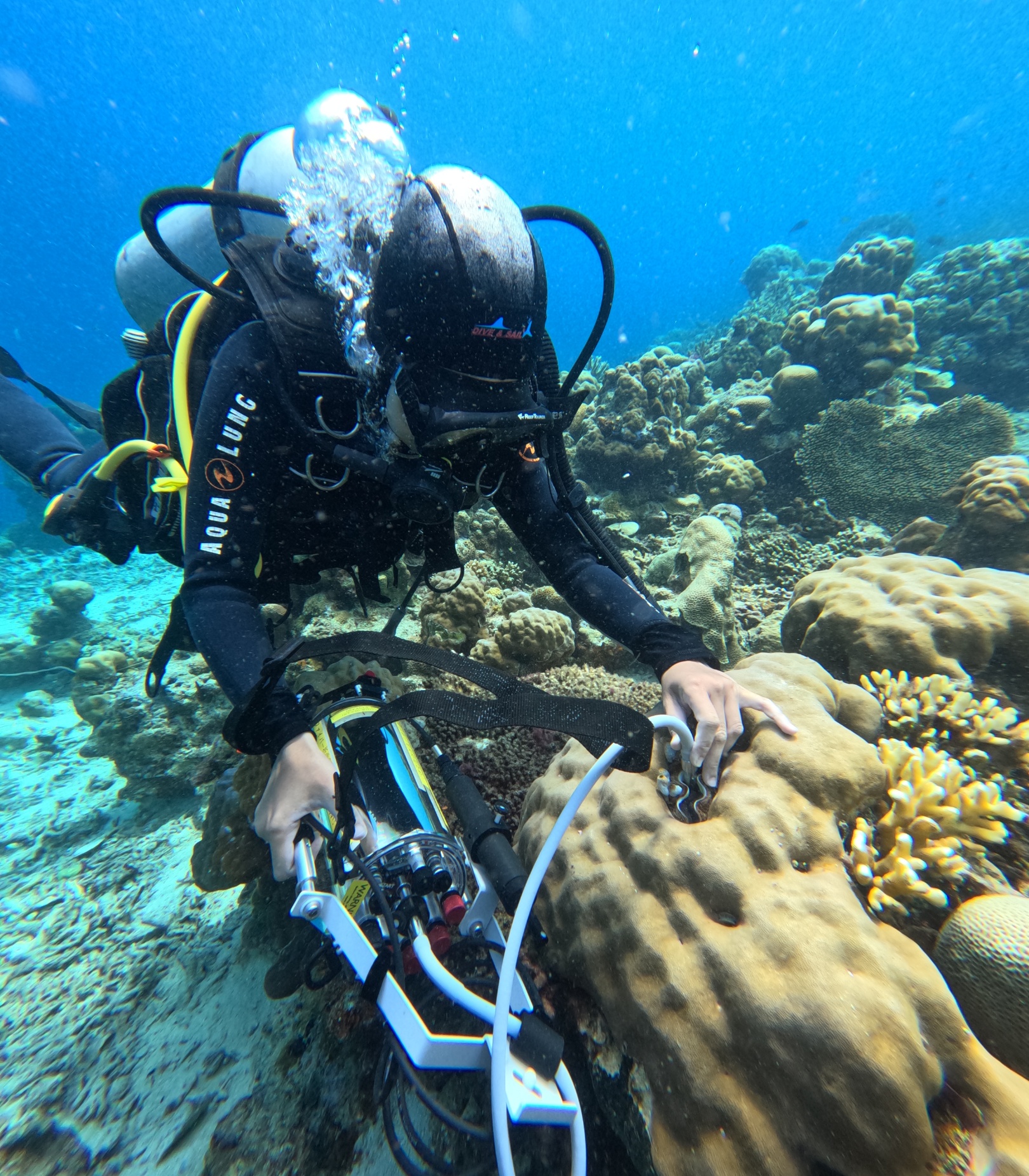
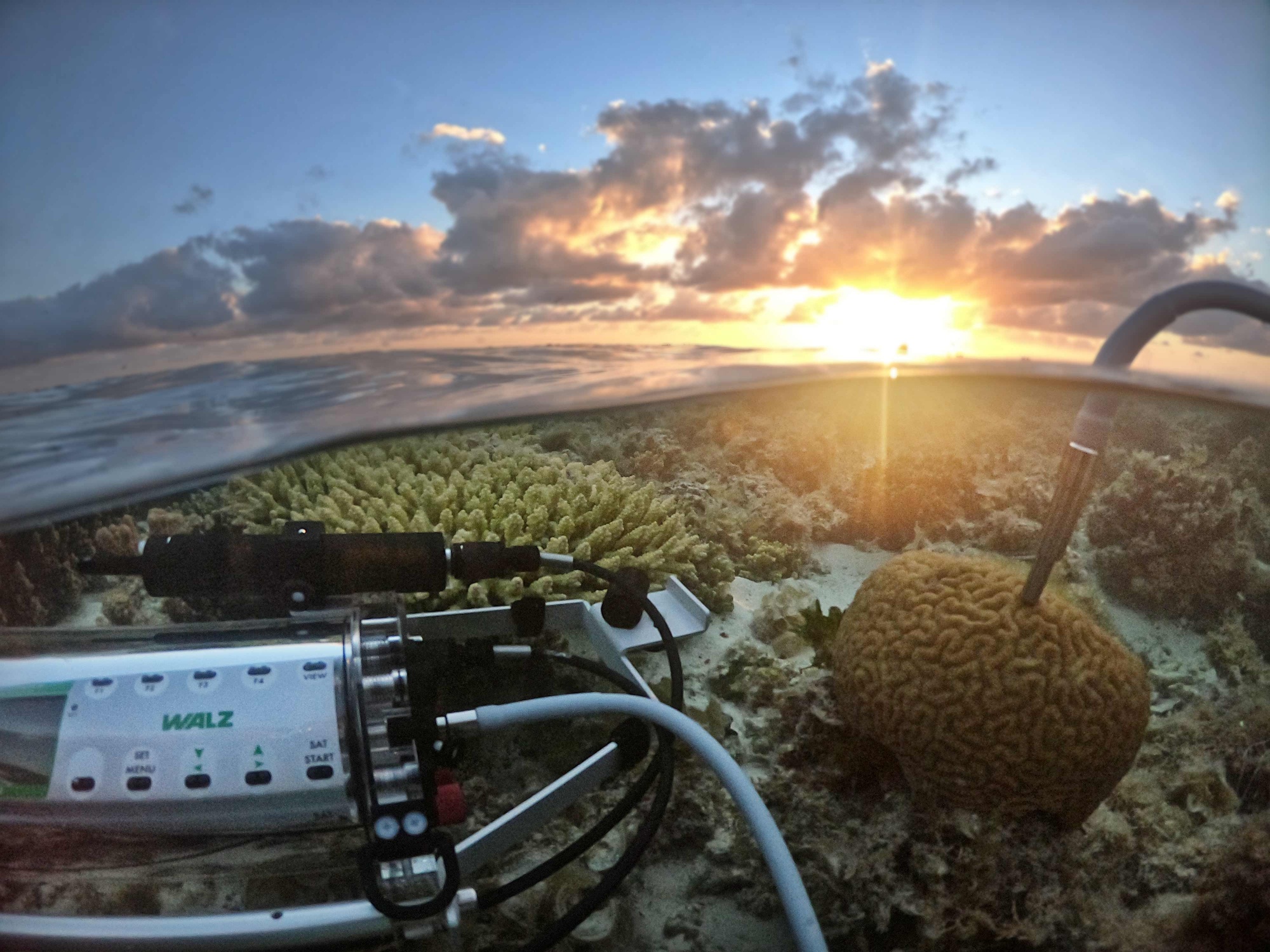
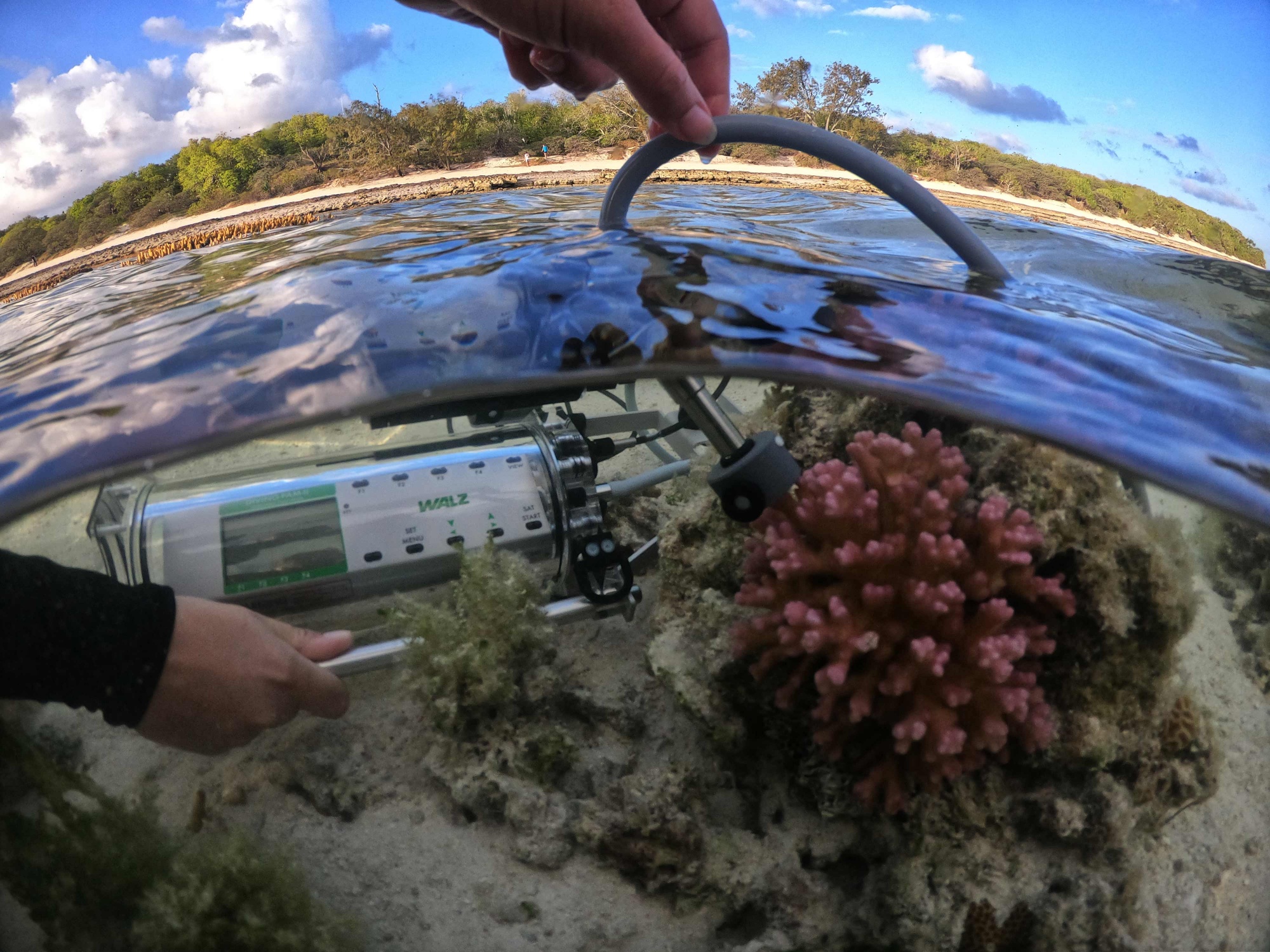
The DIVING-PAM-II is a submersible chlorophyll fluorometer designed for in situ measurements of photosynthetic performance in aquatic environments. Based on the pulse-amplitude modulation (PAM) principle, the system measures chlorophyll fluorescence directly underwater — preserving natural conditions and eliminating the need for sample collection.
Key fluorescence parameters are automatically determined from saturation pulse analysis, including quantum yield, maximum quantum yield (FV/FM), or non-photochemical quenching (NPQ). A far-red LED enables specific excitation of photosystem I (PSI). Built for demanding marine and freshwater fieldwork, the DIVING-PAM-II is the instrument of choice for coral reef monitoring, seagrass ecology, aquaculture, and underwater photosynthesis research.
Integrated Miniature Spectrometer for Spectral Analysis
A defining feature of the DIVING-PAM-II is its integrated miniature spectrometer, the MINI-SPEC. It measures the spectral composition of photosynthetically active radiation (PAR) at the measurement site and automatically calculates total external PAR — a critical parameter, as light quality changes significantly with water depth. The miniature spectrometer also enables spectral analysis of fluorescence emission and reflectance for species identification and physiological characterization.
Designed for Underwater Field Research
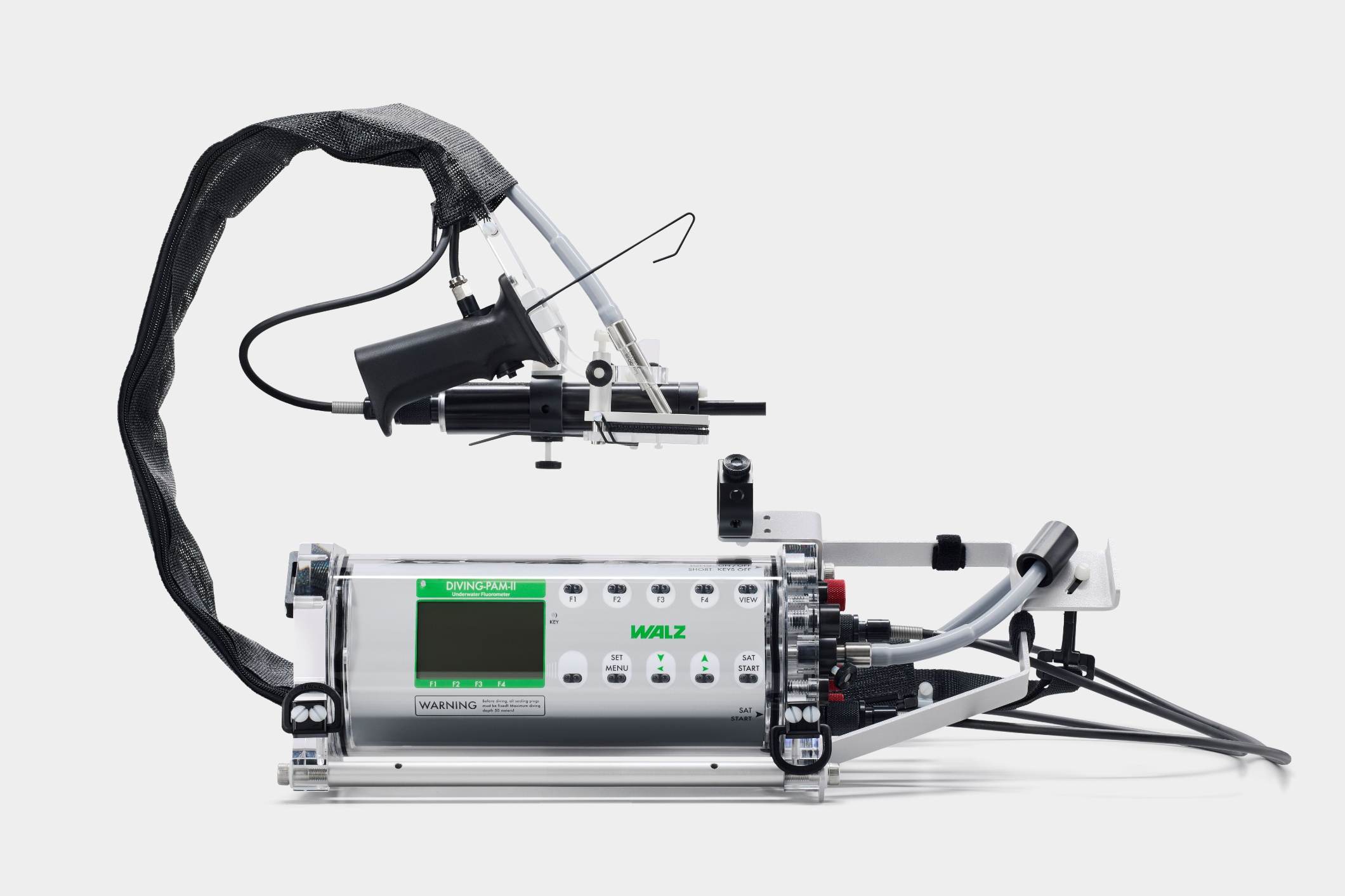
The depth-rated, fully submersible housing is built for reliable SCUBA-based fieldwork. Ten waterproof infrared reflection switches and a transflective display ensure intuitive operation underwater. Built-in sensors log depth and temperature with every measurement, while a proven fiberoptics system allows precise positioning on corals, macroalgae, and seagrass leaves.
Data Management and Versatile Use
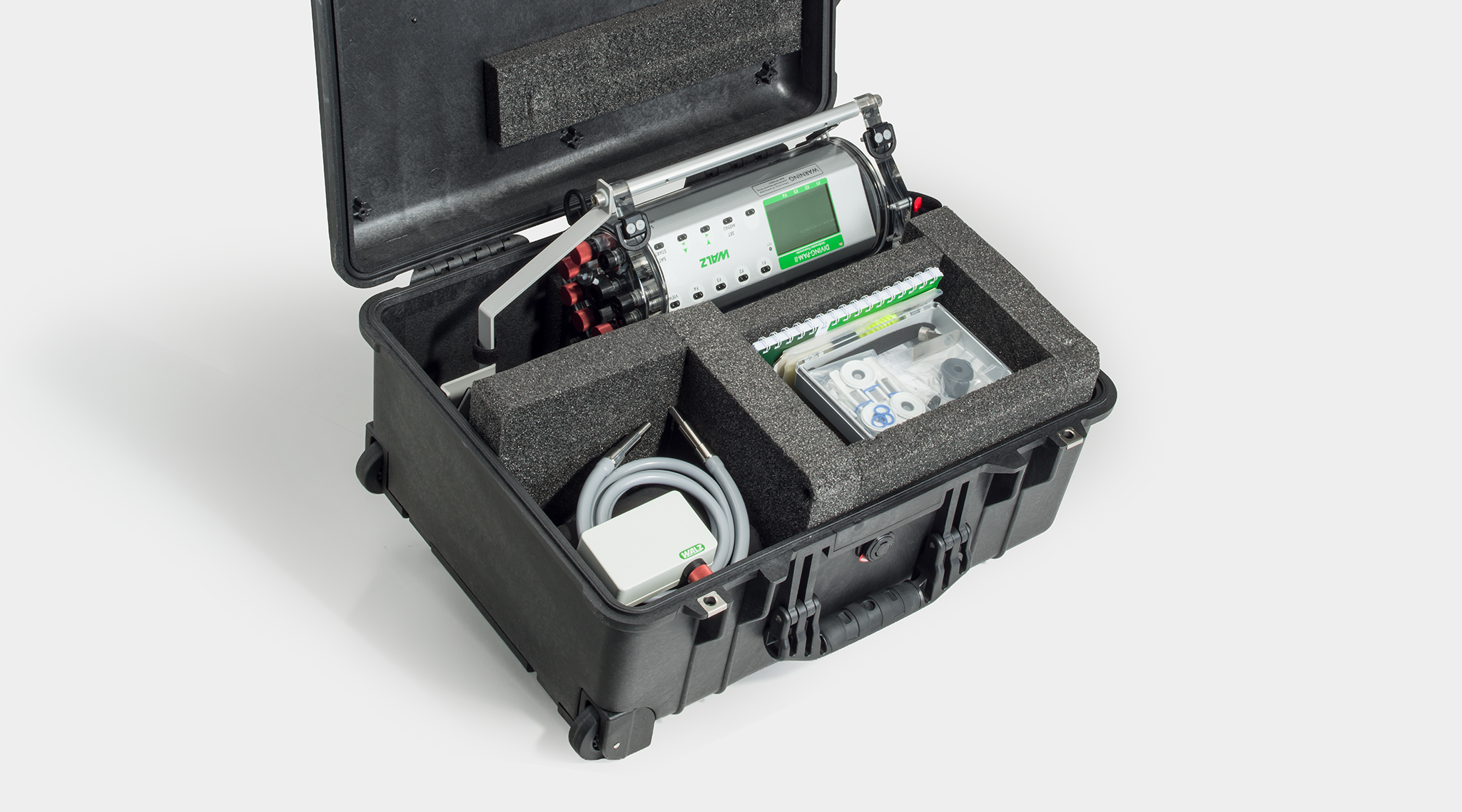
The internal flash memory stores over 27,000 measurements, with convenient data download via wireless LAN. For long-term monitoring, underwater cables connect the DIVING-PAM-II to a Windows computer running the WinControl-3 software. In dry environments, the system also operates accessories of the MINI-PAM-II fluorometer.
Applications of the DIVING-PAM-II
The DIVING-PAM-II is widely used by marine biologists, coral reef ecologists, and environmental scientists to study photosynthetic performance in aquatic ecosystems. Typical applications include for example:
Available Versions
The DIVING-PAM-II is available in two versions optimized for different sample types: The DIVING-PAM-II/B (BLUE Version) uses blue measuring light at 475 nm with broad fluorescence detection above 630 nm. The DIVING-PAM-II/R (RED Version) uses red measuring light at 655 nm with fluorescence detection above 700 nm.