KF-18/2B & KF-24/6B
Cold Traps for 6 or 25 l/min Gas Streams
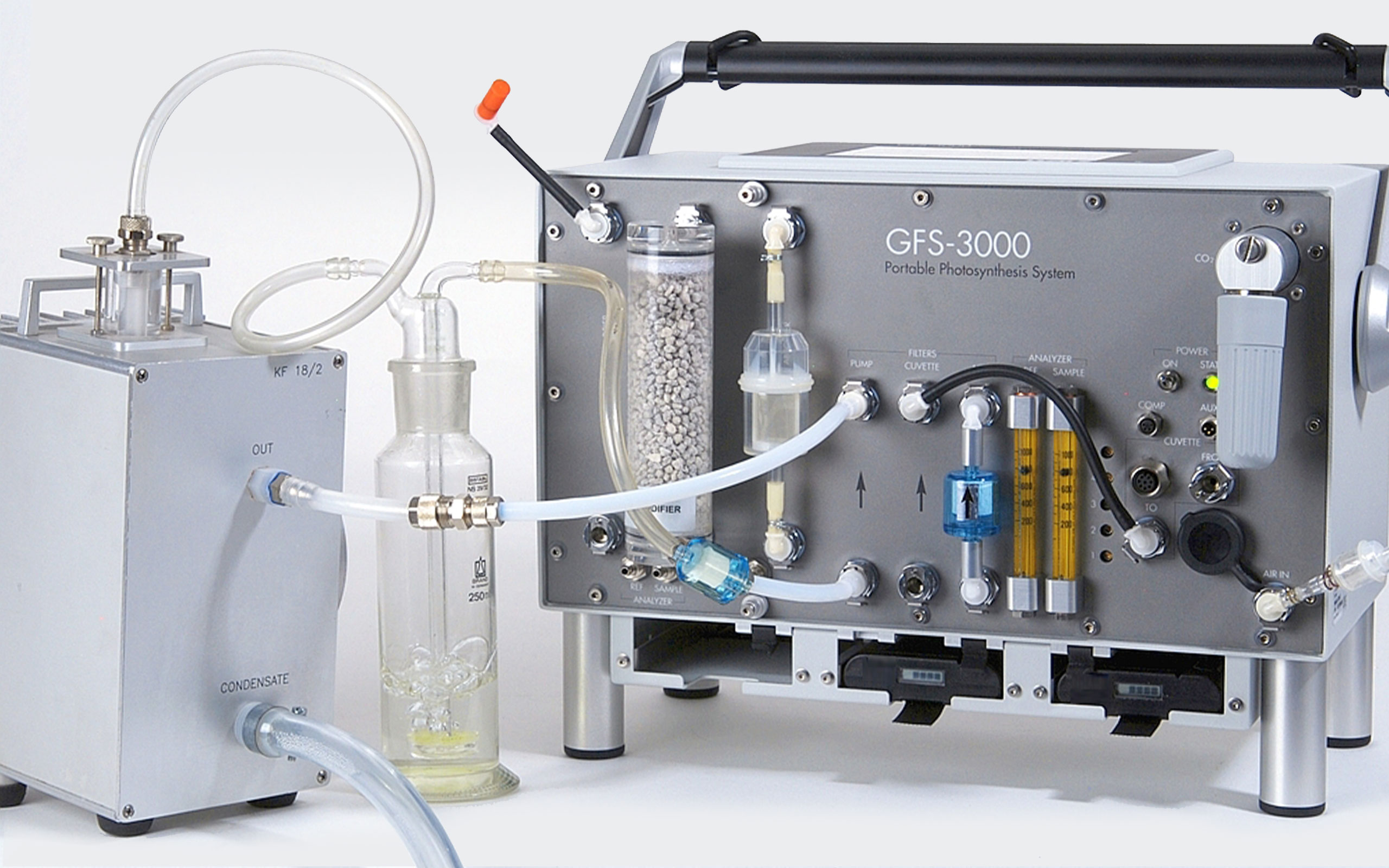
Cold traps control the humidity in a gas stream. For this purpose, the gas stream is directed through the cold trap and cooled down to the set temperature. If the dewpoint of the inflowing gas is above the set temperature value, the excessive water vapor condenses and the outstreaming gas has a defined dewpoint, corresponding to the set temperature value. If required, the gas may be humidified prior to streaming into the cold trap.
The cooling inside the cold trap is performed with Peltier coolers regulated by a temperature controller. The condensate accumulates in a hose and may be let off from time to time.
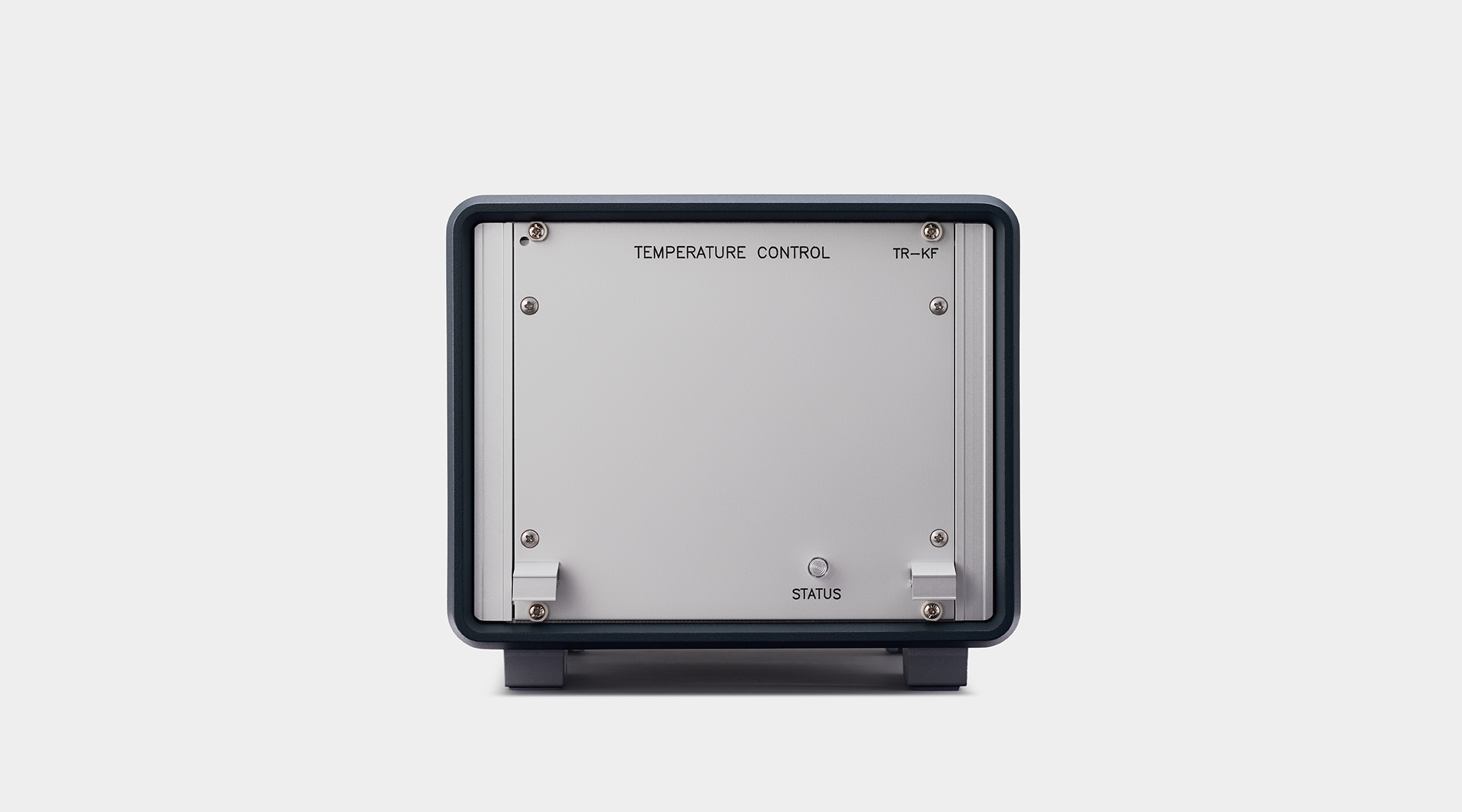
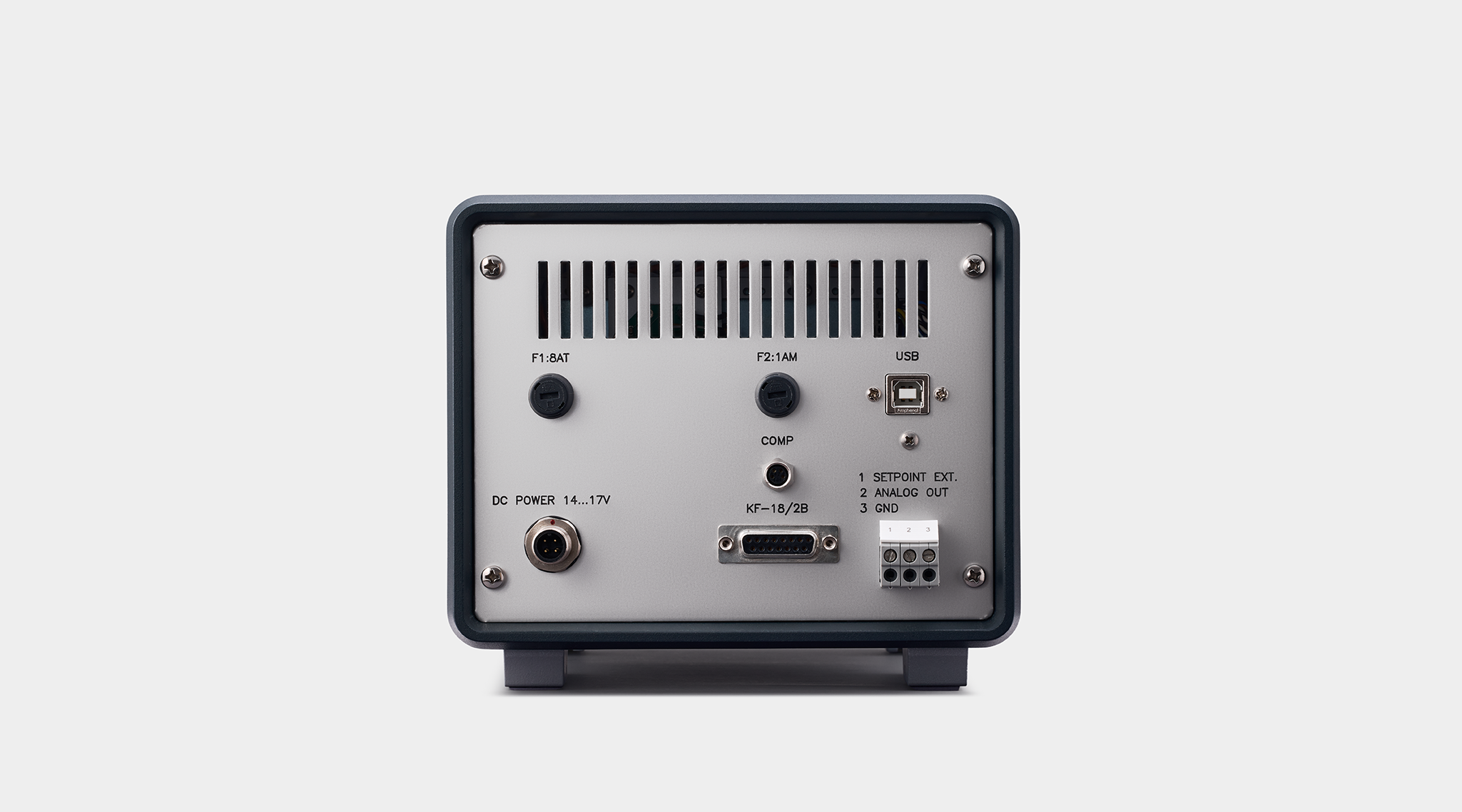
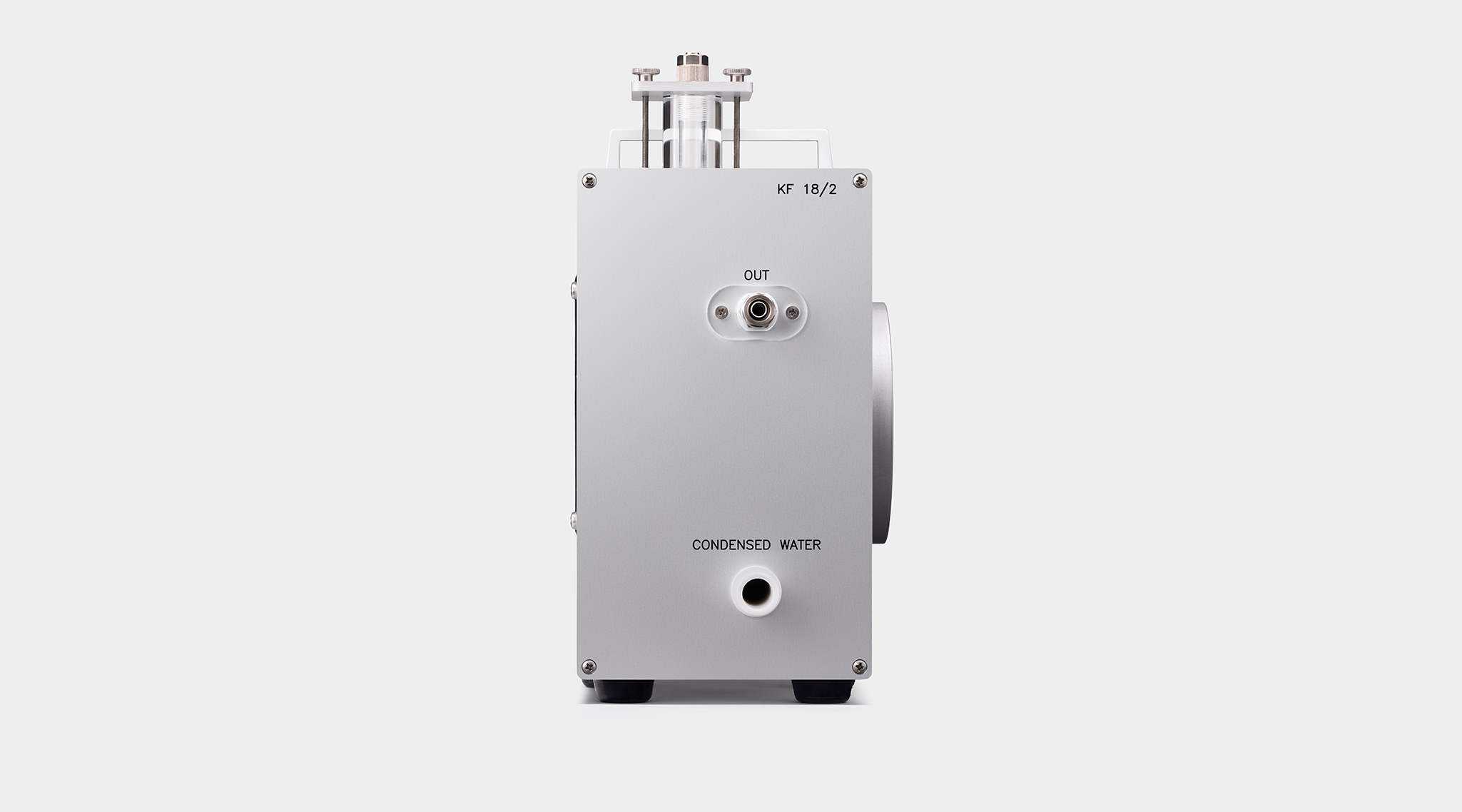
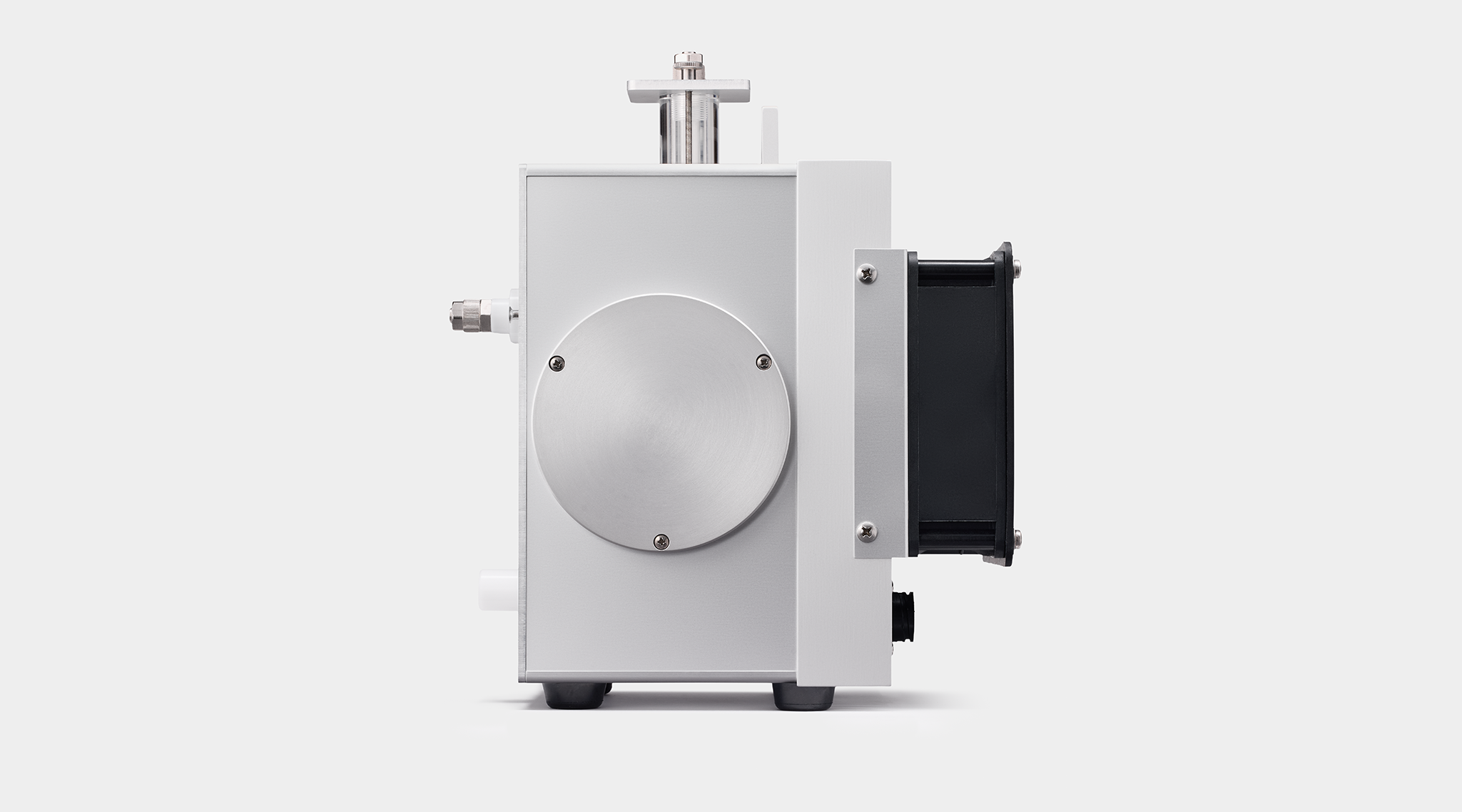
General Features KF-18/2B and KF-24/6B
Due to its powerful Peltier coolers, the cold traps may achieve temperature differences of more than 30 K, with respect to ambient temperature.
The Cold Trap KF-24/6B may be operated with a liquid cooling cycle for even larger temperature gradients. Additionally to the large range, the dewpoint setting is very accurate (0.1 °C).
Cold Traps have one gas path. The functional difference between the versions lies in the maximal flow rate. Cold Trap KF-18/2B has a maximal flow rate of 6 l/min, and Cold Trap KF-24/6B a maximal flow rate of 25 l/min.
If lower temperature gradients are required, slightly higher flow rates can be used. In return, if lower flow rates are used, higher temperature gradients may be achieved.

Different versions for various applications
Cold traps may be integrated into existing pneumatic structures. They are appropriate for a wide range of applications, such as:
- Calibration of humidity sensors (e.g. capacitive humidity measuring cells and dew point mirror measuring systems)
- Calibration of infrared H2O gas analyzers
- Generation of gas with defined humidity conditions for the inflowing gas of gas-exchange chambers
- Usage as part of bypass humidity control units, in order to avoid a rise in humidity as a result of transpiration, in large gas-exchange measuring chambers

KF-18/2B & KF-24/6B
6 l/min.
-50 to +70 °C dewp.
±0.1 °C dewp.
Peltier cooler
35 K
Pt100
Hose fittings for 6/8 mm dia. tubing
-20 to +50 °C
12 x 27 x 22 cm (W x H x D)
3.5 kg
TR-KF-18
-50 to +70 °C dewp.
yes
with the TR-KF software on an external Windows PC via USB
with the TR-KF software on an external Windows PC via USB
Internal Software TR-KF-6 and TR-KF-24
The Temperature Controllers TR-KF-6 and TR-KF-24 are operated with the software TR-KF provided for Windows PCs. The set temperature, actual temperature and status are indicated. Freely adjustable charts show the time course of set-value and temperature.
Two modes of temperature control are available:
- Control to a set temperature
- Control to an external signal
There is a choice, how the instrument shall resume operation after a power interruption. User requests can be integrated into the software.


Usage
Highlights
- Exact control of gas humidity
- Efficient Peltier cooling
- Calibration of humidity sensors