LSA-2050
Product
New
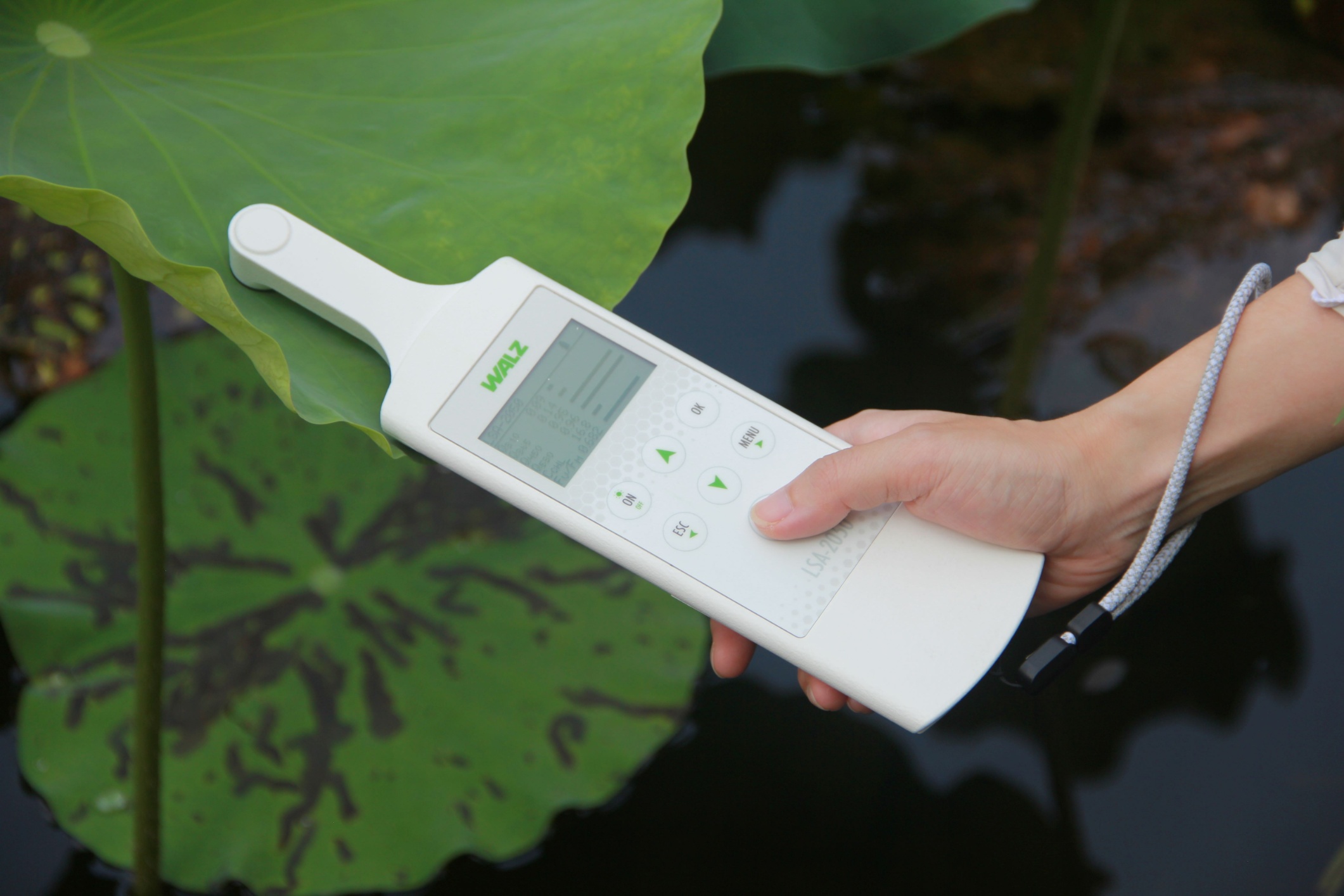
Handheld Device for non-invasive Leaf Analysis
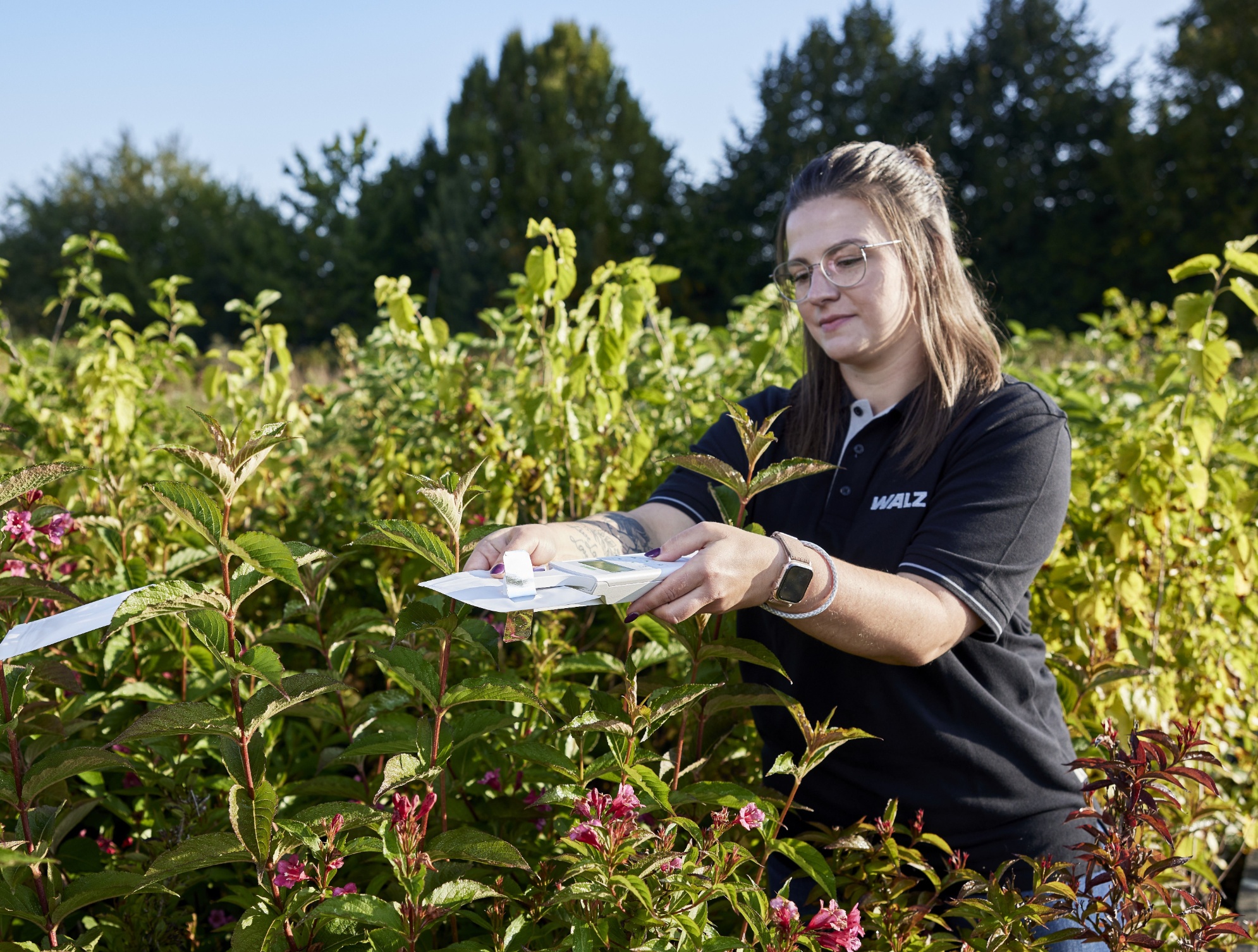


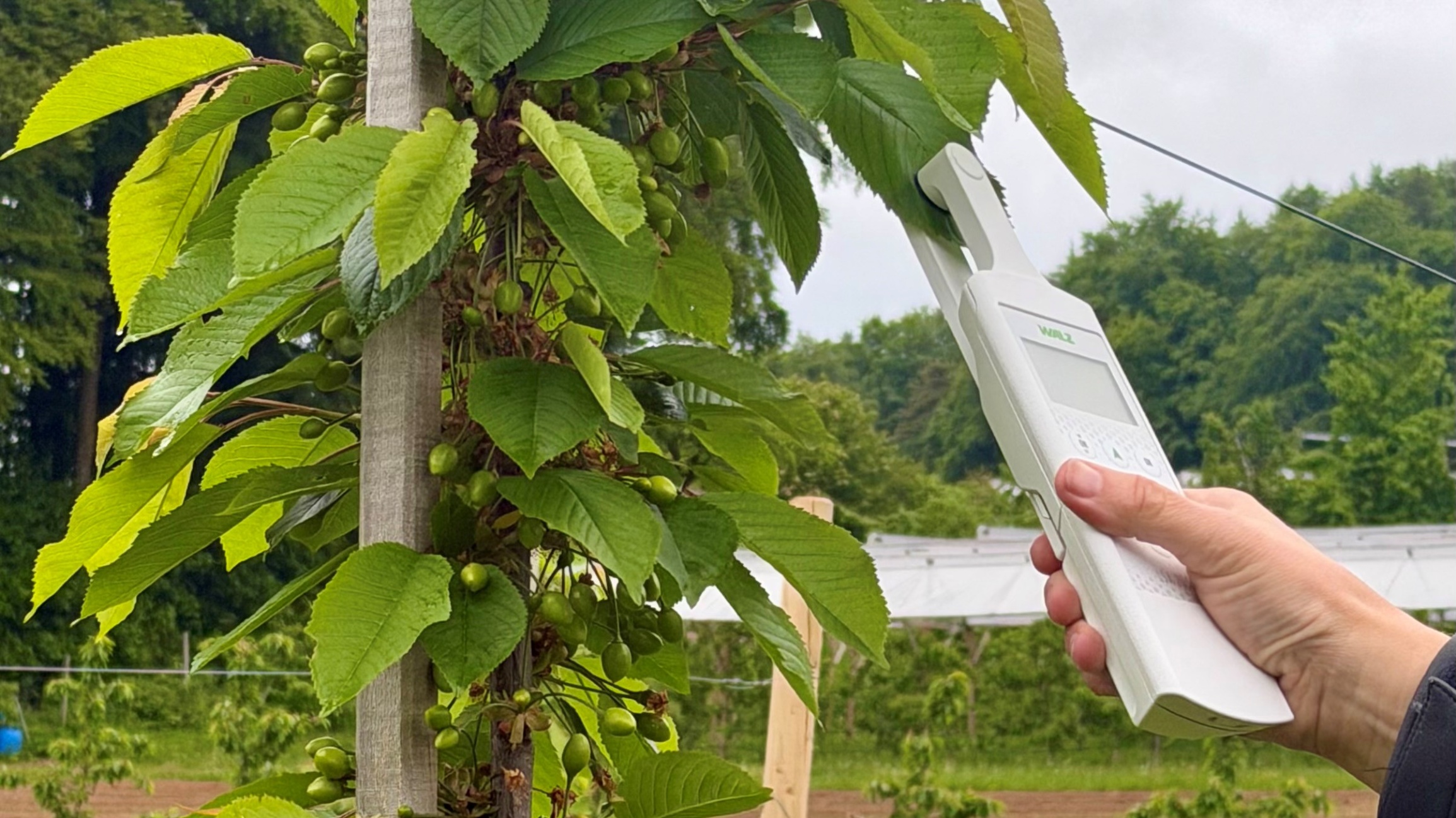
LSA-2050
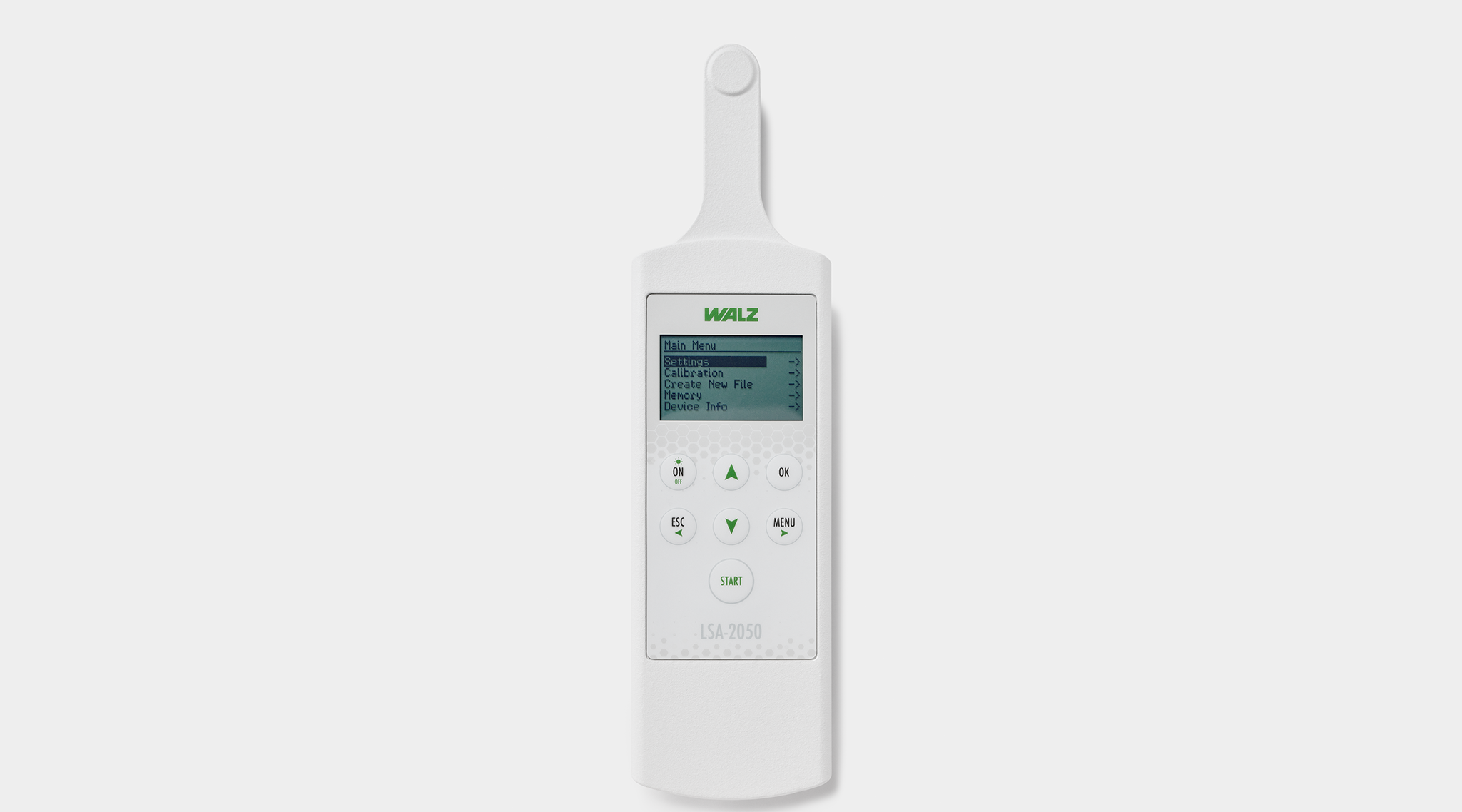
Housing
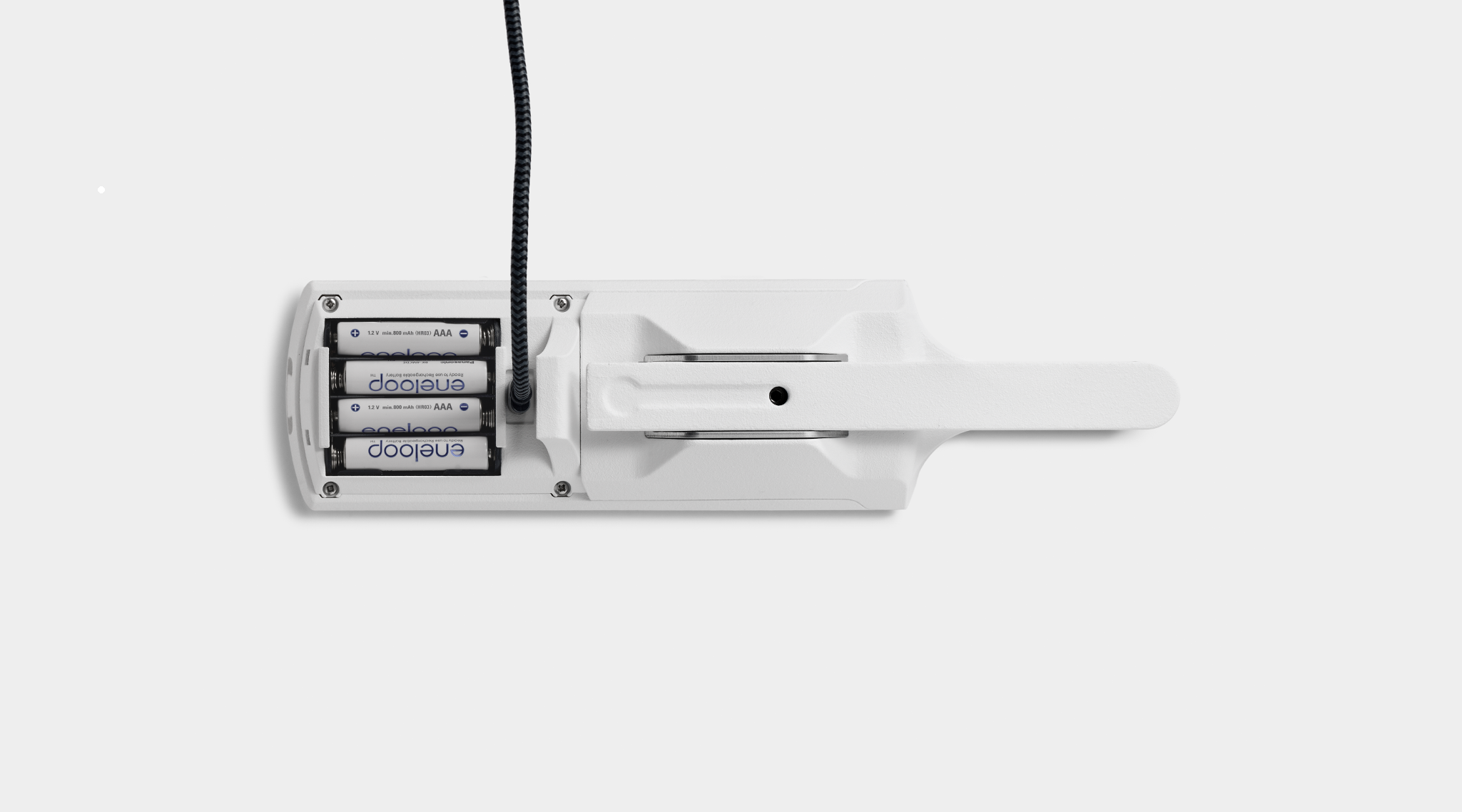
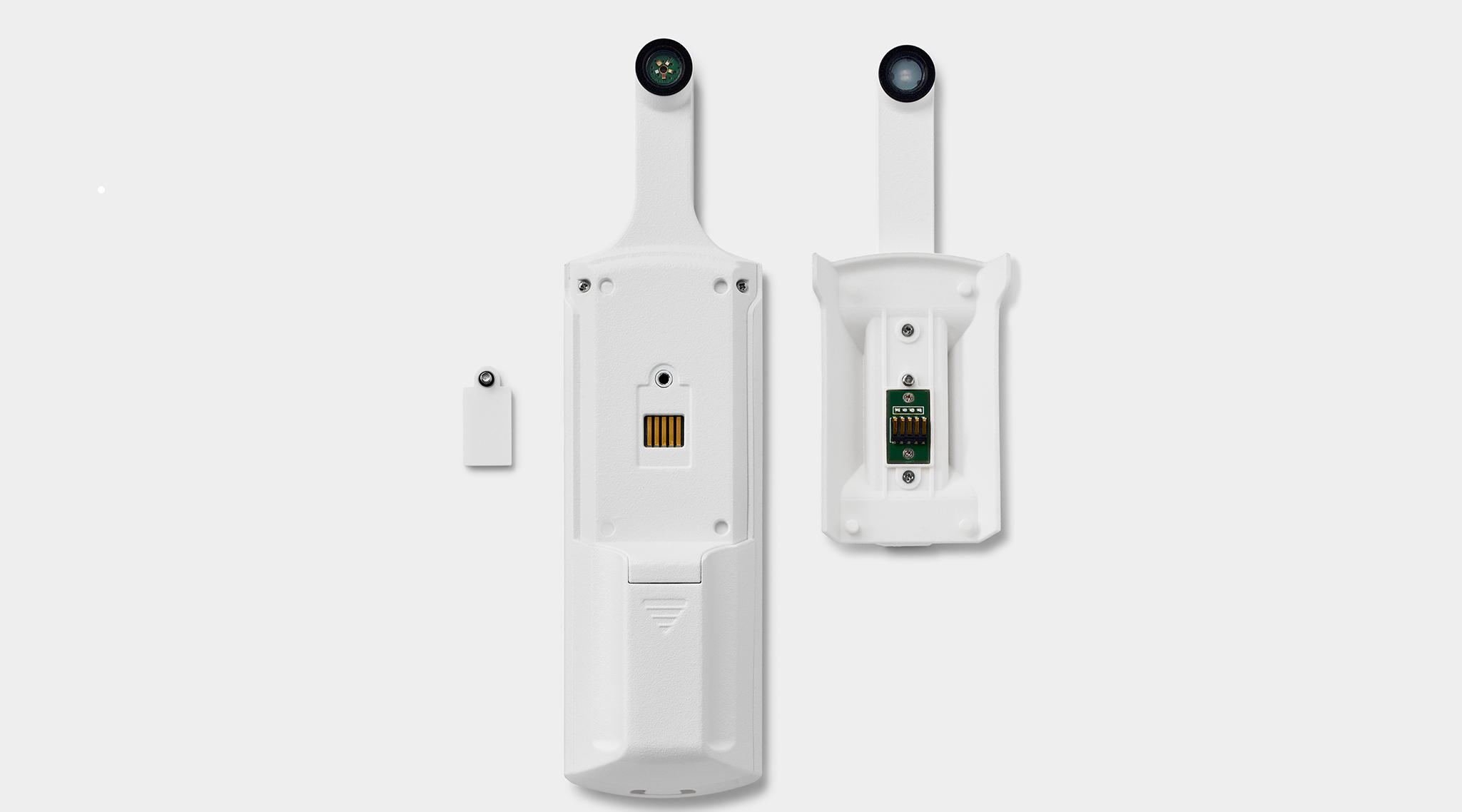
Battery-powered handheld device consisting of a control unit and a sample clip, both made of painted polyamide 12 (PA 12). The control unit is equipped with a holder for four AAA-type batteries and a USB-C connector. Two metal flat springs press the clip jaws together. The lower clip jaw is removable
Display
Backlit transflective B/W LCD display, 48 x 27 mm, 128 x 64 pixel
Control
Six control keys plus a separate START key to start a measurement
Data memory
Flash memory, 8 MB, providing memory for more than 30,000 data sets
Data transfer
USB-C port
Power supply
4 AAA (Micro) rechargeable batteries (eneloop 1.2 V/2 Ah); 4 spare batteries, automatic power/off, battery charger (100 to 240 V AC, 50-60 Hz) for 4 batteries
Operating temperature
-5 to +45 °C, non-condensing
Dimensions
maximum 26.5 cm x 7.0 cm x 3.5 cm (L x W x H)
Weight
240 g (without batteries)
Viewing area
Disk with 10 mm diameter
Upper clip jaw
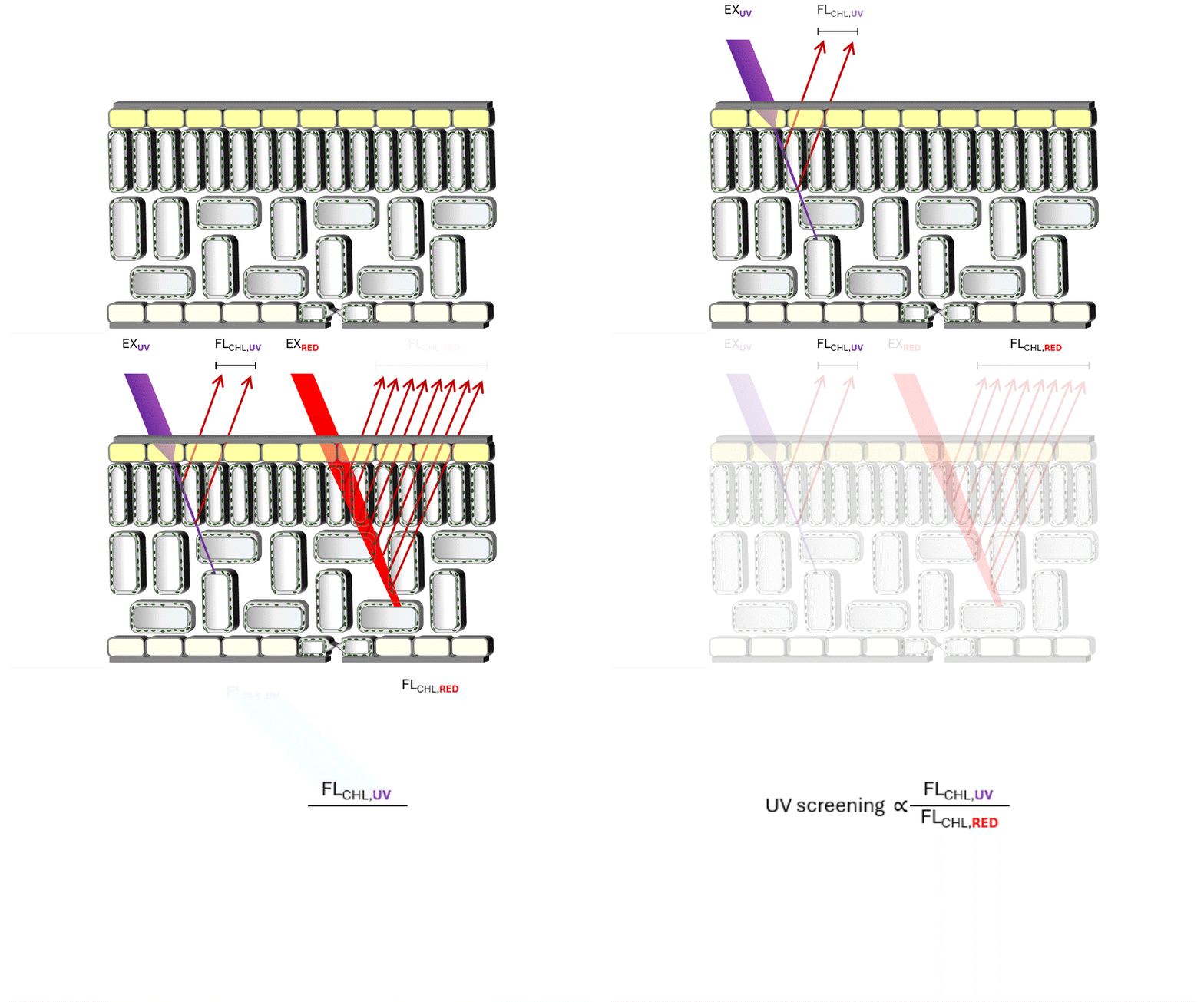
Five LEDs are circularly arranged around a PIN photodiode, which is shielded from LED emission by a long-pass filter. A quartz glass disk closes the LED/photodiode compartment. Measuring light consists of 10 µs pulses given at 15 Hz except for FM determinations (100 Hz). Typical maximum emission wavelength, full width at half maximum (FWHM), and integrated intensity at 15 Hz are: UV-B, 310 nm, 15 nm, 0.1 µmol m‑2 s‑1 (0.05 W m‑2). UV-A, 365 nm, 12 nm, 0.3 µmol m‑2 s‑1 (0.1 W m‑2). Blue, 450 nm, 14 nm, 0.1 µmol m‑2 s‑1. Green, 530 nm, 27 nm, 0.1 µmol m‑2 s‑1. Red, 630 nm, 24 nm, 0.1 µmol m‑2 s‑1. The UV LEDs are only activated in the presence of a fluorescing sample
Lower clip jaw
A far red LED (peak wavelength 715 nm, FWHM 25 nm) and a near infrared LED (peak wavelength 770 nm, FWHM 30 nm) are positioned in the center of the viewing are. The LEDs are covered by a light-diffusing disk and a quartz disk
Geospatial Data
A GPS receiver, plus accelerometer, gyro- and magneto-scope sensors add geospatial information to each measurement, including the angle at which sunlight impinges on the leaf
Design
Four position intelligent charger for AA or AAA Nickel Metal Hydride (NiMH) or Nickel Cadmium (NiCd) batteries
Design
Padded plastic case with handle
Dimensions
36.0 cm x 30.5 cm x 8.0 cm (L x W x H)
Weight
920 g
Accessories
General design
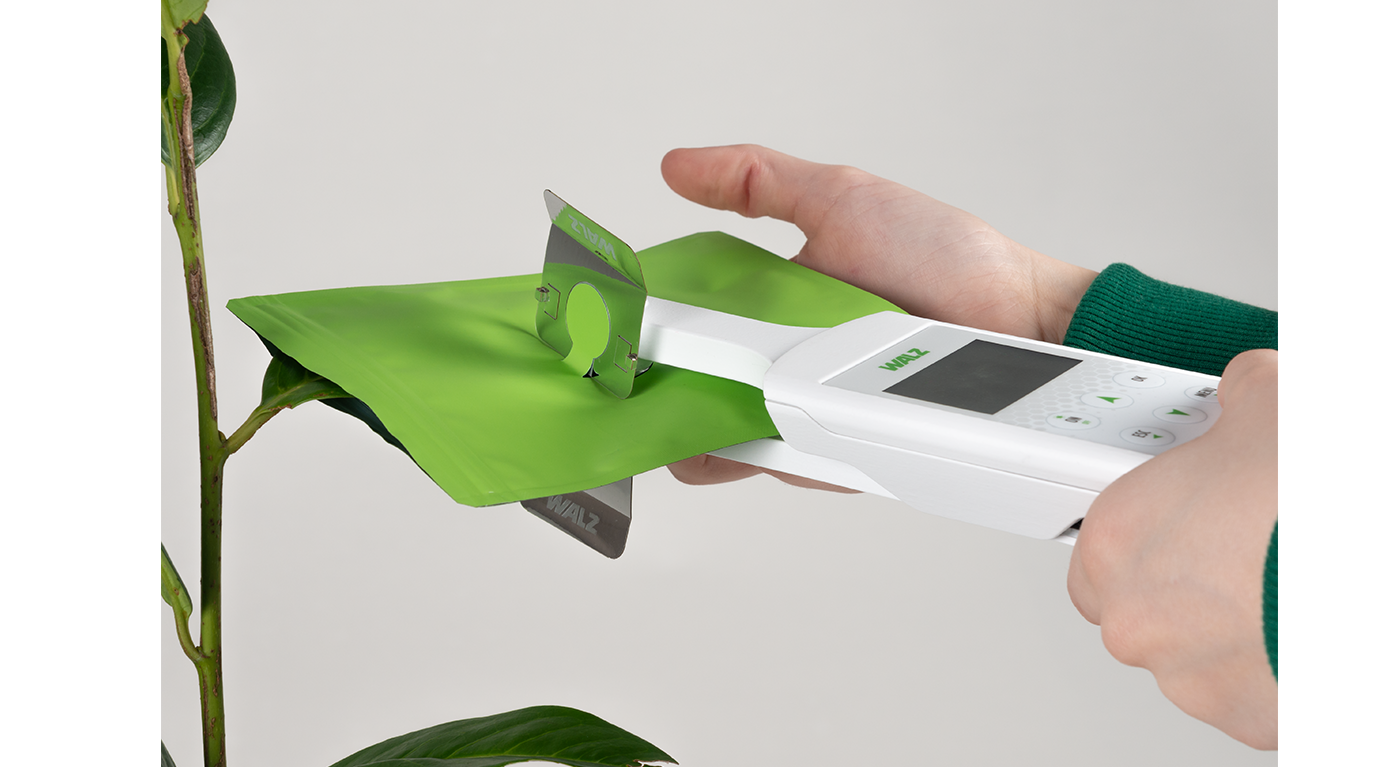
Set of three small, three medium and three large light-tight bags for dark acclimation of leaves of different sizes made of aluminum foil, colored on the outside. Each bag has a 2 cm diameter central hole for non-invasive determination of chlorophyll concentration with the LSA-2050. During dark acclimation, both sides of the hole are covered by metallized PET plastic flaps. The flaps magnetically attract each other which ensures that both lie tightly on the surface of the bag. The flaps are flexibly attached to the darkening bag at one end. The other, loose end is folded slightly outwards so that the sample clip of the LSA-2050 can be guided to the hole by folding open the flaps
Dimensions
100 mm x 70 mm, 150 mm x 100 mm, 180 mm x 120 mm (small, medium, and large size, respectively)
Weight
3 g, 4 g, 5 g (small, medium, and large size, respectively)
General design
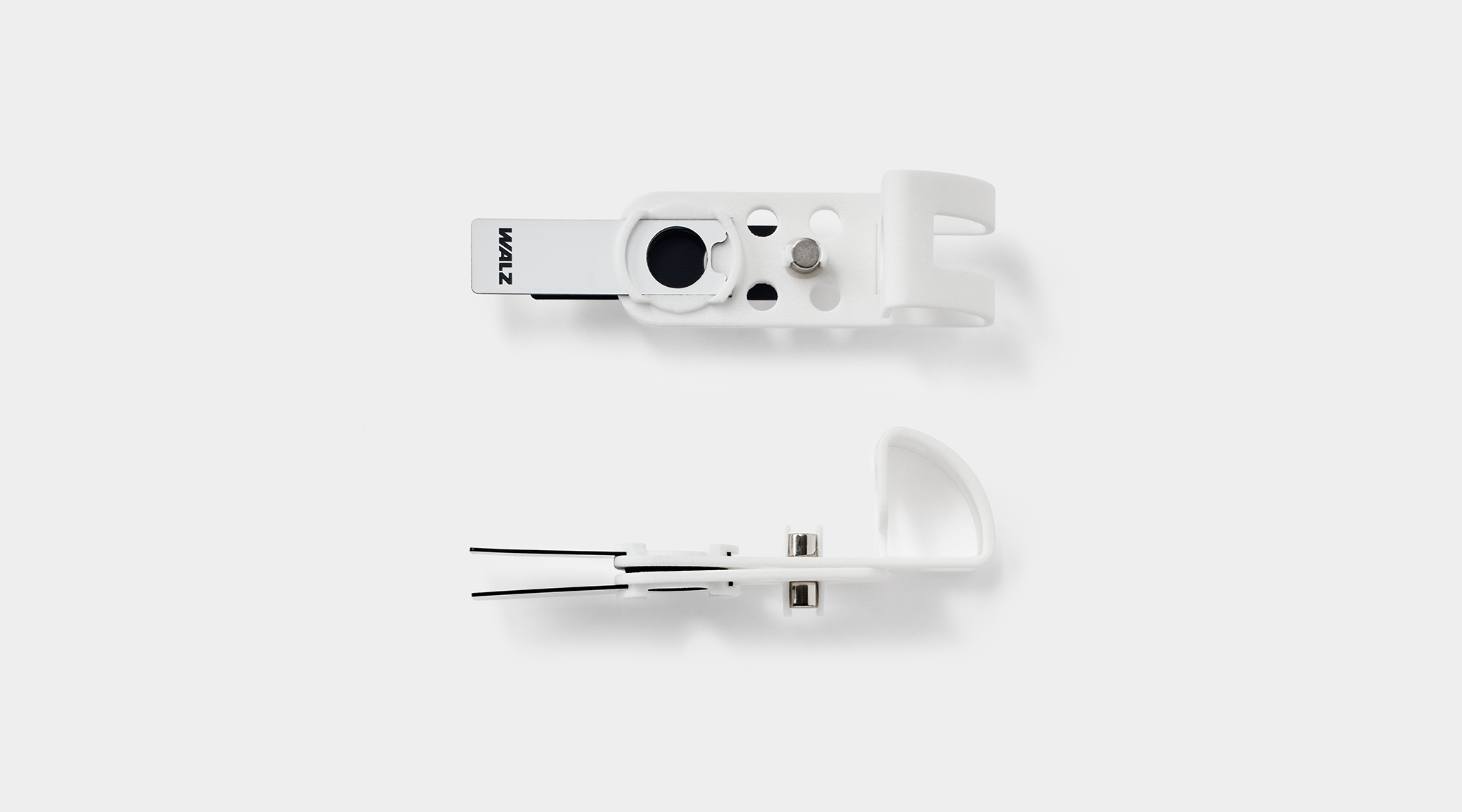
One-piece construction made of polyamide (PA12), the two jaws of the clip are pressed together by the elasticity of the material and by two neodymium magnets, each jaw has a sliding shutter for pre-darkening and an 11 mm diameter opening for chlorophyll determination.
Dimension
86 mm x 25 mm x 35 mm (L x W x H)
Weight
10 g


