MICRO-PAM
Compact Fluorometer for Long-term Monitoring of Photosynthesis
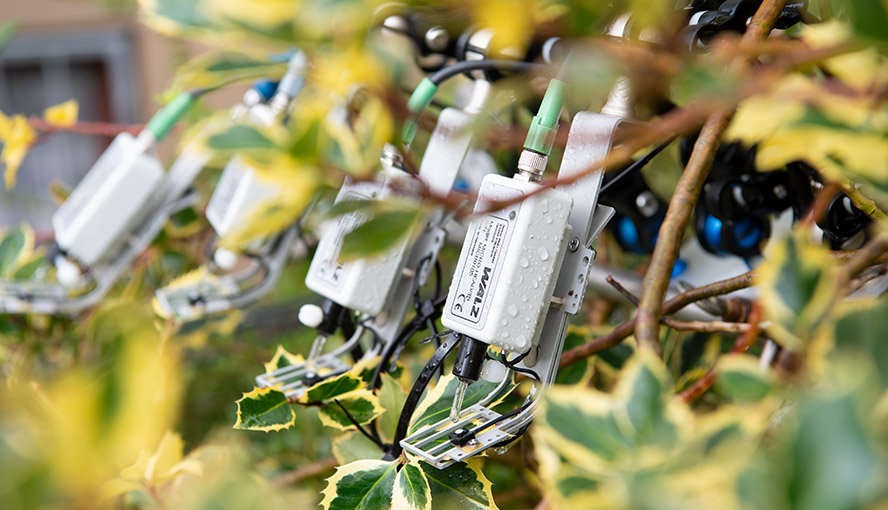


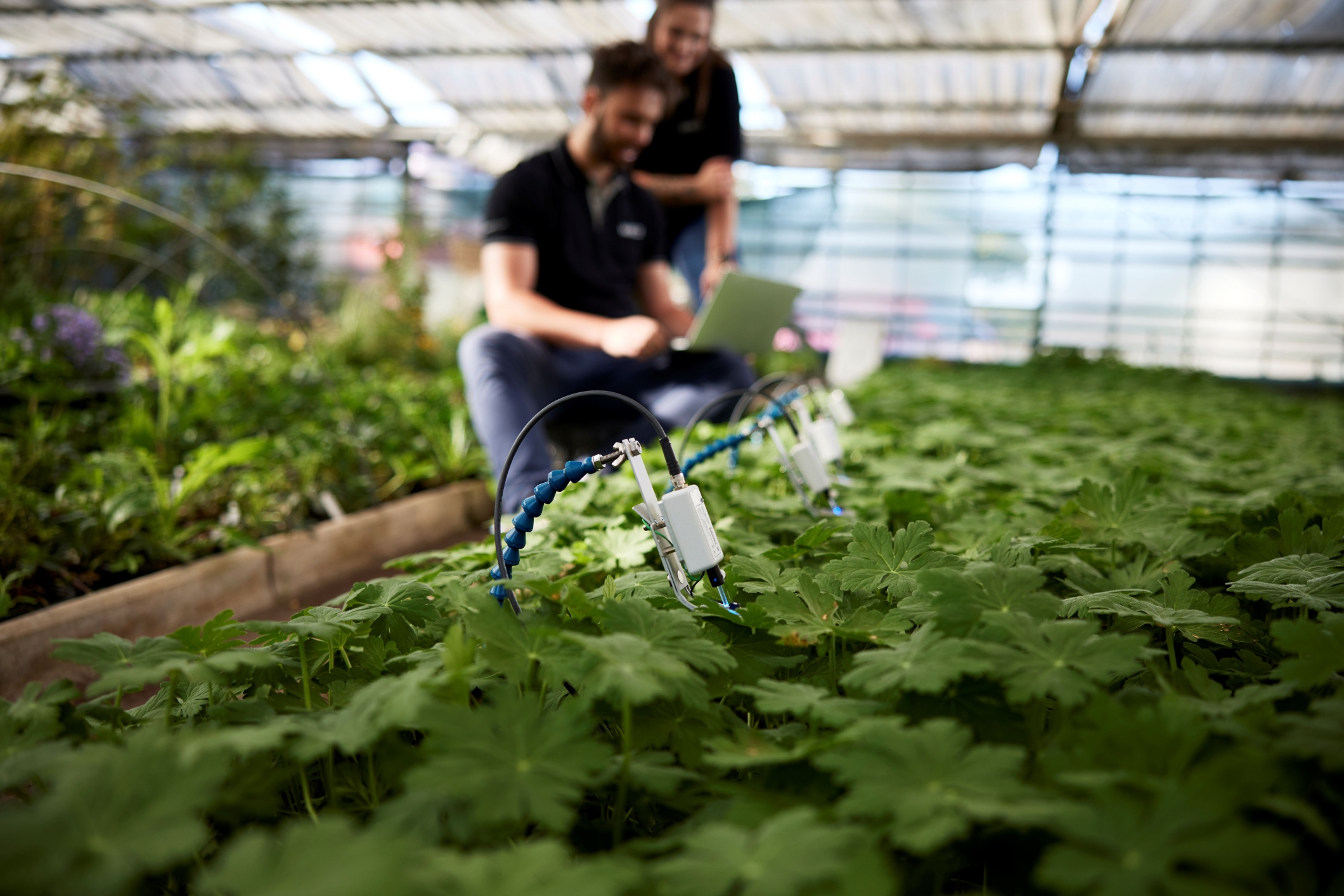
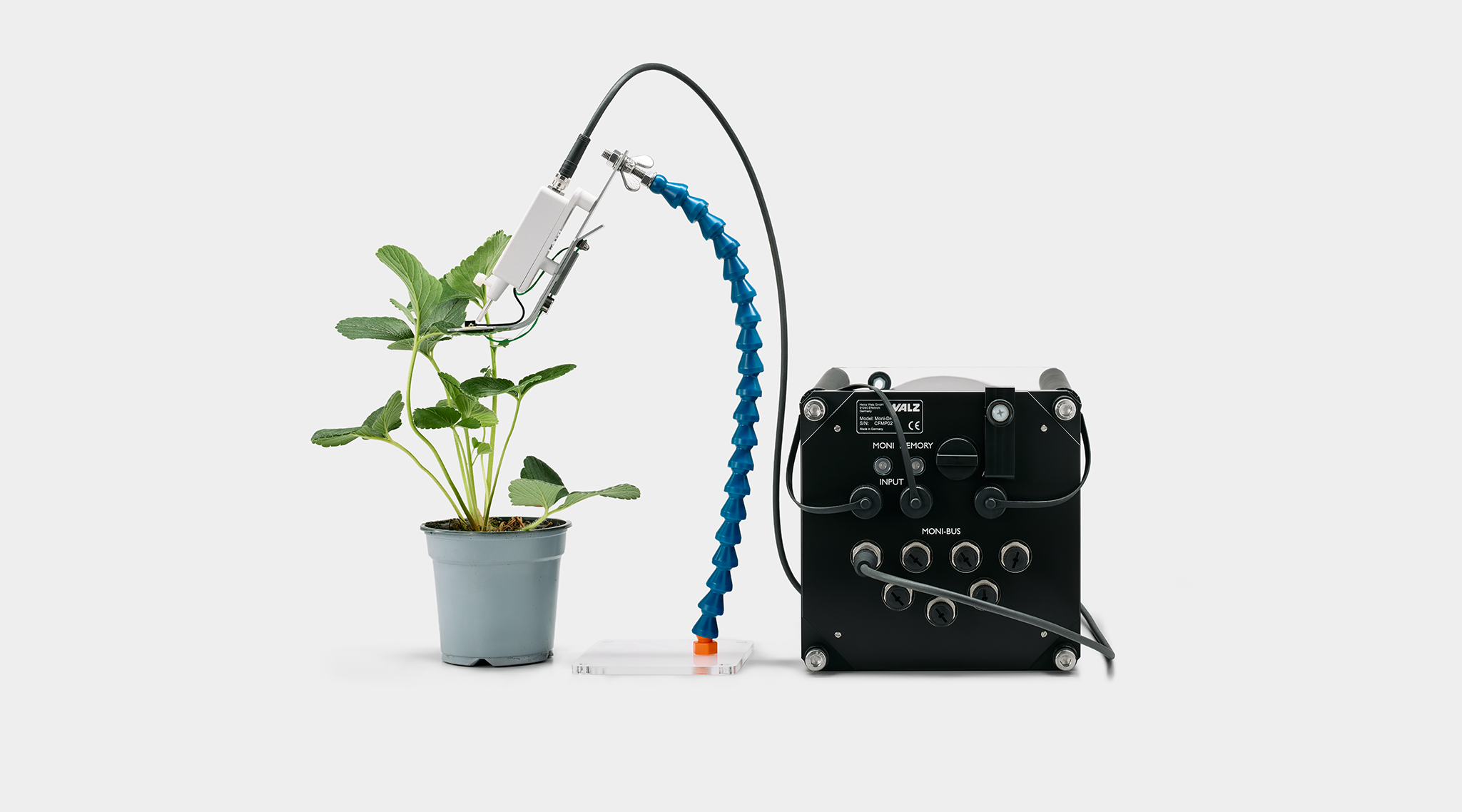
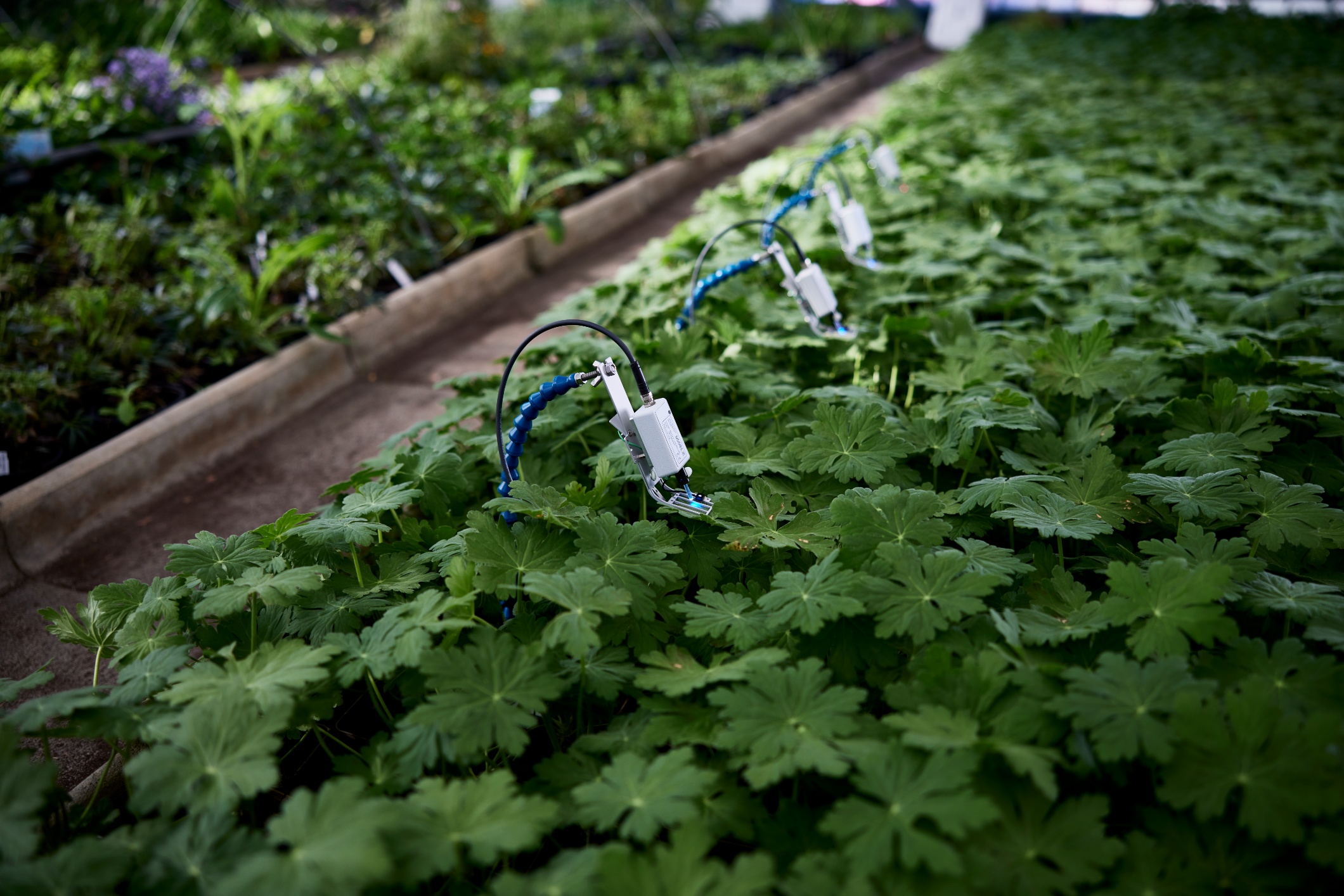
A MICRO-PAM system involves several light-weight chlorophyll fluorometers for field use. Being capable of multi-site monitoring of photosynthesis over weeks and months, the MICRO-PAM is tailored to study plant responses to environmental changes in nature and under controlled conditions. Due to its compact measuring heads, the MICRO-PAM is suited for smaller samples than those typically probed by the established MONITORING-PAM.
Originally, the MICRO-PAM has been developed to measure photosynthesis of lichens growing on rocks or in biological soil crusts. The actual field of application includes herbaceous plants, shrubs and trees. In addition to determining photosynthesis yield by the saturation pulse technique, the measuring heads record light intensity and temperature by external sensors, and humidity by an internal sensor.
General Features MICRO-PAM
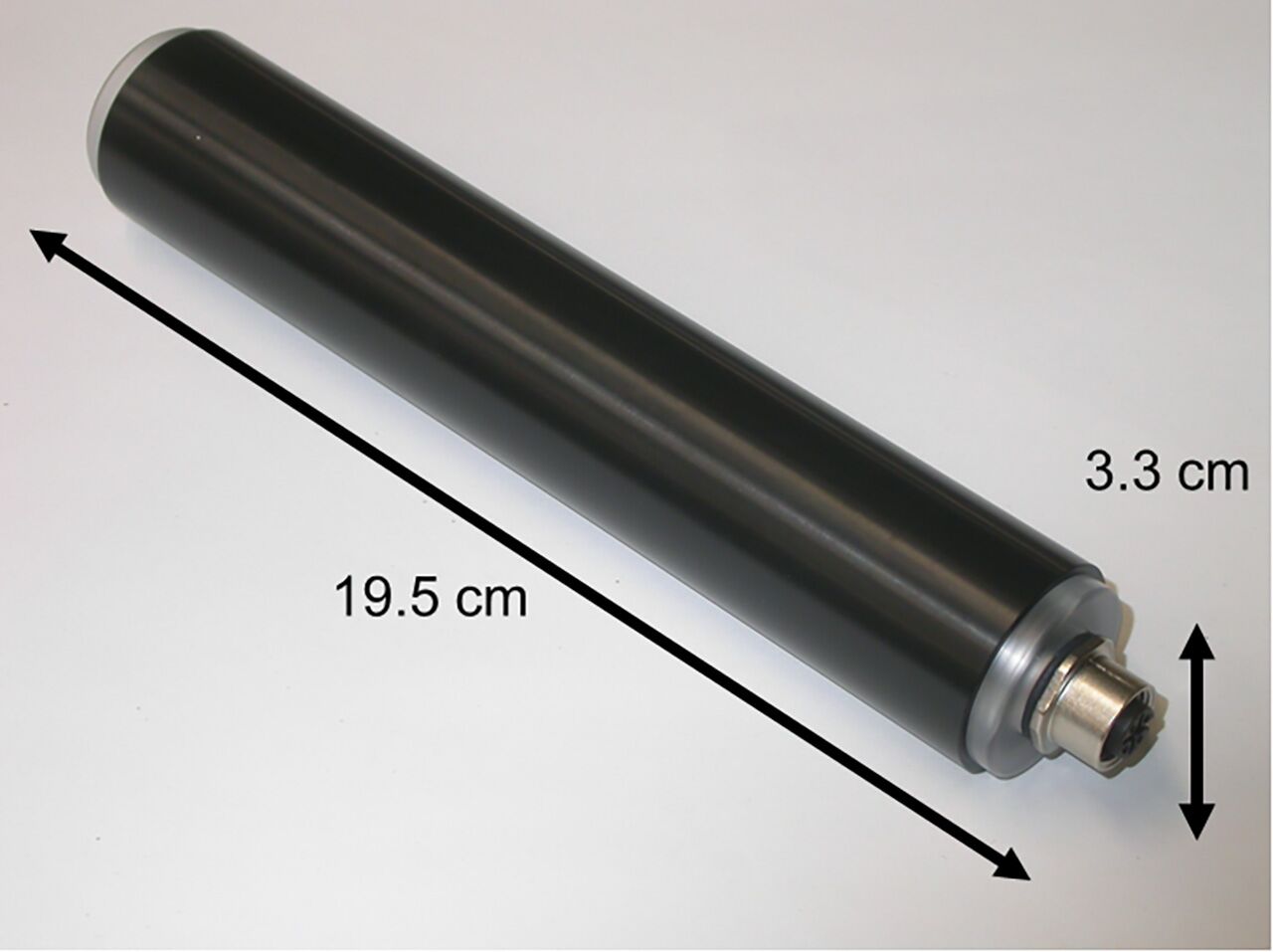
The measuring heads of a MICRO-PAM system are denoted as MICRO-HEAD/3B where the “3” specifies the diameter in mm of the light guide and the “B” stands for the blue color of measuring and actinic light. An extra long light guide for immersed samples is available.
The MICRO-HEAD/3B possesses a blue power LED with maximum emission at 465 nm and a full width at half maximum of 22 nm. The maximum actinic light intensity at sample level is 3000 μmol m-2 s-1, the maximum saturation pulse intensity is 8000 μmol m-2 s-1.
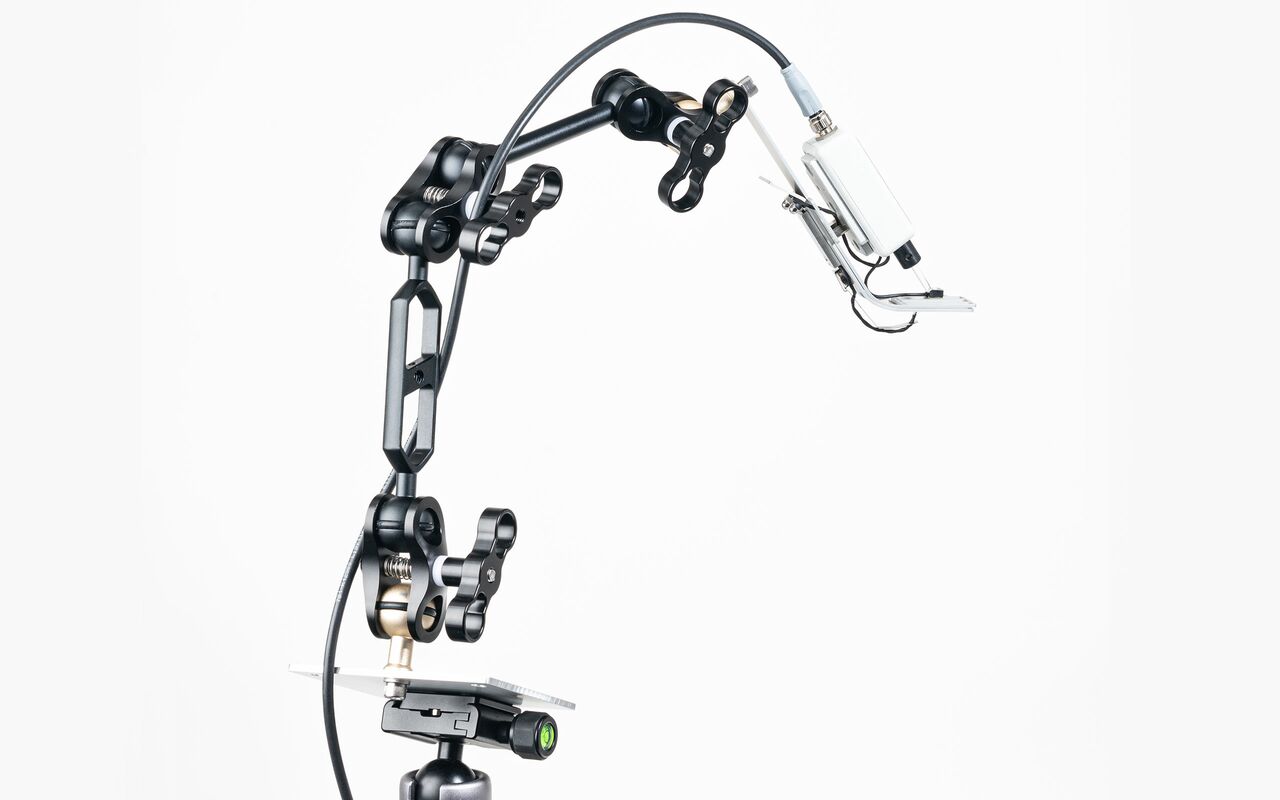
The MICRO-HEAD/3B is equipped with a sample clip. A cosine-response PAR sensor is positioned parallel to the sample plane. A thermocouple touching the lower sample side measures temperature. Humidity is measured by a capacitive-type sensor located inside the fluorometer housing. On request, a special stand will be provided to mount the MICRO-HEAD/3B on solid surfaces.
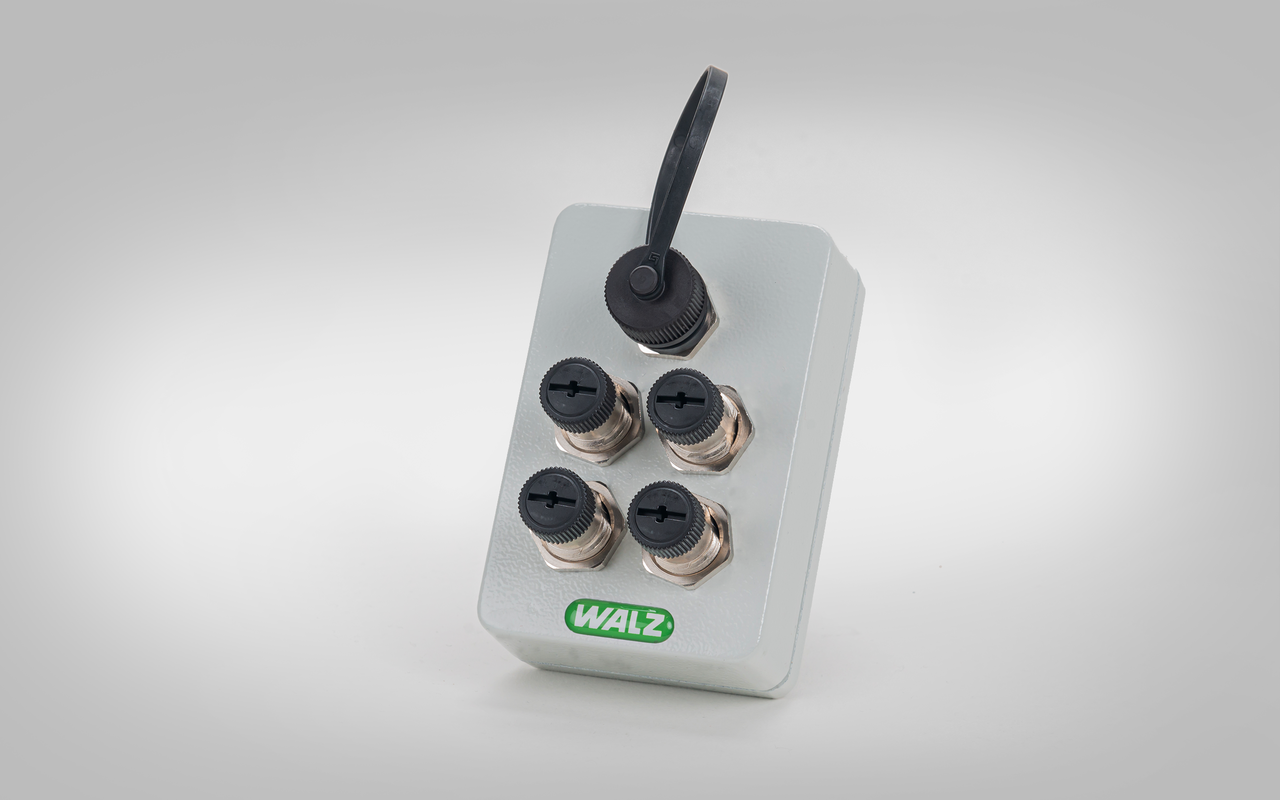
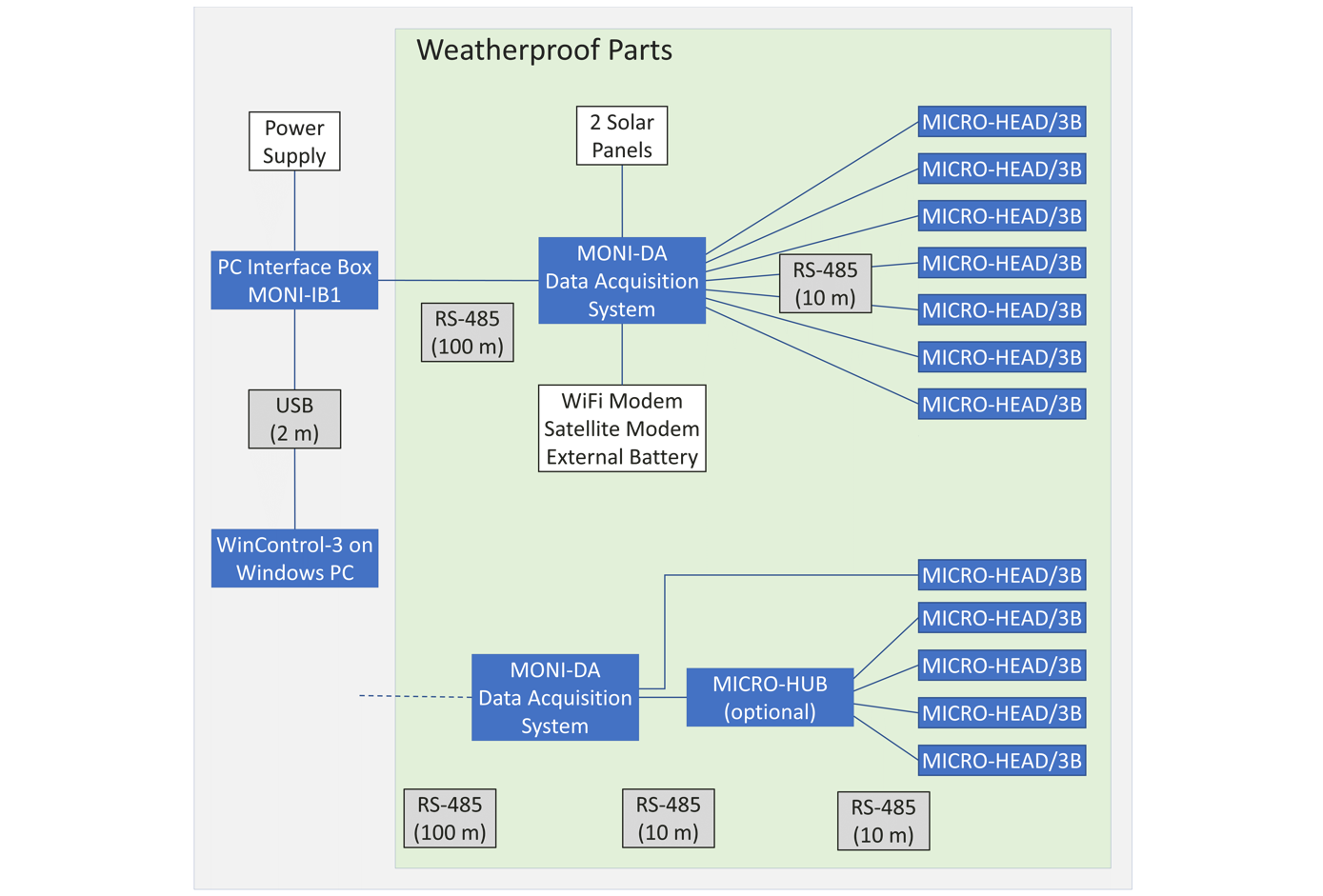
MICRO-PAM systems can be operated in the ONLINE configuration in which up to four measuring heads can be connected via the MONI-IB4/LAN PC Interface Box to an USB port of a Windows computer running WinControl-3. In the OFFLINE configuration, measuring heads are connected directly or via the so-called MINI-HUB to a MONI-DA data acquisition system.
Choosing Between the Blue and Amber Version
Not every sample responds equally well to blue light. The MICRO-PAM is therefore available with two measuring heads, the MICRO-HEAD/3B and the MICRO-HEAD/3A. They are identical in mechanics, sensors and electronics, and differ only in the colour of the light used for measurement, actinic illumination and saturating pulses. Which one suits your work depends on the pigments in your sample — and on how much signal they return.
uses blue light (460 nm). It is the established standard for green samples and has proven itself in both terrestrial and aquatic research.
uses amber light (598 nm), which cyanobacteria absorb far better than blue light. It therefore delivers a stronger, cleaner signal from cyanobacterial mats, crusts and lichens with cyanobacterial photobionts.
Online and Offline Operation
The MICRO-PAM supports two configurations. In online mode, up to four heads connect via the MONI-IB4/LAN Interface Box to a Windows computer running WinControl-3 — ideal for greenhouse or laboratory setups with real-time data display. In offline mode, heads connect to a MONI-DA data acquisition system for autonomous field deployments with data retrieval via WiFi modem.
WinControl-3 Software for MICRO-PAM
General Features and Graphical User Interface
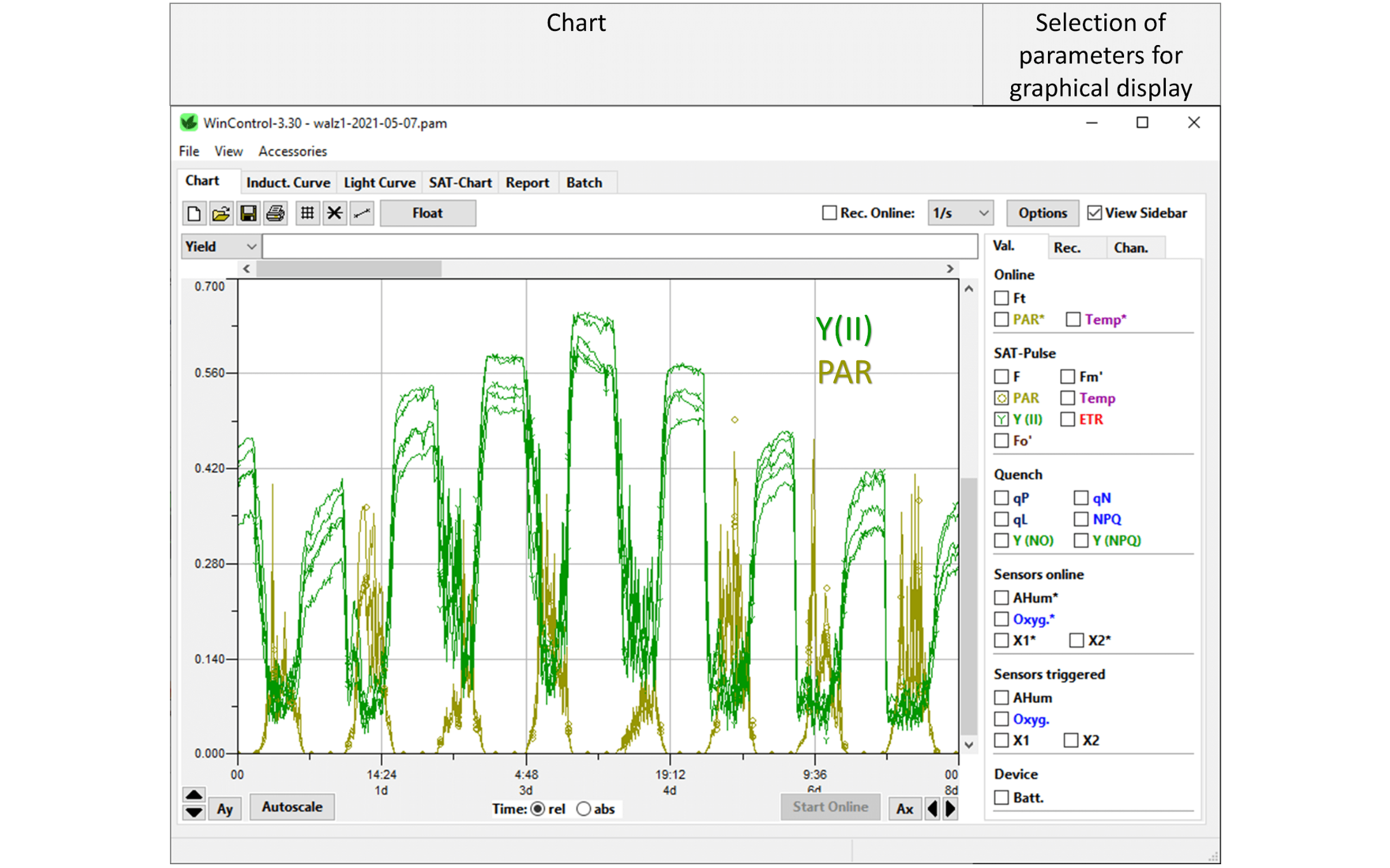
The WinControl-3 is a very versatile software dedicated to operate a certain class of Walz PAM fluorometers. The software executes classical experimental routines like fluorescence induction and light response curves, but also acquires and graphically display data. WinControl-3 not only operates the MICRO-PAM but also the DIVING-PAM-II, JUNIOR-PAM, MINI-PAM-II, and MONITORING-PAM fluorometers, as well as PAM-CONTROL operated instruments (MICROSCOPY-PAM, MICROFIBER-PAM and WATER-PAM) and the Universal Light Meter ULM-500.
Data Evaluation
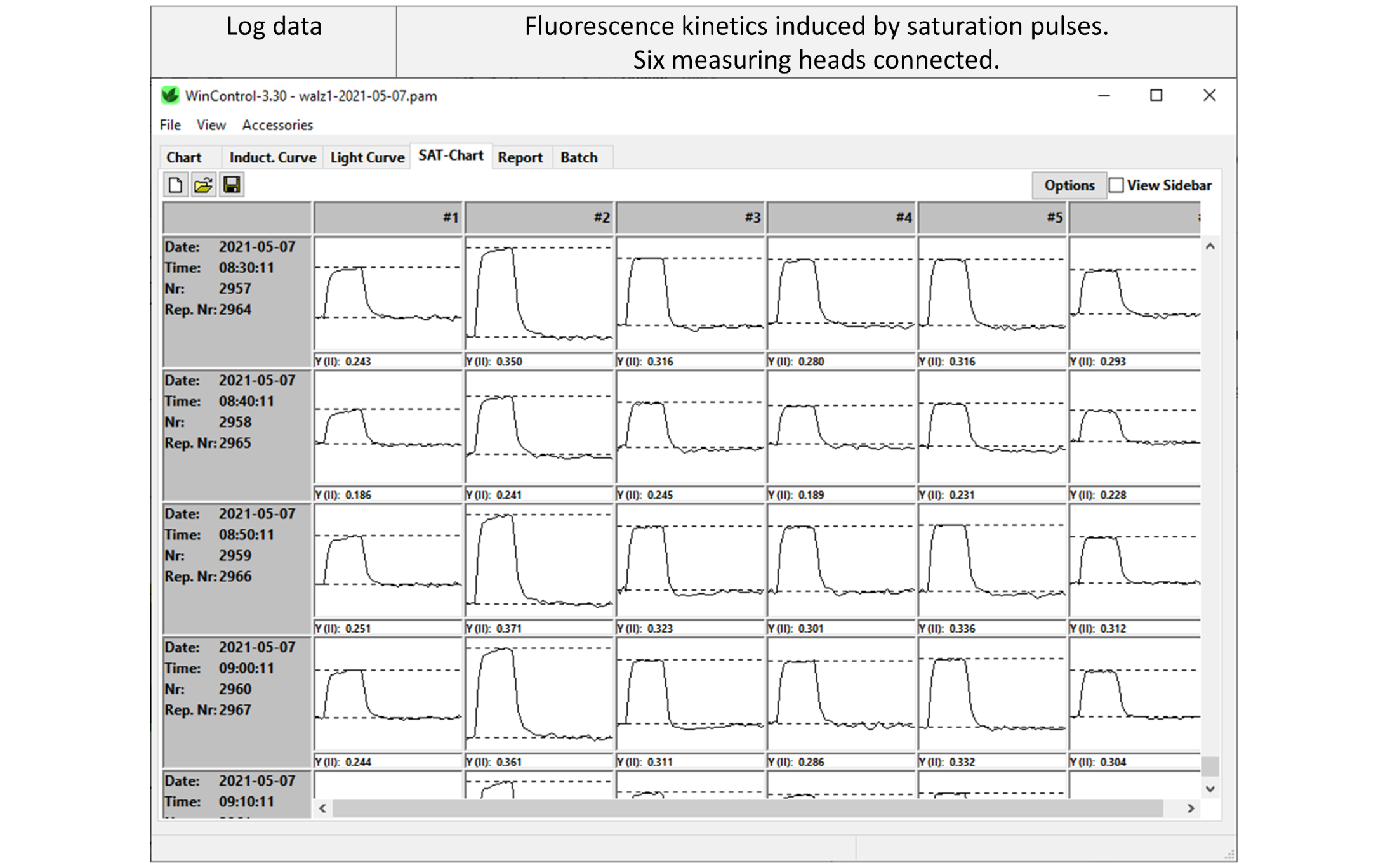
Saturating pulse analysis with automatic detection of fluorescence levels F0, FM, F, and FM’. Calculation of F0’ level fluorescence and of standard fluorescence parameters. Specifically, photochemical yield of photosystem II, FV/FM and Y(II), photochemical quenching, qP and qL, non-photochemical quenching, qN, NPQ, Y(NPQ), and Y(NO), and electron transport rate, ETR.
Advanced Features
All experimental protocols can be performed automatically using the batch file feature of WinControl-3. Convenient programming of experiments using the built-in macro recorder. The software is capable of DDE communication with peripheral machines.
Automated Routines
Repetitive triggering of fluorometer functions (e. g., dark-light induction and dark recovery curves) by adjustable clock. Automatic execution of light exposure protocols and fitting of two different model functions to data of light response experiments.
Data Export
Export of original fluorescence traces, saturating pulse analysis data and parameter estimates of light response curves as semicolon- or tab-separated data.
Comparing Monitoring Systems
System
MICRO-PAM
MONI-PAM
Measuring Head
MICRO-HEAD/3B
MONI-HEAD/485
Weight
96 g
205 g
Volume
189 cm3
365 cm3
PAR Sensor
External
Internal
Temperature Sensor
External (Thermocouple)
Internal
Humidity Sensor
Internal
Absent
Optical Pathway
Fiber
Lens
Weather Resistance
Coating of electronic circuitry to protect against moisture
Waterproof Housing
Underwater Version
Not available
Available
Power Consumption
3 W during SPmax
7 W during SPmax