WALZ Photosynthesis Instruments
  • Career
  • WALZ Academy
Contact Us
Overview
  • Show all
  • Show Products
  • Show Accessories
Field of use
  • Laboratory
  • Field
  • Water
Metrics
  • Photosynthetic Light Reactions
  • Gas Exchange
  • Light Measurement
Application
  • Corals
  • Algae
  • Surfaces
  • Leaves, Fruits & Branches
  • Lichen & Mosses
  • Suspensions (High Conc.)
  • Suspensions (Low Conc.)
Downloads
  • Product
  • General
Support
  • Technical Support
  • Repair Service
  • Contact
  • Tutorials
Sales
  • International Distributors
  • Request a Quote
Events
  • Meetings
  • Webinars
Company
  • About Us
  • History
  • Company Founder
  • News
  • Jobs
  • Overview
    • Show all
    • Show Products
    • Show Accessories
  • Downloads
    • Product
    • General
  • Support
    • Technical Support
    • Repair Service
    • Contact
    • Tutorials
    Sales
    • International Distributors
    • Request a Quote
  • Events
    • Meetings
    • Webinars
  • Company
    • About Us
    • History
    • Company Founder
    • News
    • Jobs
  • Career
  • WALZ Academy
Contact Us

LS-C Mini Quantum Sensor

Product

Tiny Versatile Mini Quantum Sensor

  • Overview
  • Specifications
Tiny Versatile Mini Quantum Sensor
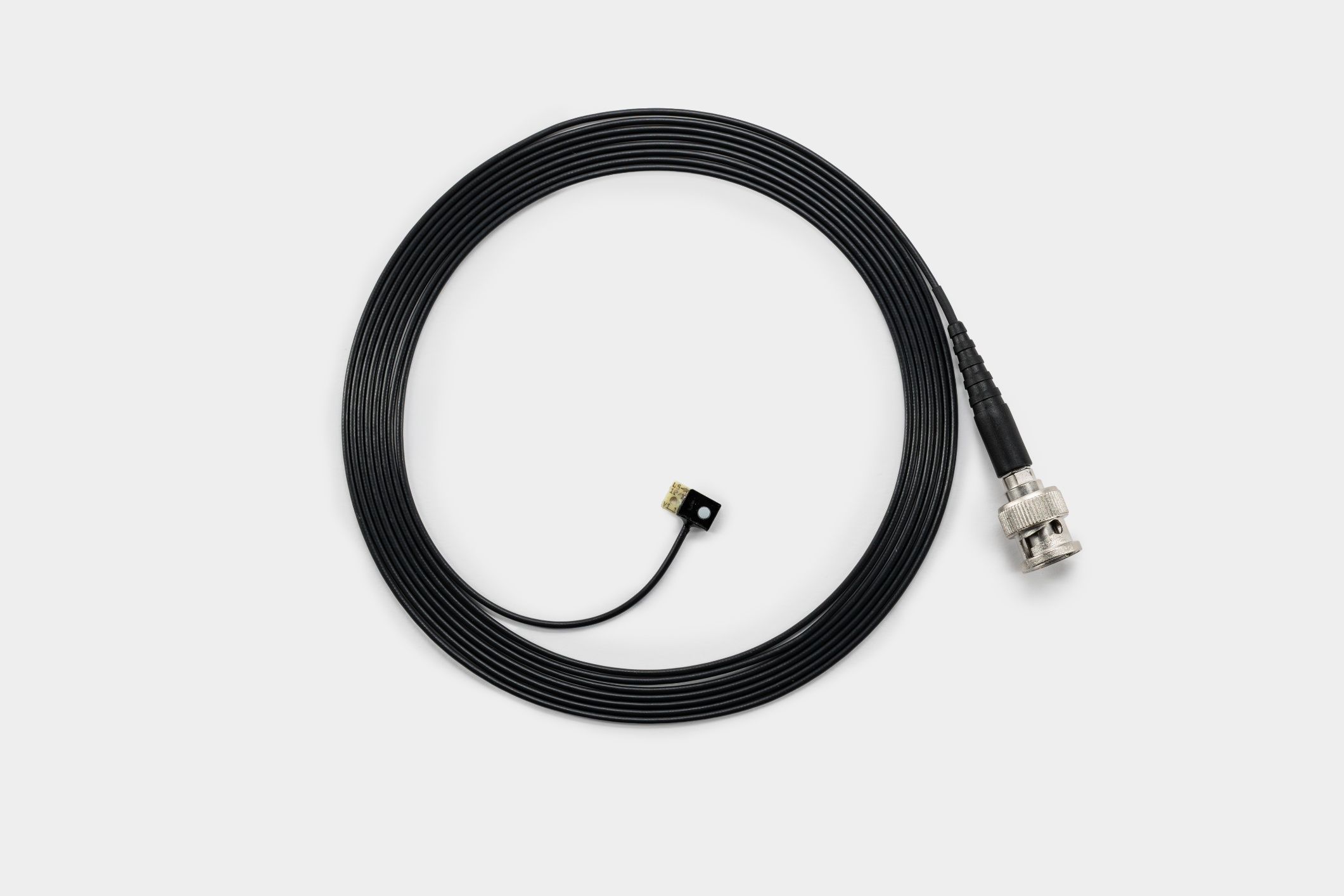
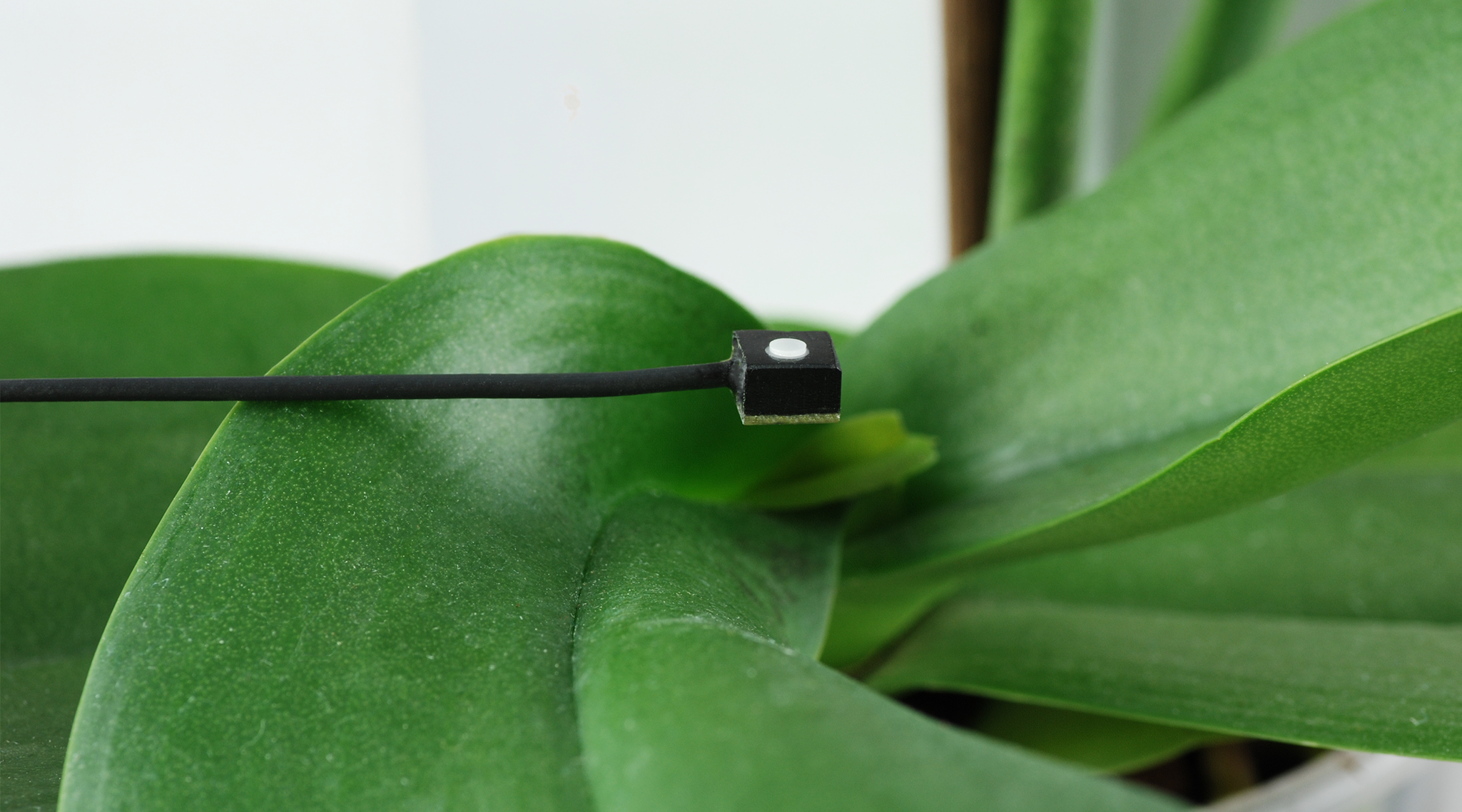
The Mini Quantum Sensor LS-C is a miniaturized and flat sensor that can be placed close to leaves in small spaces or within tubes if the quantity of photons striking a surface shall be measured . The LS-C measures photosynthetically active radiation (PAR) and is also very suitable as a reference sensor for our microscopy sensor MC-MQS/OVV due to its good spectral properties.

The sensor is well suited for light incident perpendicular to the surface between -30° and + 30°. For a completely cosine-corrected sensor, see MQS-B. To read out the measured values, our ULM-500 is a good choice.

The LS-C Sensor.
The LS-C Sensor.
The LS-C Sensor.
The LS-C Sensor.
Size comparison of the LS-C Sensor.

General Features LS-C Mini Quantum Sensor

Spectral Response

Fig. 1 shows the typical response between 350 nm and 750 nm of a LS-C sensor. The solid line shows the ideal response of a photon flux sensor for photosynthetically active radiation. For comparison Fig. 2, shows the response to energy flux rate from 350 – 750 nm.

Fig. 1: Spectral sensitivity of LS-C; blue line with dots: Typical spectral response of the LS-C for photon flux density (PFD); pink line: Ideal response of PAR-sensors.
Fig. 2: Spectral sensitivity of LS-C; blue line with dots: Typical spectral response of the LS-C for energy flux density (EFD); pink line: Ideal response for PAR-sensors.
Fig. 1: Spectral sensitivity of LS-C; blue line with dots: Typical spectral response of the LS-C for photon flux density (PFD); pink line: Ideal response of PAR-sensors.
Fig. 2: Spectral sensitivity of LS-C; blue line with dots: Typical spectral response of the LS-C for energy flux density (EFD); pink line: Ideal response for PAR-sensors.

Angular Response

The LS-C sensor uses a plastic diffuser to obtain an angular response error of less than ± 3% (-30…30 ° angle). Fig. 3 shows a typical angular response curve of the LS-C sensor compared to the ideal characteristic.

Fig. 3: Angular dependence of LS-C; black dots: Typical sensitivity of the LS-C sensor; green line: Ideal cosine response.
Fig. 4: Typical error of angular dependence of the LS-C sensor in comparison to an ideal cosine response.
Fig. 3: Angular dependence of LS-C; black dots: Typical sensitivity of the LS-C sensor; green line: Ideal cosine response.
Fig. 4: Typical error of angular dependence of the LS-C sensor in comparison to an ideal cosine response.

LS-C Mini Quantum Sensor

Design of sensor

Small versatile waterproof mini quantum sensor for selective PAR measurement, cosine corrected for light incident at an angle between -30 ° to +30 ° from surface normal for PPFD (photosynthetical photon flux density) measurement, with base plate for screw connection.

Sensor housing

Black resin material

Diffuser material

Perspex

Signal detection

High stability silicone photovoltaic detector with filter set for PAR correction (see “General Features” for typical response)

Signal output
Typically 10 μA / (1000 μmol m-2 s-1)
Temperature coefficient of photodiode

0.01 %/K

Absolute calibration
± 10 %
Immersion coefficient
Typically 1.15
Angular dependence
Error < 3 % for angle between -30 ° and +30 ° from normal axis (see chart for typical response)
Design of sensor
Microscopy quantum sensor for PPFD (photosynthetical photon flux density) measurement.
Operating temperature
- 5 °C … + 45 °C
Cable length
3 m
Connector

BNC

Size

Base plate: 12 mm x 7 mm x 1 mm (H x W x L)
Sensor housing 5 mm x 7.5 mm x 7 mm (H x W x L)
Diffuser diameter: 3 mm

Weight

26 g

Design of sensor

Microscopy quantum sensor for PPFD (photosynthetical photon flux density) measurement.

Sensor housing

Black anodized aluminum housing

Diffuser material

Resin with fluorescence dye

Signal detection

High stability silicon photovoltaic. Signal output typically 1.5 μA / (1000 μmol m-2 s-1)

Temperature coefficient of photodiode

0.01 %/K

Absolute calibration

± 5 %

Operating temperature

0 °C … + 40 °C

Cable length

55 cm

Connector

BNC

Power supply

Not required

Size

Height: 5.5 mm
Length: 76 mm
Width: 26 mm
Diffuser diameter: 0.2 mm

Weight
36 g
Design

Light grey plastic housing with connectors, membrane keyboard and a white illuminated LCD graphic display

Dimensions

12 x 7.5 x 3.5 cm

Weight

210 g (including 4 AAA 1.5 V batteries)

Power supply

4 AAA-type batteries or 5 V DC from USB voltage source when connected to the computer

Working conditions

up to 85 % rH (avoid condensation), - 20° to + 50°C ambient temperature

Time resolution

PAR channel #1: 100 samples / second, PAR channel #2 and other channels: 5 samples / second (connected to computer running WinControl-3 software)

Operation time

10 days or ca. 100 days automated logging with sleep mode (1 meas. / 5 min). Unlimited working time via USB connection (PC-software WinControl-3 – no sleep mode)

Inputs
  • Two BNC-connectors for the connection of two PAR-sensors with individual calibration factors between -50.0 and -9999.9 (memory for 10 calibration factors), range switchable in 5 steps 250 nA to 0.6 mA
  • Connector for Monitoring Leaf-Clip JUNIOR-B; an adapter is available for the connection of the Leaf-Clip Holder 2030-B, and the Micro Quantum/Temp.-Sensor 2060-M
  • Connector for additional digital sensors (still under development)
  • USB-Connector for connection with computer (software: WinControl-3)
Memory

Flash memory used as ring buffer for 50000 lines (1 line / single measurement)

Display

White illuminated graphic display with 5 different display modes (1: all data; 2-4: two selected sensors in big letters; 5: chart mode for channel no. 1, with maximum, minimum and average indicated), resolution: 0.1 μmol m-2 s-1

Computer Connection

1 free USB socket. Processor, 1 GHz. RAM, 256 MB. Hard disc space, 20 MB. Screen resolution: 800 x 600 pixels. Interface, USB 1.1, 2.0 and 3.0. Operating system: Microsoft Windows 10 and 11.

Usage

Field
Laboratory
Light Measurement

Highlights

  • Exceptionally small.
  • Excellent spectral properties.
  • Cosine response at angles of incidence up to 60°.

Downloads

Go to downloads
Request a quote

Innovation and tradition: These are the driving forces which have made of Heinz Walz GmbH one of the world’s top producers of highly sophisticated photosynthesis measuring systems.

  • Jobs
  • Imprint
  • Contact
  • Privacy
  • Terms und Conditions
© 2026 Walz. All Rights Reserved.