MINI-PAM-II (SEO)
Version:
Photosynthesis Yield Analyzer
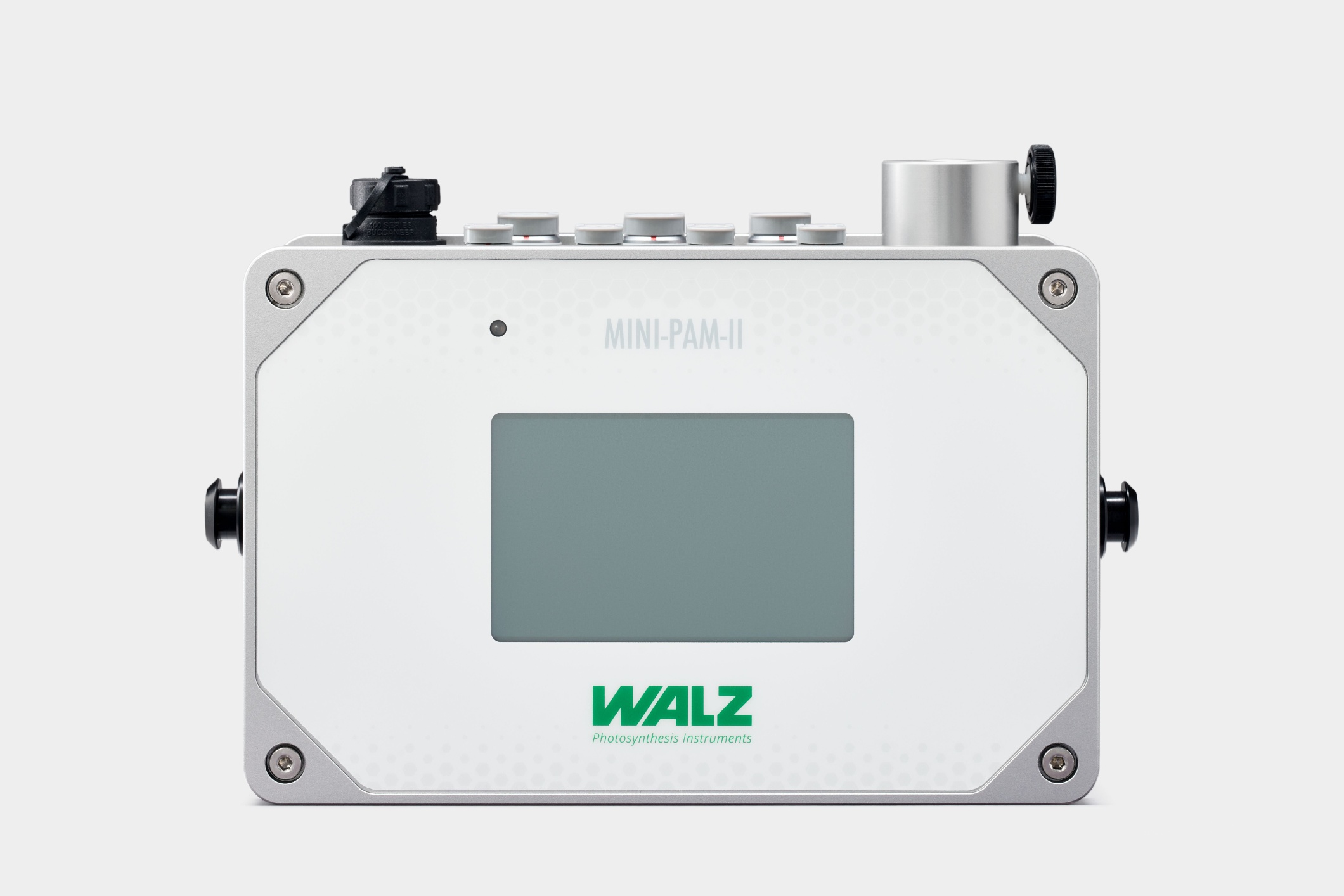
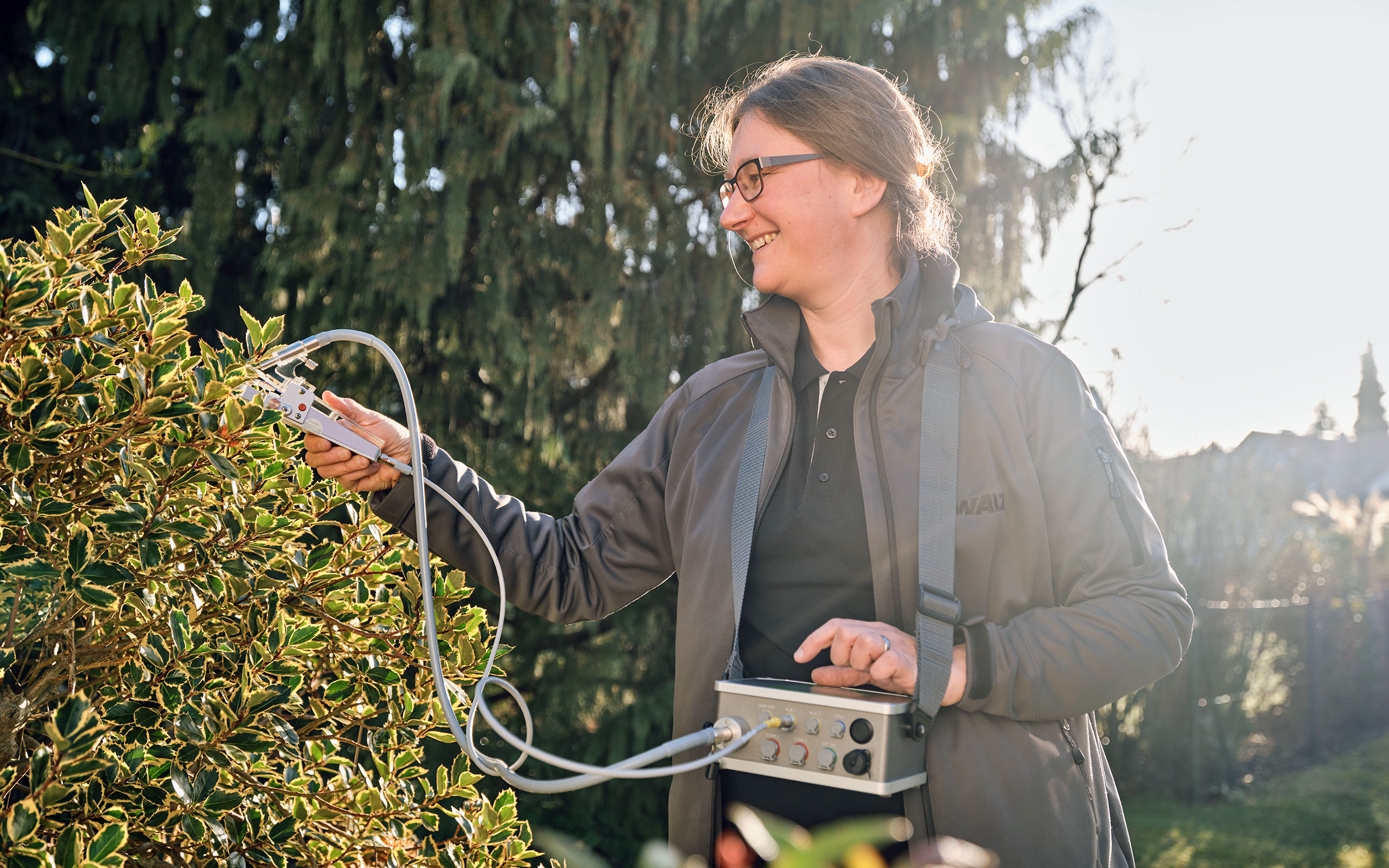
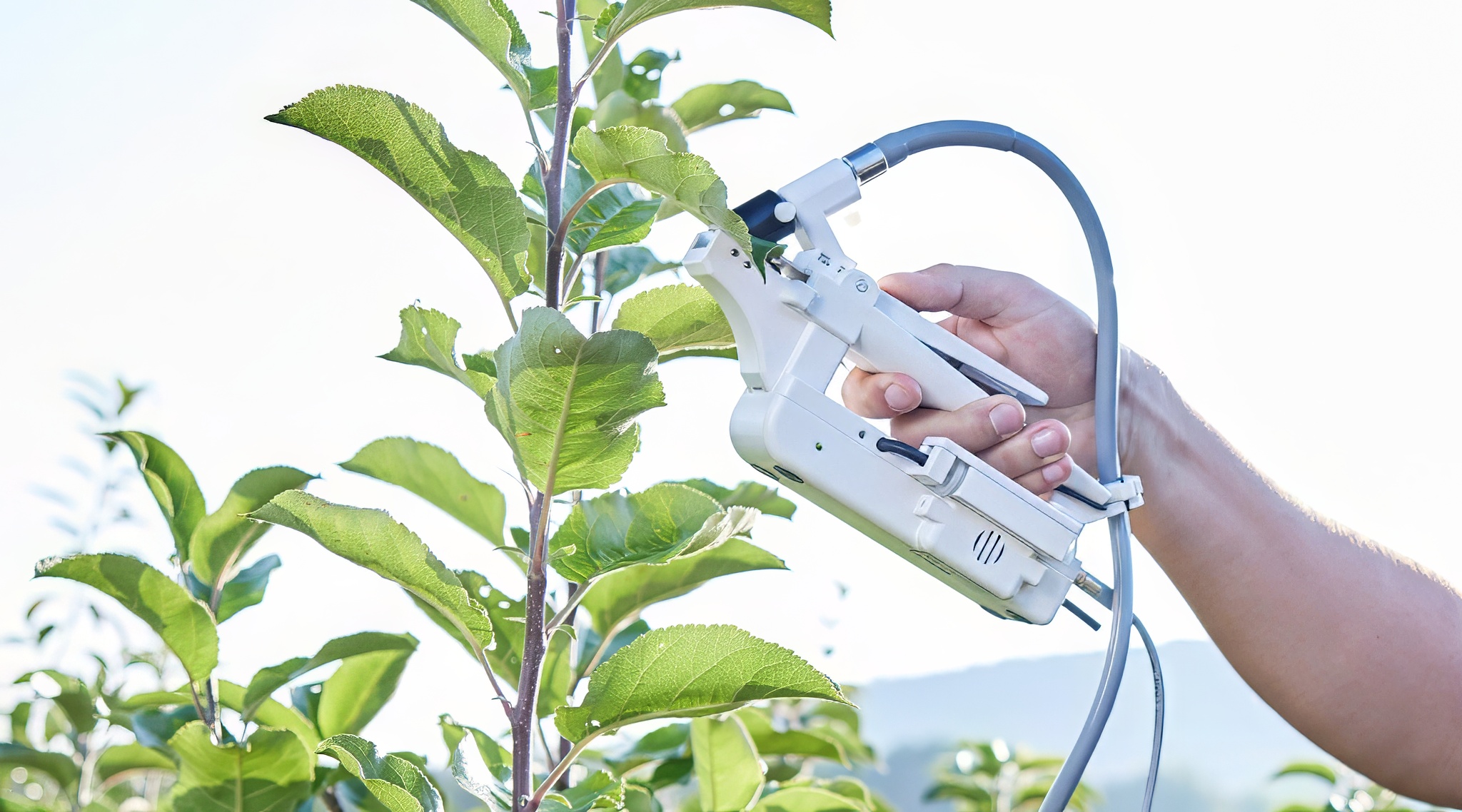
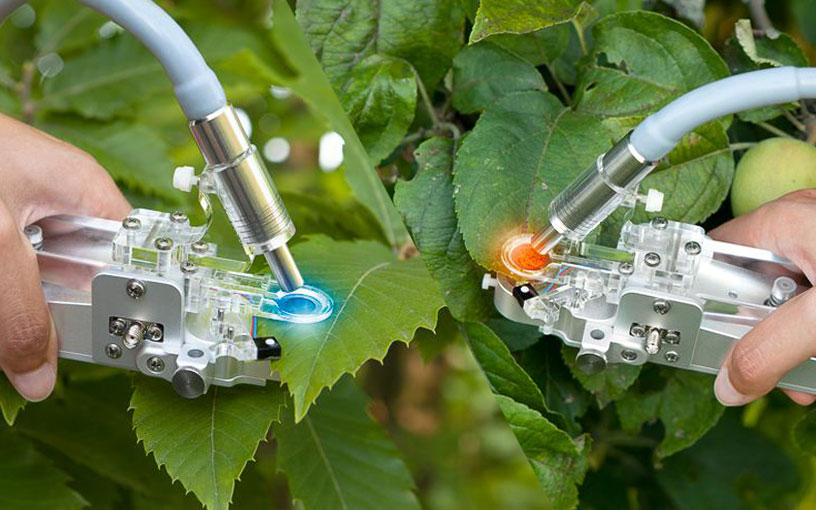
MINI-PAM-II – Portable Chlorophyll Fluorescence System for Field Research
The MINI-PAM-II is a portable fluorometer for measuring chlorophyll fluorescence using the pulse-amplitude modulation (PAM) method. It enables rapid assessment of photosynthetic performance and plant stress directly in the field. Chlorophyll fluorescence measurements provide non-destructive insights into photosynthetic performance and plant stress responses.
What is chlorophyll fluorescence?
Chlorophyll fluorescence is a small fraction of absorbed light that is re-emitted by chlorophyll molecules during photosynthesis. Measuring this fluorescence provides non-destructive information about the functional state of photosystem II (PSII). Chlorophyll fluorescence analysis is widely used to detect environmental stress, photoinhibition, nutrient deficiency, and acclimation responses in plants.
What is the MINI-PAM-II?
The MINI-PAM-II is a compact chlorophyll fluorescence fluorometer designed for in-situ measurements of photosynthetic activity in plants, algae, lichens, and cyanobacteria. Its portable design and robust construction allow reliable measurements under field conditions. Typical users include plant physiologists, ecophysiologists, agricultural researchers and environmental scientists. It is suitable for both controlled laboratory experiments and measurements conducted directly under field conditions.
How does the MINI-PAM-II work?
The MINI-PAM-II uses the pulse-amplitude modulation (PAM) technique, which separates fluorescence signals from ambient light using modulated measuring light. The measurement sequence typically includes: Modulated measuring light to detect baseline fluorescence. Saturation pulses to determine maximum fluorescence. Actinic light to drive photosynthesis. Calculation of fluorescence parameters describing PSII efficiency.
From these measurements the system automatically calculates many different parameters, for example:
- Maximum quantum yield FV/FM
- Effective PSII quantum yield Y(II)
- Non-photochemical quenching NPQ
- Electron transport rate ETR
Applications of the MINI-PAM-II
The MINI-PAM-II is widely used by plant physiologists, ecologists, agronomists, and environmental scientists to study photosynthetic performance and plant stress. Typical applications include field measurements of photosynthesis, monitoring seasonal acclimation and ecosystem responses, as well as analyzing stress caused by drought, heat, nutrient deficiency, or photoinhibition.
It is also used in teaching and for rapid screening of plant phenotypes in laboratory and greenhouse experiments. The instrument is particularly valuable for quick, non-destructive measurements directly at the site of interest under natural light conditions.
Why Use the MINI-PAM-II?
- Portable field operation for measurements outside the laboratory
- High signal sensitivity even under natural light conditions
- Large internal memory for long field campaigns
- Modular accessories for diverse applications
Compared to stationary fluorescence systems, the MINI-PAM-II offers greater flexibility and mobility while maintaining scientifically reliable measurement quality. The system is particularly suitable for in-situ measurements where laboratory instruments cannot be used.
Key Technical Specifications
Measuring Principle
Pulse-amplitude modulated (PAM) chlorophyll fluorescence
Diverse accessories
e.g., porometer, spectrometer, suspension cuvette, oxygen sensor
Optoelectronic Unit
available as red or blue version; far-red light
Fiber Optic
0.5 m standard up to 10 m; compatible with diverse adapters and leave clips
Battery & Field Operation
rechargeable Li-ion battery; up to 8 h continuous measurements
Different Versions for Different Applications
The MINI-PAM-II is available in different configurations tailored to specific experimental needs. For measurements of algae or other suspension samples, the Suspension Version - MINI-PAM-II is designed to enable reliable fluorescence measurements in liquid samples. For experiments requiring simultaneous analysis of photosynthesis and gas exchange parameters, the MINI-PAM-II/POROMETER allows measurements of chlorophyll fluorescence together with stomatal conductance in leaves or needles.