MINI-PAM-II (SEO)
Version:
Photosynthesis Yield Analyzer
Measure Photosynthesis Directly in the Field
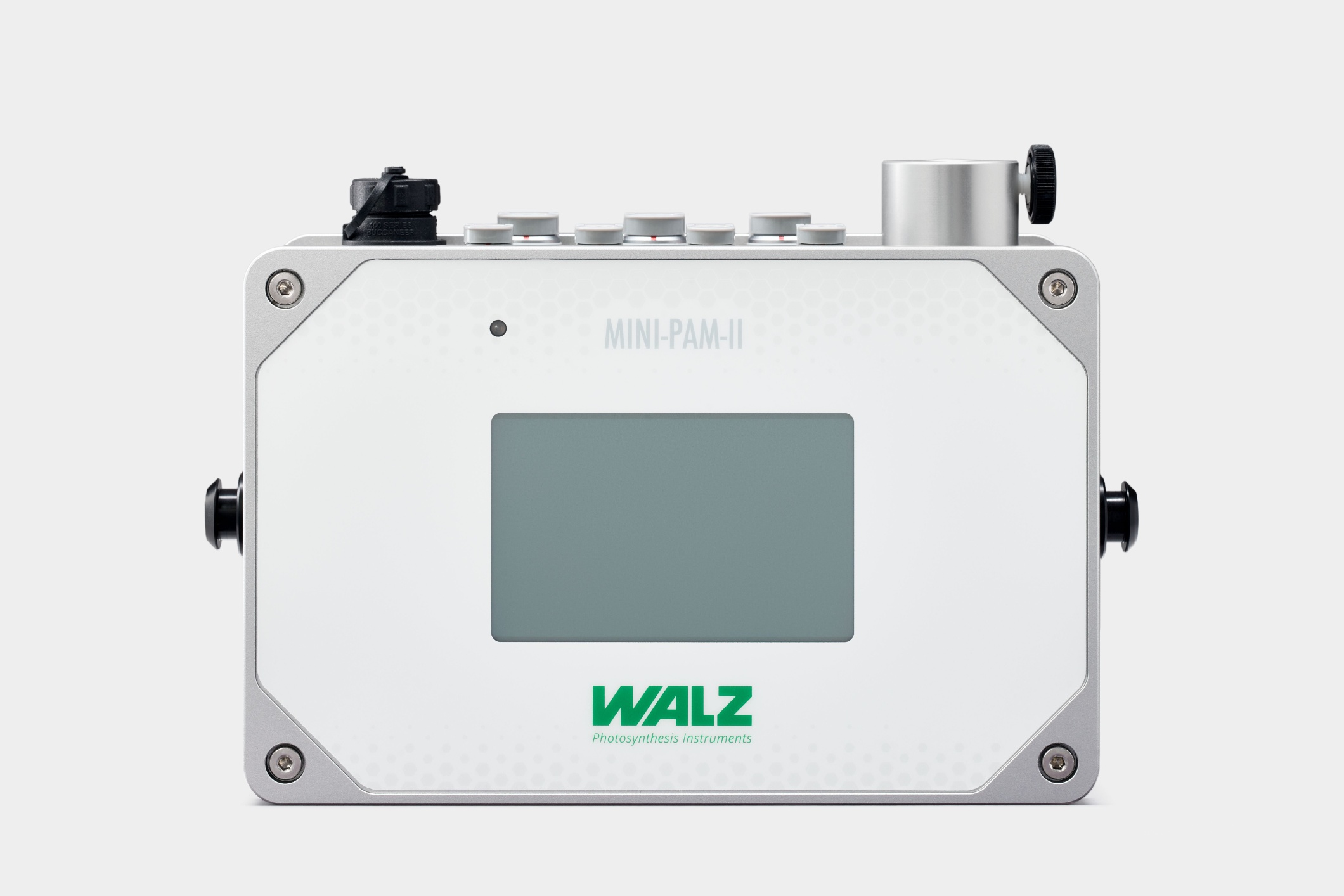
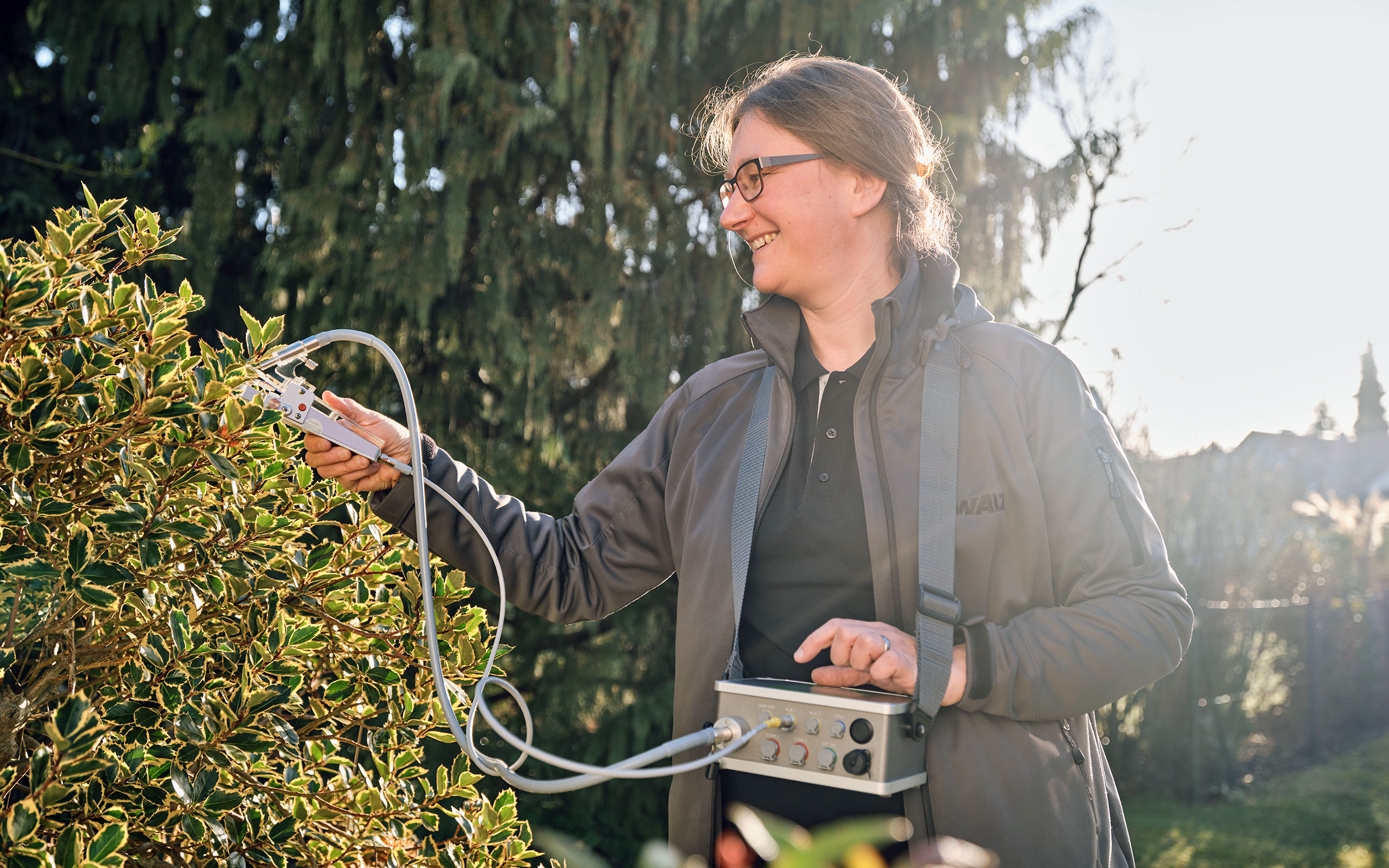
The MINI-PAM-II is a field-ready, portable chlorophyll fluorometer based on the pulse-amplitude modulation (PAM) technique. It enables rapid, non-destructive assessment of photosystem II (PSII) efficiency, electron transport rate, and plant stress responses — directly at the site of interest.
What is Chlorophyll a fluorescence?
When chlorophyll molecules absorb light during photosynthesis, a small fraction of that energy is re-emitted as fluorescence. Measuring this chlorophyll fluorescence signal provides a direct, non-invasive window into the photosynthetic performance of the plant without causing any damage. Chlorophyll fluorescence analysis is a well-established technique for detecting and quantifying environmental stress, photoinhibition, nutrient deficiency and acclimation processes in plants, algae, lichens and cyanobacteria. As the measurements are non-invasive, the same leaf or organism can be monitored repeatedly over time.
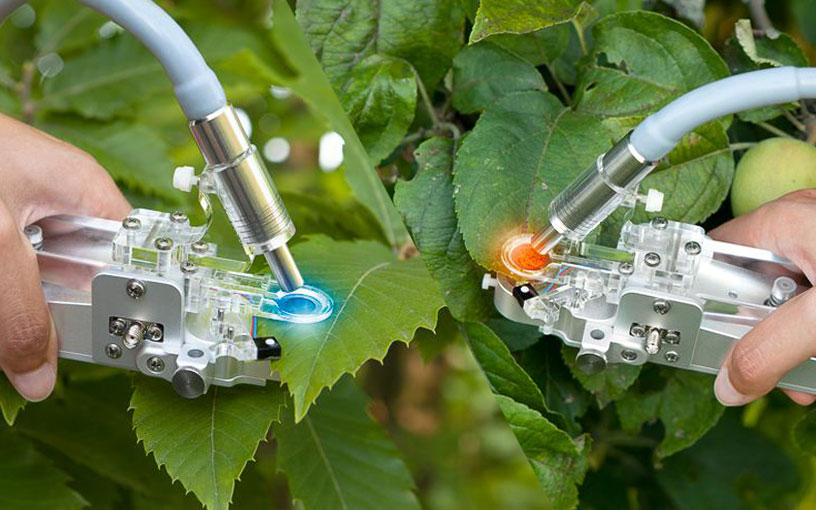
The MINI-PAM-II uses the pulse-amplitude modulation (PAM) technique - a technique that enables the detection of weak chlorophyll fluorescence signals even in full sunlight. The key principle is that the instrument emits rapidly pulsed measuring light at a defined modulation frequency. As the detector only responds to signals at this exact frequency, it can clearly distinguish the fluorescence emitted by the plant from the much stronger unmodulated ambient light. This separation allows reliable measurements to be taken in the field without the need to shield the leaf.
From these measurements the system automatically calculates many different parameters, namely FV/FM (maximum photochemical yield), Y(II) (effective photochemical yield) and its complementary yields Y(NPQ) and Y(NO), as well as parameters of photochemical (qL, qP) and non-photochemical quenching (NPQ, qN).
Typical Applications
From agricultural fields to coral reefs, the MINI-PAM-II is used across a wide range of real-world research scenarios. The following examples illustrate how researchers apply portable PAM fluorometry to answer specific questions about photosynthetic performance and plant stress - quickly, non-destructively, and directly at the site of interest. Some typical research questions are for example:
Why Use the MINI-PAM-II?
Compared to stationary fluorescence systems, the MINI-PAM-II offers greater flexibility and mobility while maintaining scientifically reliable measurement quality. The system is particularly suitable for in-situ measurements where laboratory instruments cannot be used.
- Portable field operation for measurements outside the laboratory
- High signal sensitivity even under natural light conditions
- Large internal memory for long field campaigns
- Modular accessories for diverse applications
Versatile Accessories for the MINI-PAM-II: Expanding Your Research
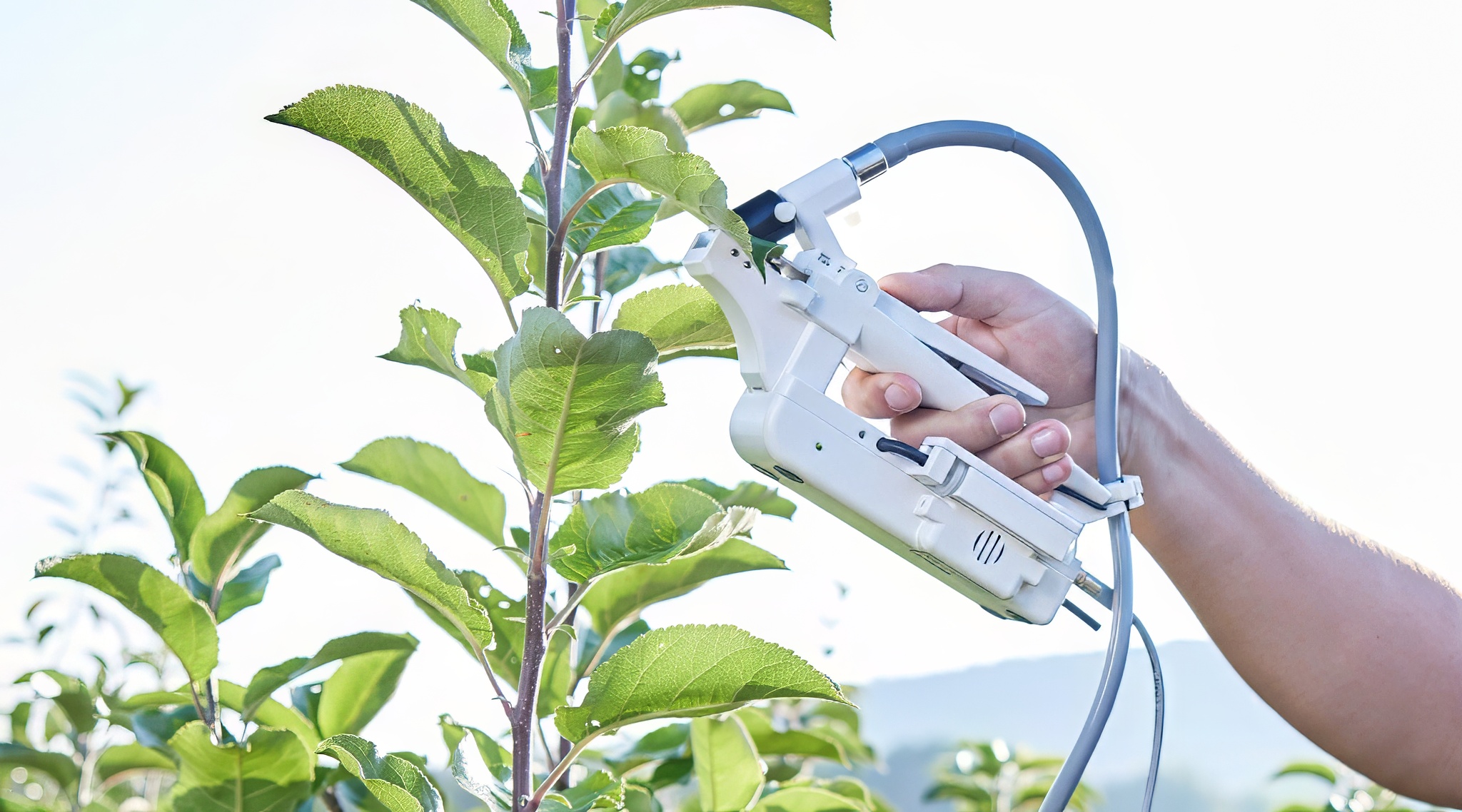
The MINI-PAM-II system offers a range of powerful accessories designed to broaden its application across diverse research settings. The MINI-PAM-II/POROMETER leaf-clip is a leaf porometer. It enables combined measurements of stomatal conductance and chlorophyll a fluorescence, making it ideal for rapid stress screenings, field studies, and detailed plant analysis - all within a compact, GPS-equipped device that delivers stable results in under 15 seconds. You can use it on leafs of any size, needles and leaf blades.
For suspension-based work, the Suspension version of the MINI-PAM-II using the KS-2500 cuvette paired with the MKS-2500 stirring unit allows simultaneous fluorescence and oxygen measurements in just 400 µl of sample, with optional temperature control via a connected water bath. Together, these accessories make the MINI-PAM-II a flexible and comprehensive tool for both laboratory and field-based photosynthesis research.