MONITORING-PAM
Fluorometer for Long-term Monitoring of Photosynthesis


Coral photosynthesis through record heat in the Gulf of Aqaba
A refuge facing record heat
Coral reefs are increasingly exposed to marine heatwaves that disrupt the symbiosis between corals and their photosynthetic algae. The Gulf of Aqaba, at the northern end of the Red Sea, is unusual: its corals tolerate temperatures that cause bleaching in many other regions. This has led scientists to consider the Gulf an important thermal refuge - but a refuge that is warming rapidly and still requires protection.
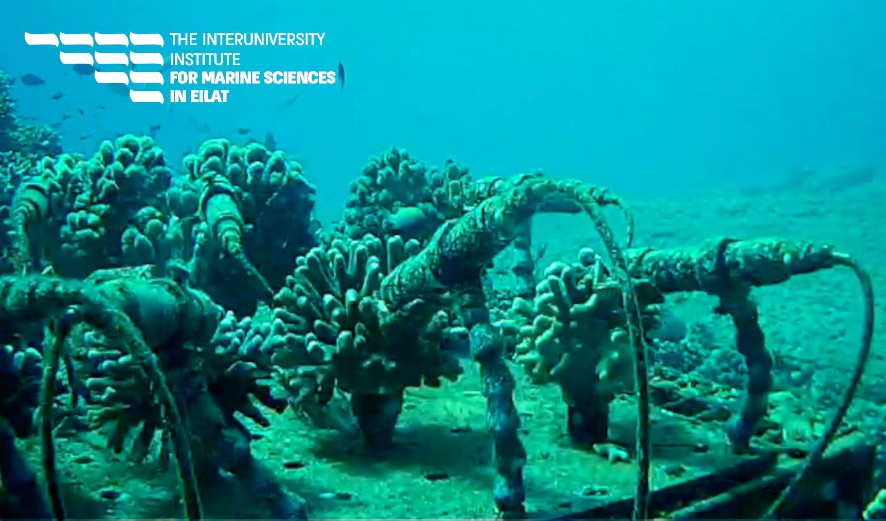
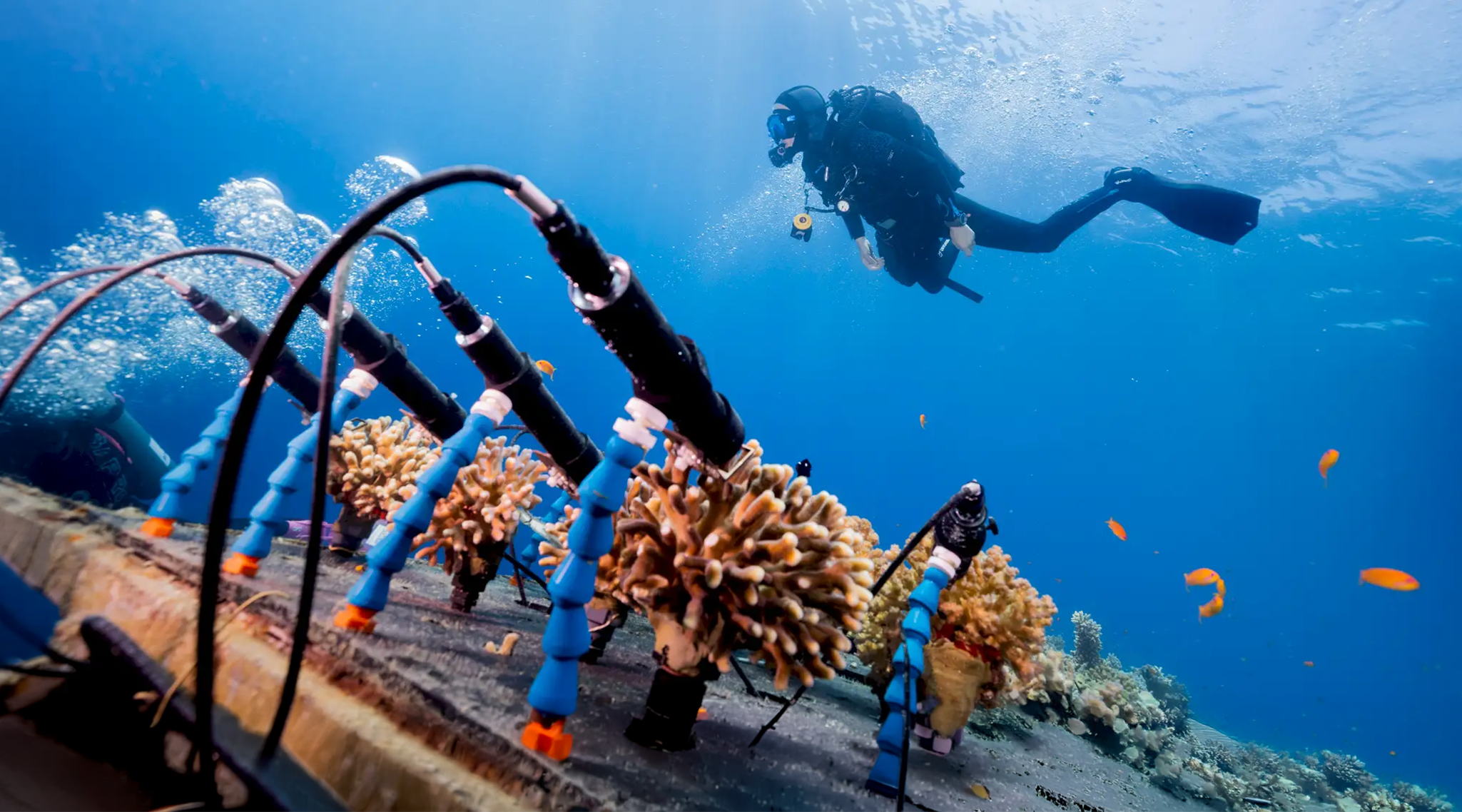
At seven meters depth in the northern Red Sea, a network of underwater Monitoring PAM records the photosynthetic activity of reef corals around the clock. Its observations during the severe 2024 marine heatwave provide a rare physiological window into one of the world's most resilient coral reefs.
Kochman and Fine followed tagged coral colonies through four consecutive and intensifying summers. The 2024 marine heatwave lasted 113 days. Surface water reached 32.6 °C and accumulated 30 Degree Heating Weeks, the highest value reported globally during 2024. Yet the monitored colonies maintained their photosynthetic performance and energy reserves. Some shallow colonies elsewhere in Eilat did bleach, however, warning that even this exceptional refuge may be approaching its limits.
Watching coral physiology in real time
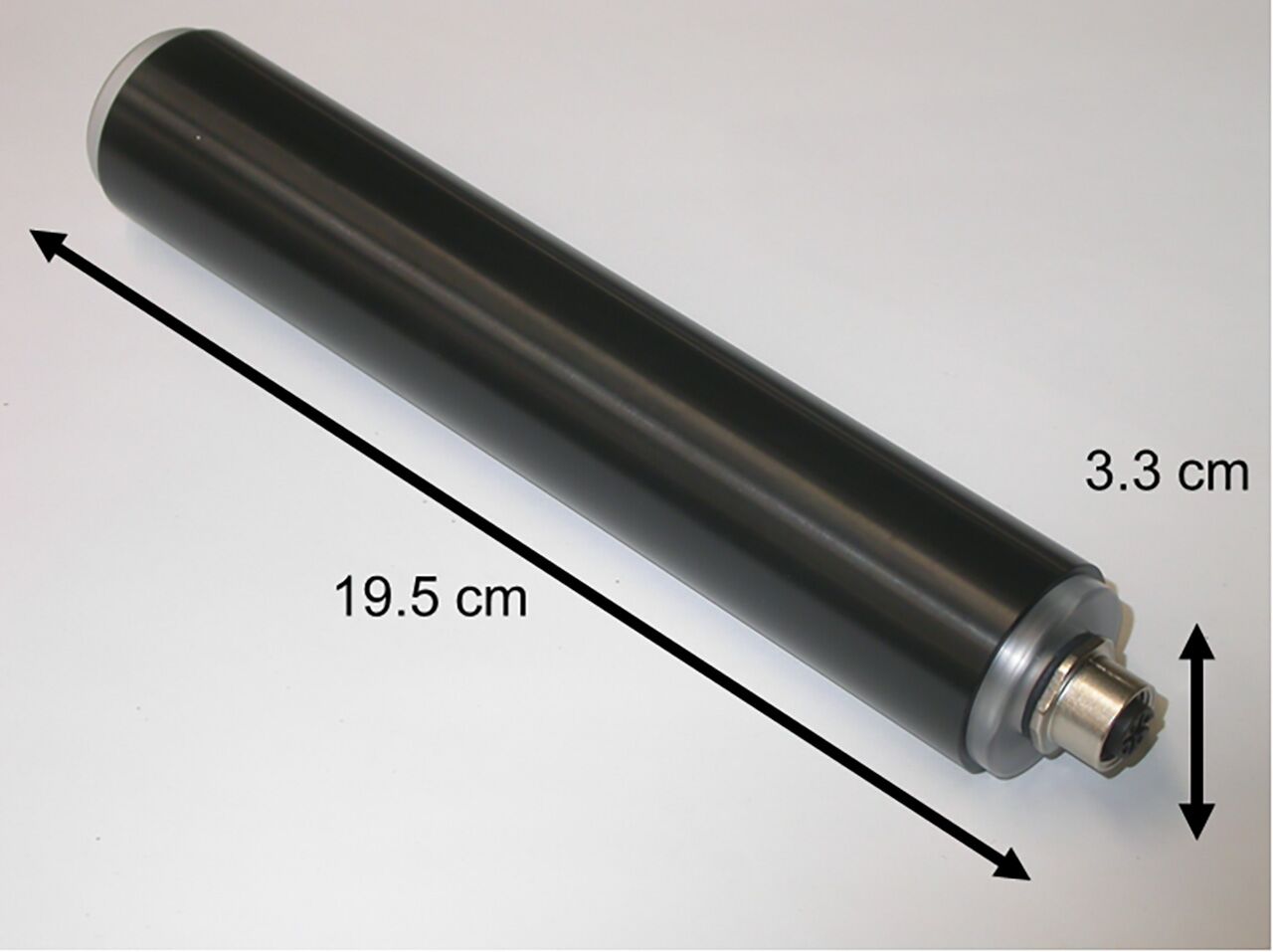
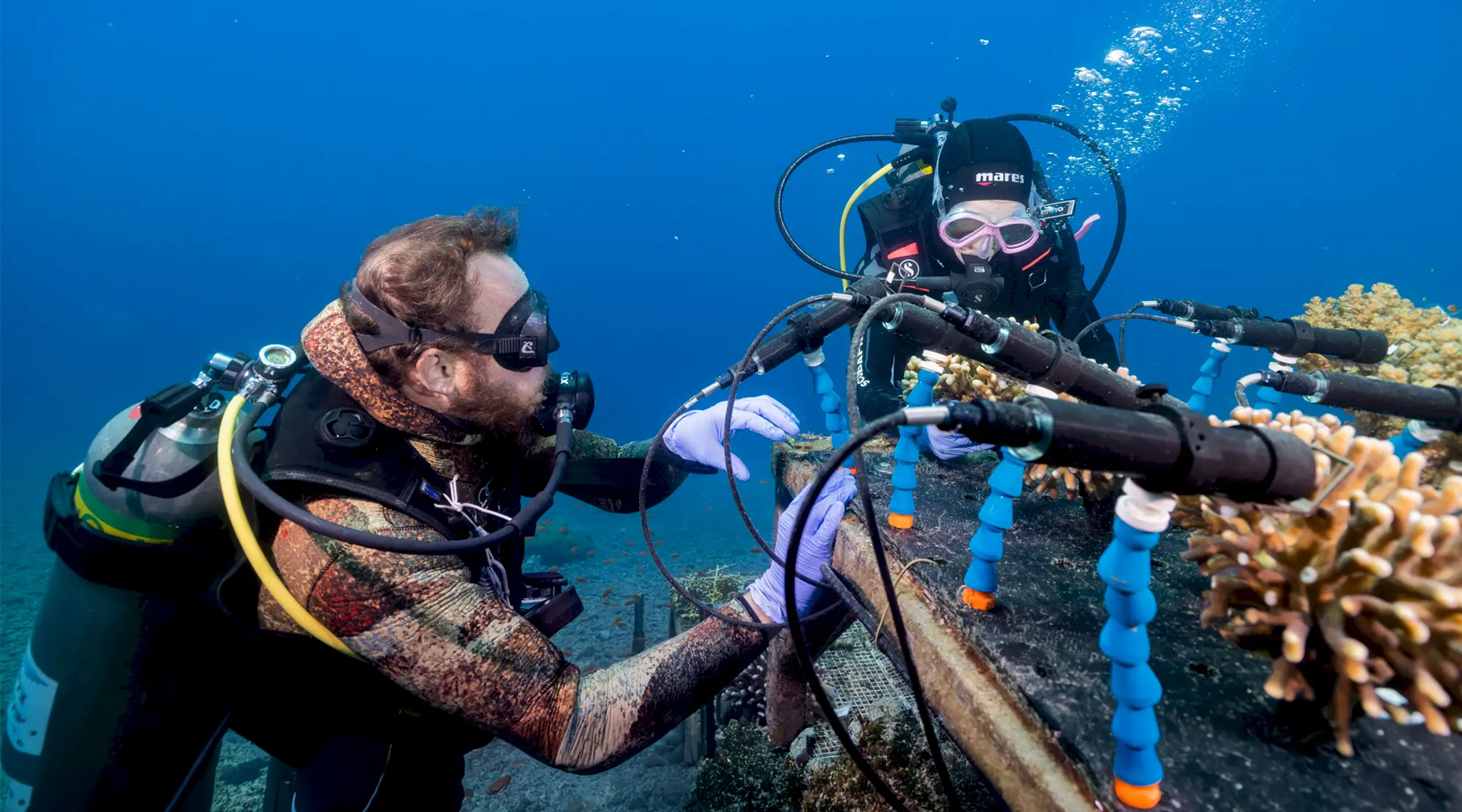
Coral Monitoring Station I was installed beside the Interuniversity Institute for Marine Sciences in Eilat. Eight underwater MONI-heads are positioned on individual Stylophora pistillata and Pocillopora damicornis colonies. The MONITORING-PAM system measures chlorophyll fluorescence together with light and temperature every 30 minutes during daylight and hourly at night (Life Data).
This non-invasive approach follows the same corals continuously. Saturation-pulse measurements calculate the effective quantum yield of Photosystem II, Y(II): the fraction of absorbed light that can be used in photosynthesis at the time of measurement. The station therefore captures both seasonal stress and the rapid daily adjustments that would be missed by occasional field sampling.
What the extended record reveals
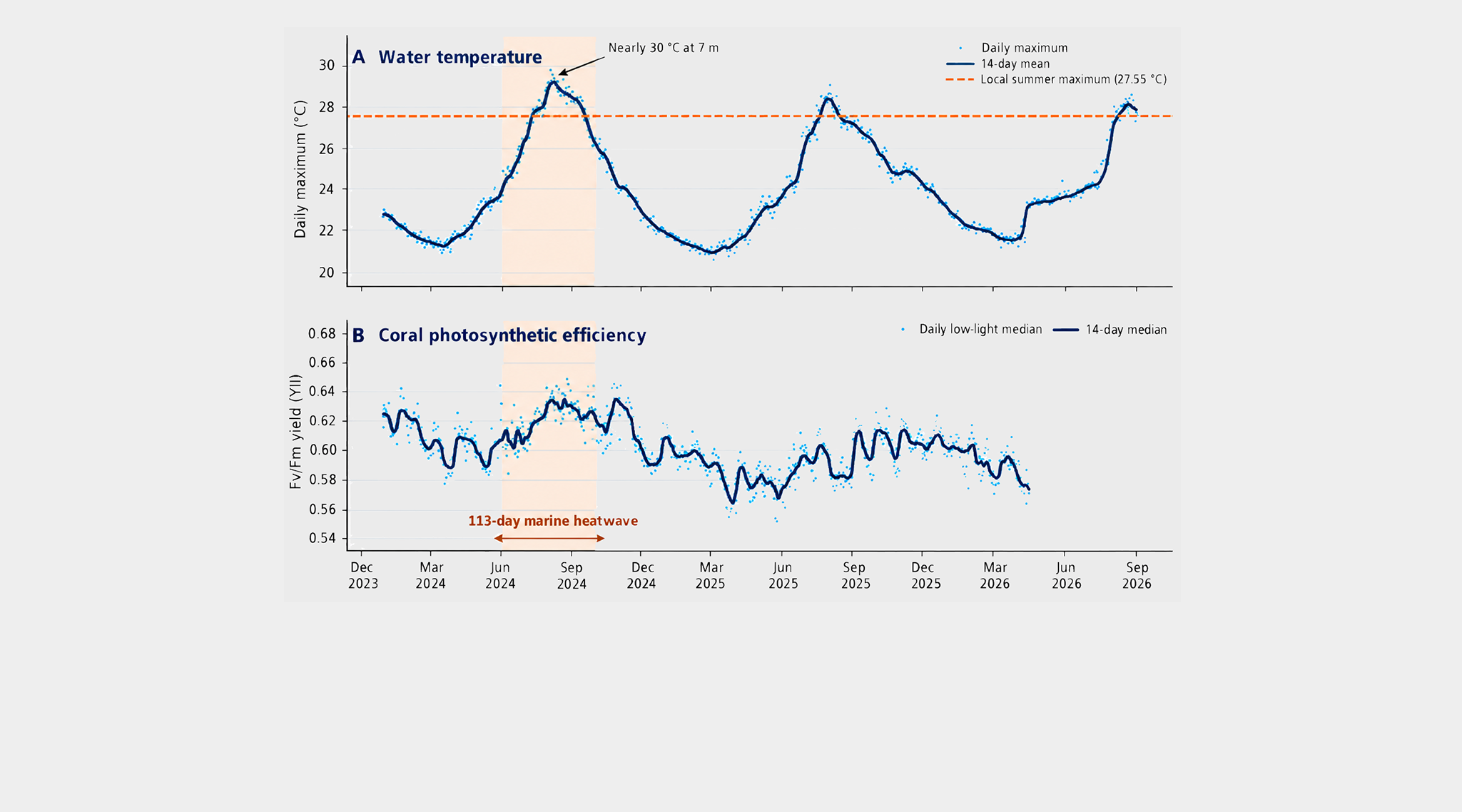
The January 2024-August 2026 record shows three annual warming cycles. Summer 2024 was the strongest at the monitoring depth, with daily maximum temperature approaching 30 °C. Even under this record heat, low-light PSII efficiency remained high, with no sustained decline corresponding to the exceptional 2024 temperature peak.
Together, the peer-reviewed physiological sampling and the continuous WALZ record show why long-term observatories matter. They connect extreme climate events to coral function at timescales ranging from minutes to years, while making the reef visible to researchers, managers, students and the public.
Peer-reviewed source: Kochman N-R, Fine M. (2025). Gulf of Aqaba as a thermal refuge: Insights from four years of intensifying marine heatwaves. Science of the Total Environment, 1000, 180463. https://doi.org/10.1016/j.scitotenv.2025.180463.
Reuse: The article is published open access under the Creative Commons CC BY 4.0 licence.
Photosynthesis in Lakes
The Limnological Research Station Iffeldorf of the Technical University of Munich (TUM), founded by Prof. Dr. Arnulf Melzer, is a hotspot for lake research in Germany. Ideally located at the Easter Lakes (German: Osterseen), the station covers a wide range of limnological research and teaching activities.
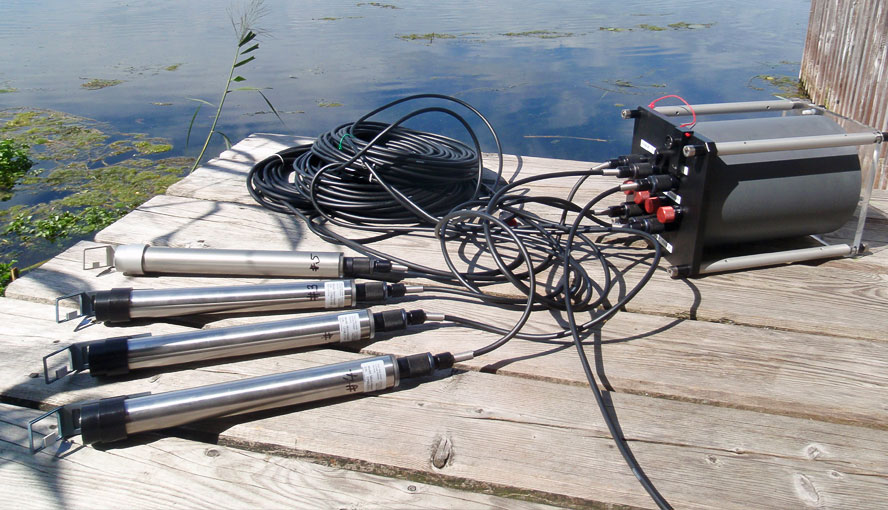
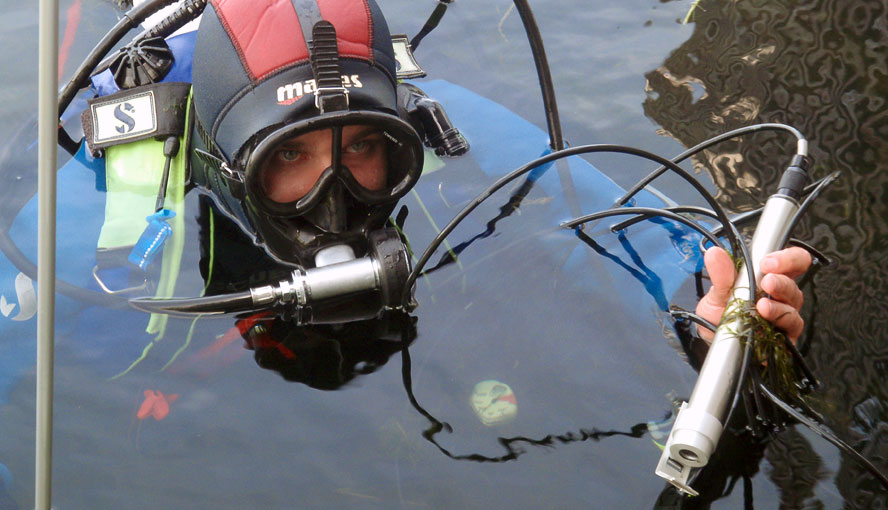
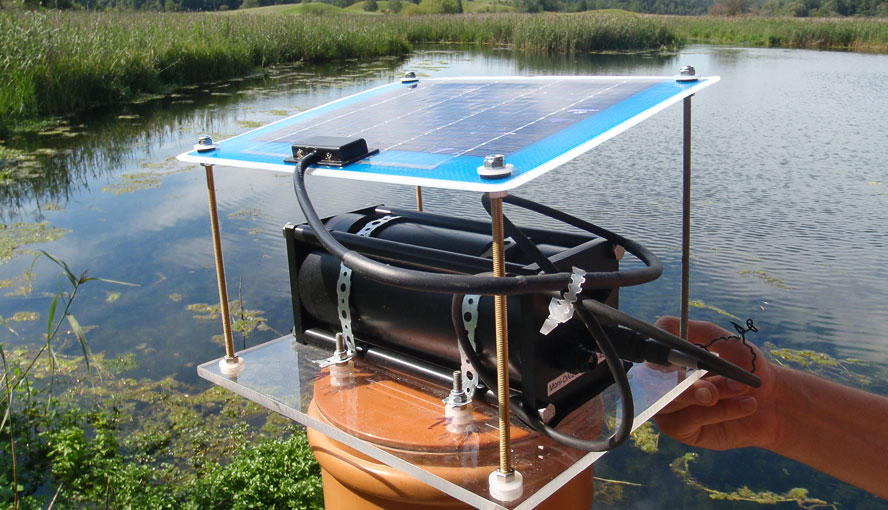
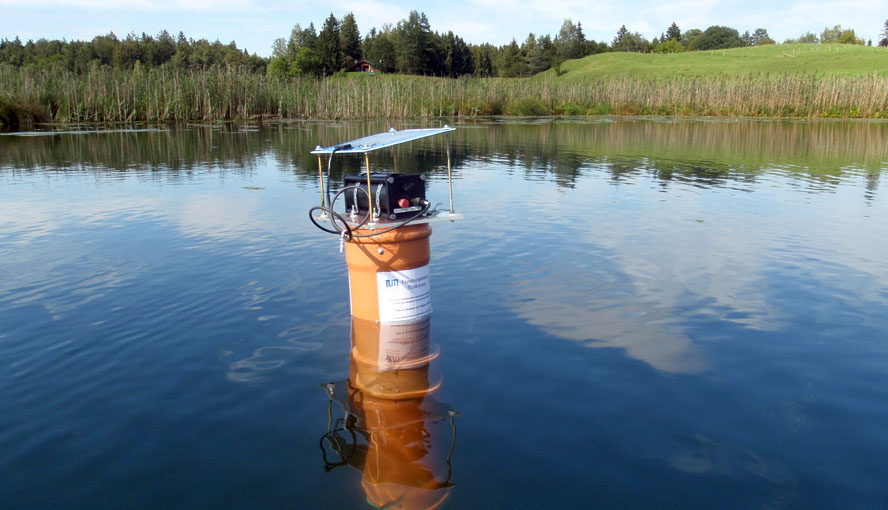
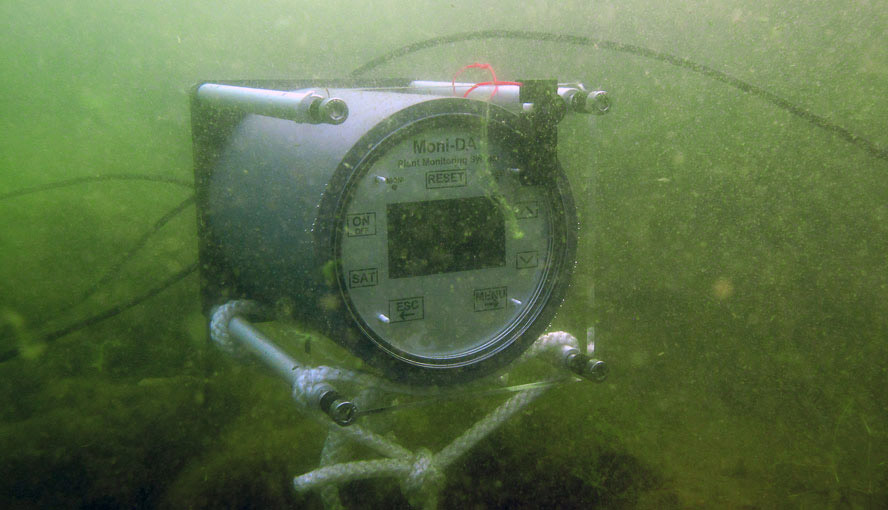
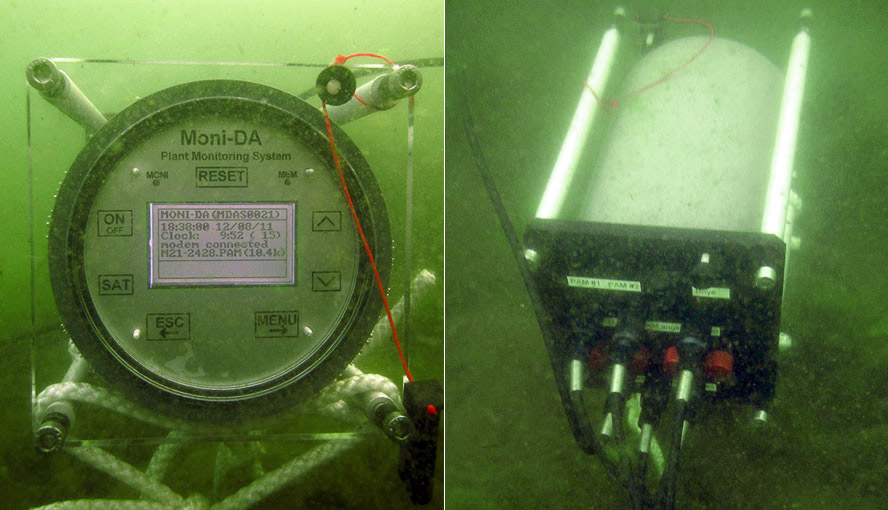
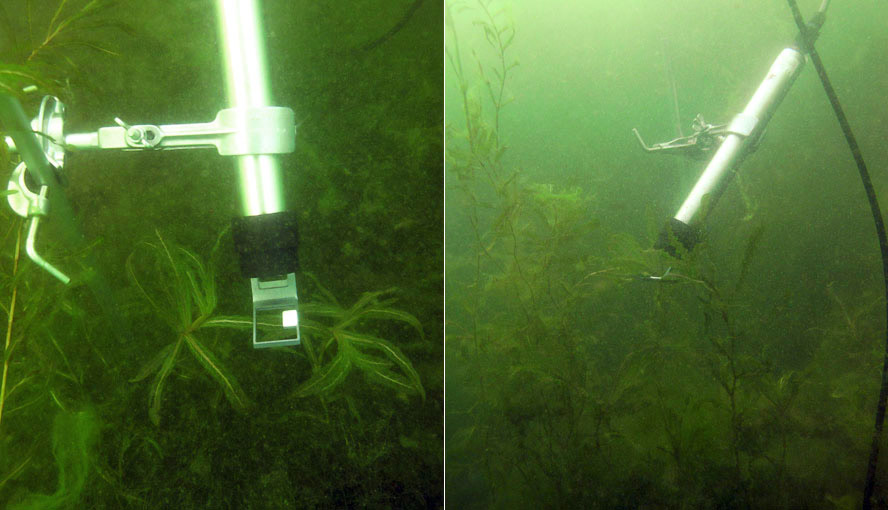
In one of these lakes, M.Sc. Nicolas Eckert and Rolf Gademann monitored photosynthesis in monocotyledonous plants over long time periods. In these experiments, the data acquisition system of the AQUATIC Version of the MONITORING-PAM was successfully recharged by a solar panel mounted on a buoy. Compatible with this setup would be the connection of a MONI-DA/SWIFI modem, which sends current data via the Walz cloud to the user’s computer.
The Geisenheim FACE Experiment
The FACE (Free Air Carbon Dioxide Enrichment) site of the Hochschule Geisenheim and a similar site of the Justus Liebig-Universität Giessen form the experimental backbone of the LOEWE research cluster “FACE2FACE”. With substantial support from the state of Hessen, researchers strive to understand how elevated CO2 of the earth’s future atmosphere affects life.
Being the outstanding center of German grapevine breeding and research for almost 150 years, the Hochschule Geisenheim naturally includes grapevine plants in their FACE research program. Currently, a white and a red grape variety are investigated: Riesling and Cabernet Sauvignon, respectively.
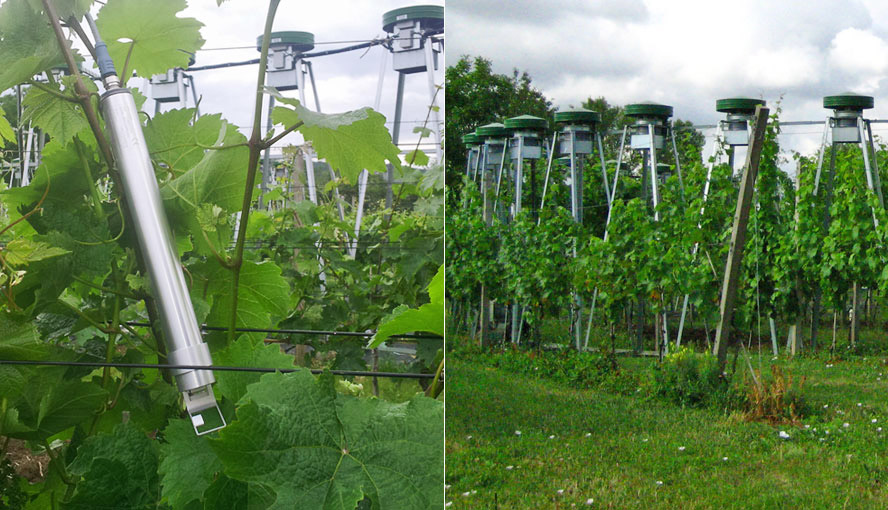
Right: Ring of CO2 outlets. Picture by courtesy of S. Tittmann and Y. Wohlfahrt, Hochschule Geisenheim.
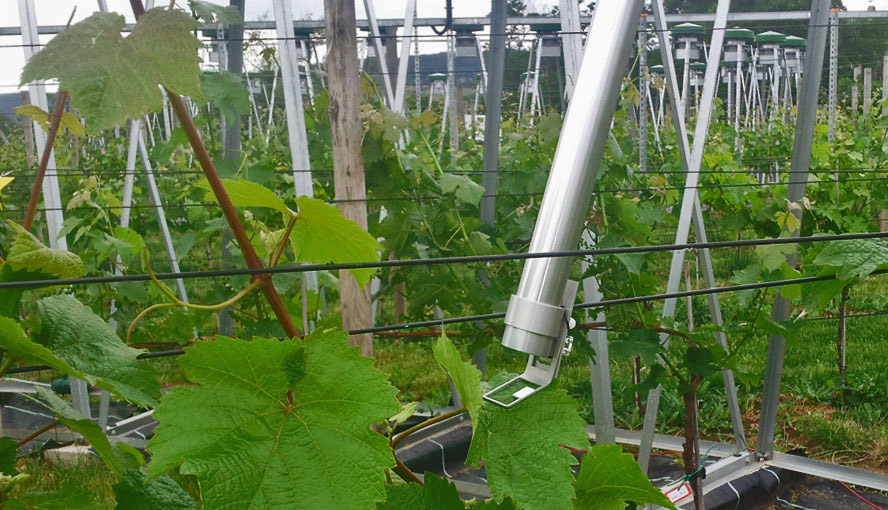
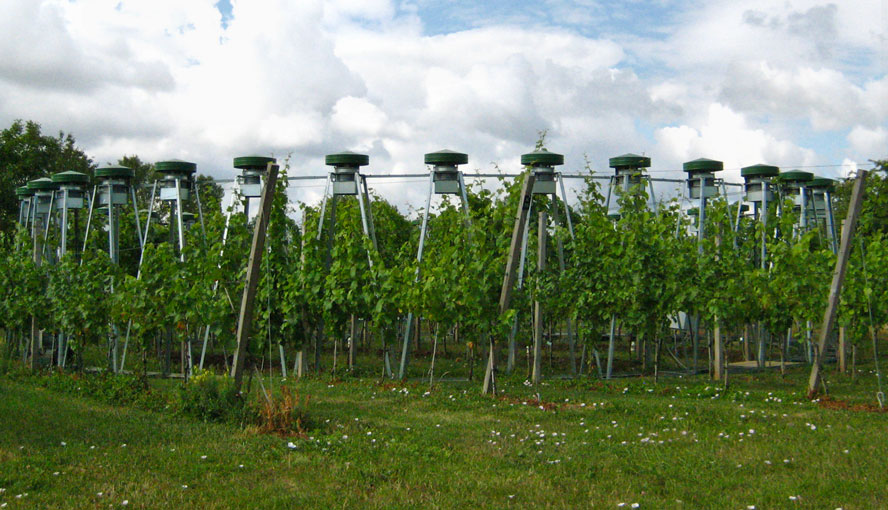
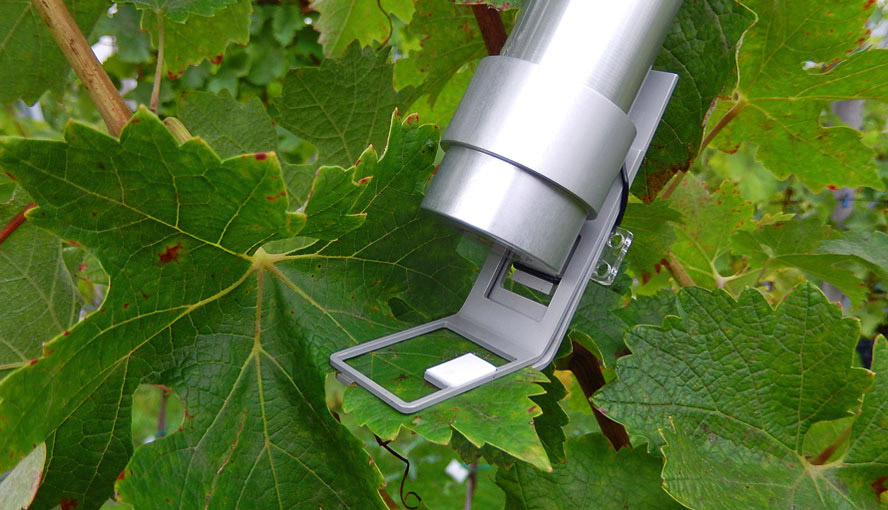
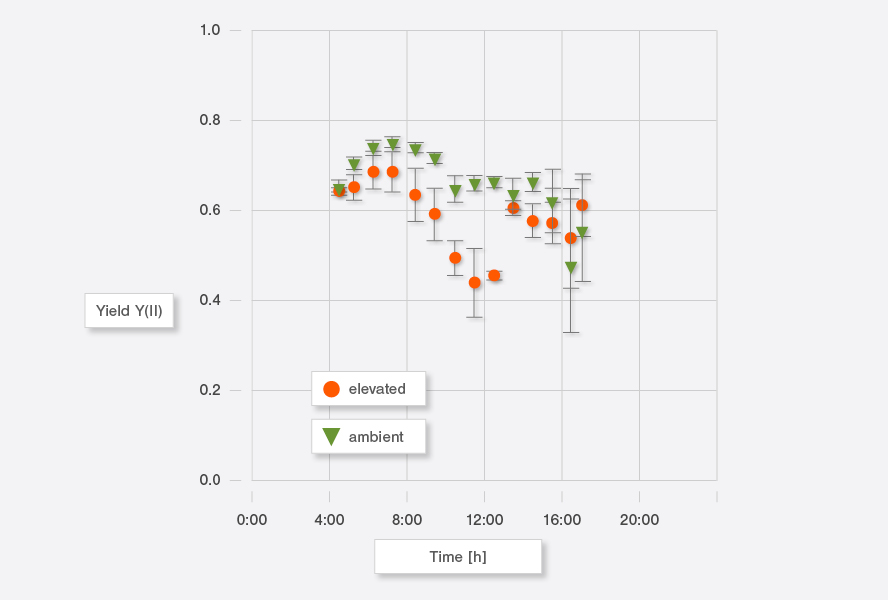
Led by Dr. Manfred Stoll, the Geisenheim research group records long-term effects on photosynthesis with two MONITORING-PAM systems, each capable of surveying simultaneously four samples. The MONITORING-PAMs determine data of Y(II) which indicate the efficiency of photosystem II to convert absorbed light into chemical energy. Figure 1 shows averages of 14 diurnal measurements of Y(II) carried out in June 2014.
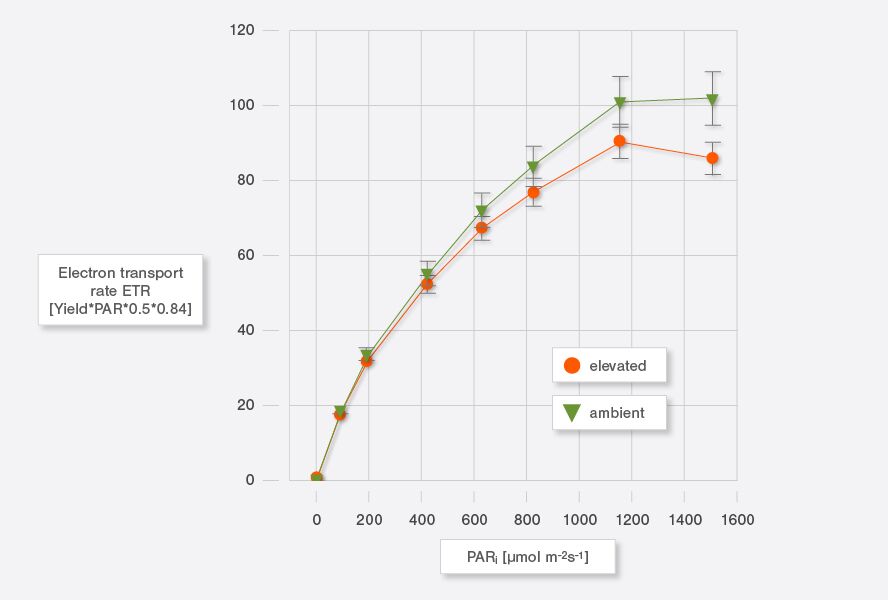
These daytime measurements were accompanied by experiments at night in which the response of Y(II) to increasing light intensities (PAR) from the MONI measuring heads was recorded. From Y(II) and PAR, photosynthetic electron transport rates were calculated and plotted against the respective PAR values (Fig. 2).
Based on these “light response curves”, acclimation state and maximum capacity of photosynthesis can well be assessed. The Geisenheim grapevine researchers crosscheck MONITORING-PAM data by CO2 gas exchange measurements using a GFS-3000 device. Apart from photosynthesis, the project is expected to yield general insights into plant growth, berry development, and wine quality under future climate conditions.
Continuous Monitoring
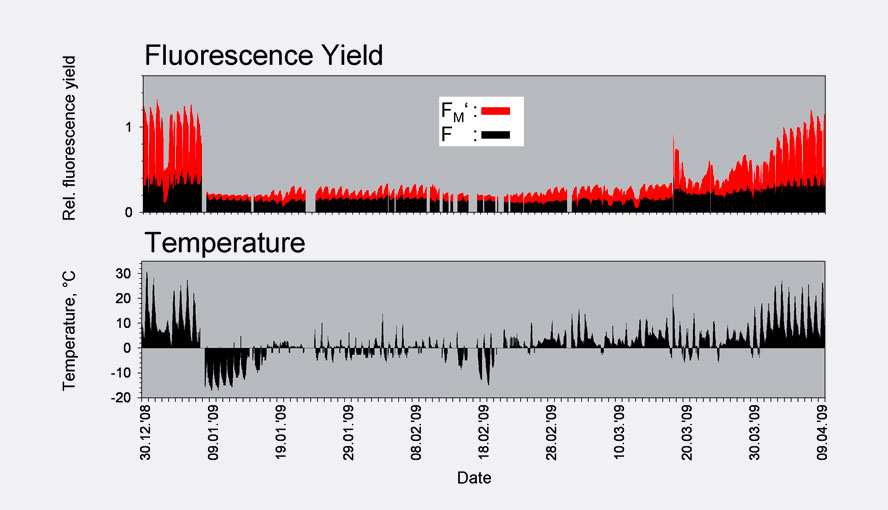
Continuous monitoring of fluorescence from a leaf of Ilex aquifolium, and of air temperature by the STANDALONE configuration of the TERRESTRIAL version of the MONITORING-PAM. The measurements reveal that Fm’ and F fluorescence levels dropped sharply during onset of a frost period on 07.01.2009. Fluorescence levels recovered close to initial values only at beginning of April when day temperatures reached 20°C and night temperatures did not drop below 5°C.
Likely, the sustained fluorescence quenching during low temperatures reflects markedly increased dissipation of absorbed light energy. This energy dissipation can prevent damage by light under very low temperature conditions when light energy can not be used by biochemistry.
The MONITORING-PAM in the Field
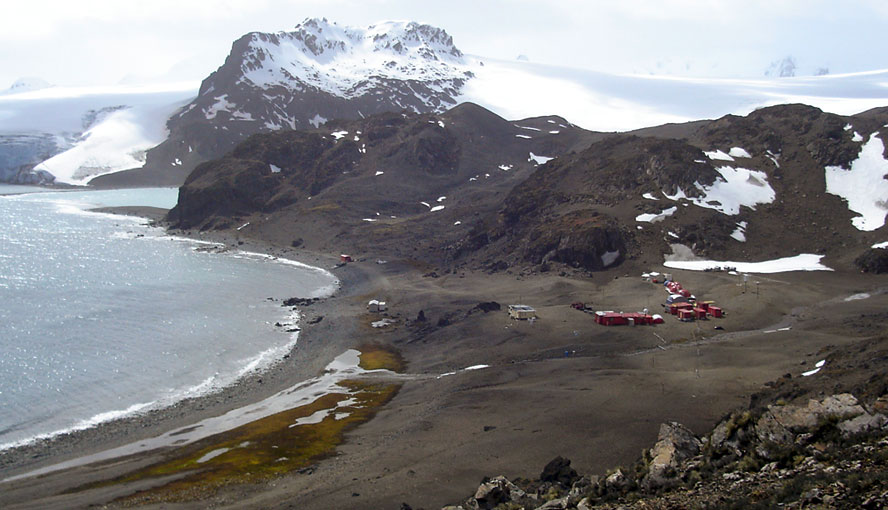
Photography by courtesy of Rolf Gademann.
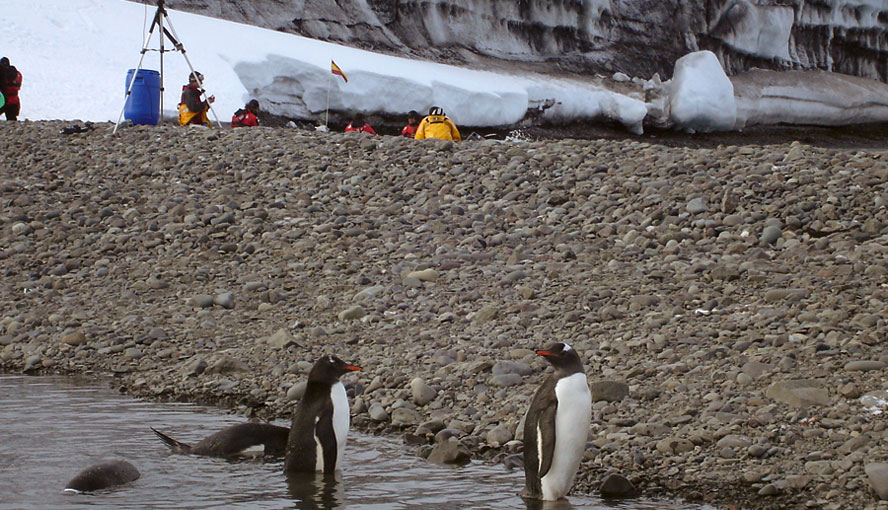
Photography by courtesy of Rolf Gademann.
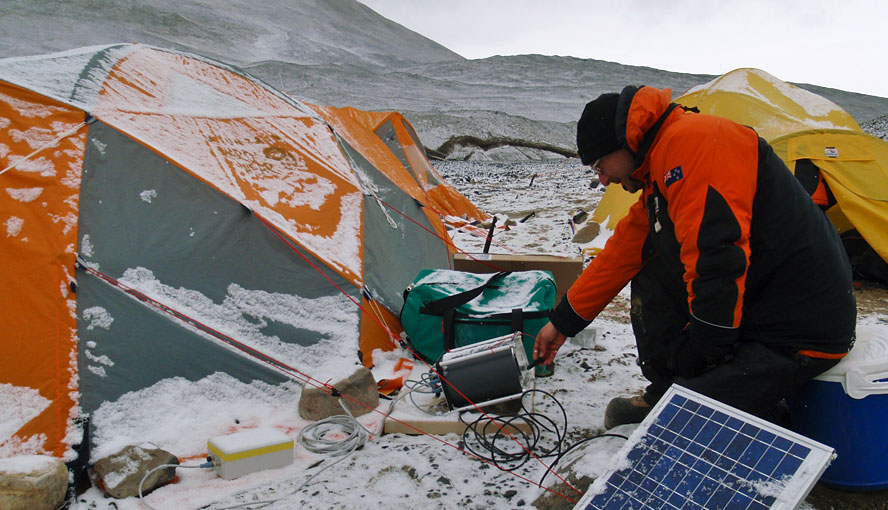
Photography by courtesy of Rolf Gademann.
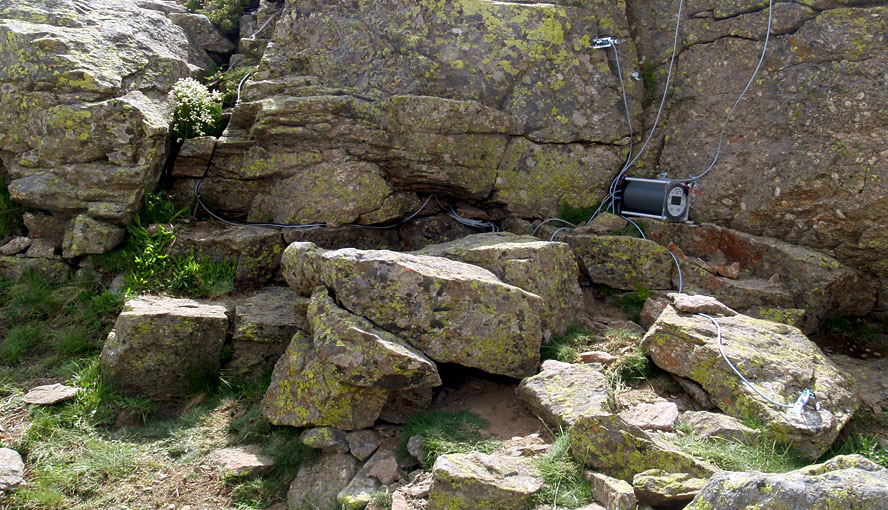
Photography by courtesy of Rolf Gademann.

Photography by courtesy of Albert Porcar-Castell.
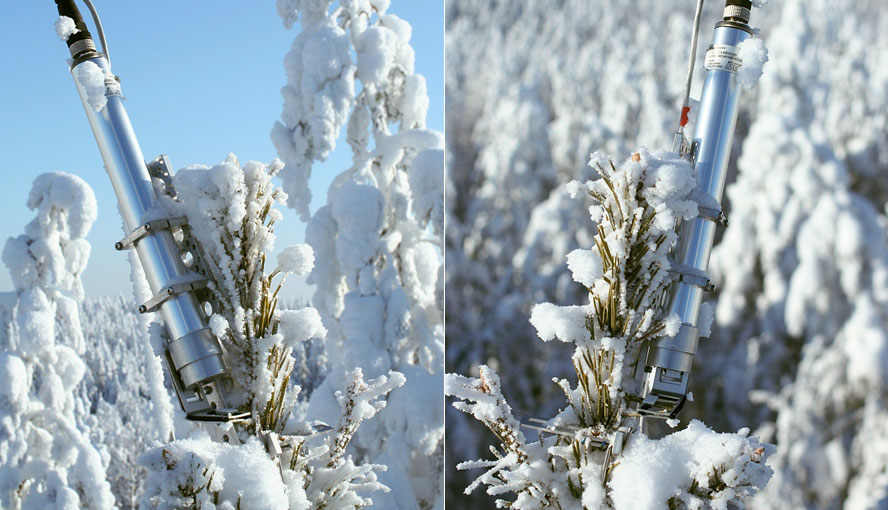
Photography by courtesy of Albert Porcar-Castell.