MONITORING-PAM
Fluorometer for Long-term Monitoring of Photosynthesis
PAM Data and Video
The Research Sites
Pioneering use of the MONITORING-PAM AQUATIC version: The world's first real-time, open data Coral Monitoring Network (CMN).
Coral reefs are under increasing threat from anthropogenic pressure, including rising sea temperatures, ocean acidification, and pollution. Monitoring coral health and understanding how environmental conditions impact them is essential for research, conservation, and policymaking. The fragile state of most reef ecosystems underscores the urgency of generating accurate, real-time, and actionable monitoring data.
The Gulf of Aqaba stands out as a marine refuge, with its reef-building corals demonstrating remarkable resilience to rising ocean temperatures. The CMN was established to collect diverse data streams curated in an open-access online database. This database empowers researchers from across the region and around the world to collaborate and advance our understanding of how environmental conditions affect coral function and well-being.
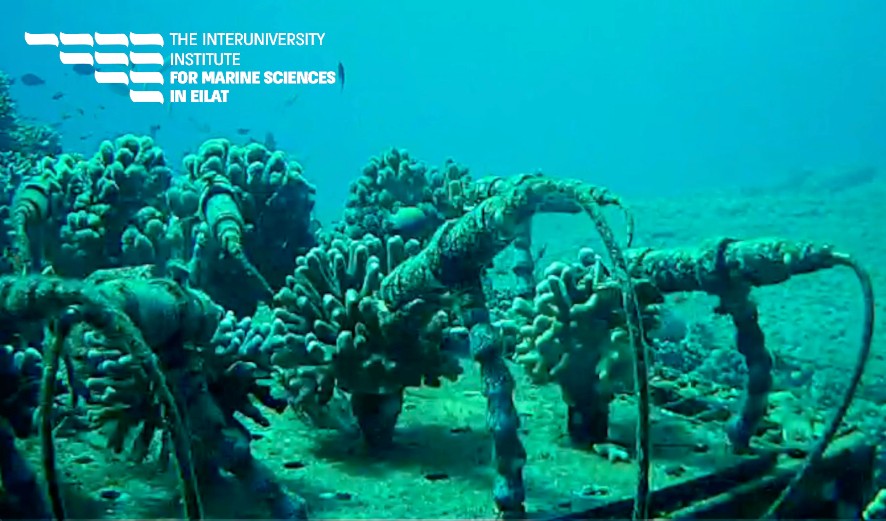
The CMN currently comprises 3 stations in the Gulf of Aqaba: CMS I in Eilat at 6 m depth, CMS II at the same depth in Aqaba, Jordan, and CMS III in Eilat at 42 m depth. At these station, MONITORING-PAM systems are employed to measure continuously photosystem II yield (Y(II), photosynthetic electron transport rate (rETR), temperature and PAR. In addition, real-time data on various environmental parameters is collected (e.g., air and water temperature, wind speed and direction, light intensity at surface and underwater). Streaming video provides additional information on fish activity, coral pigmentation and light environment.